
Last updated August 25, 2026
Free on-site gate assessment - hinges, posts, and your LiftMaster or Nice gate operator checked before anything is quoted
The assessment is free and the quote is the invoice.
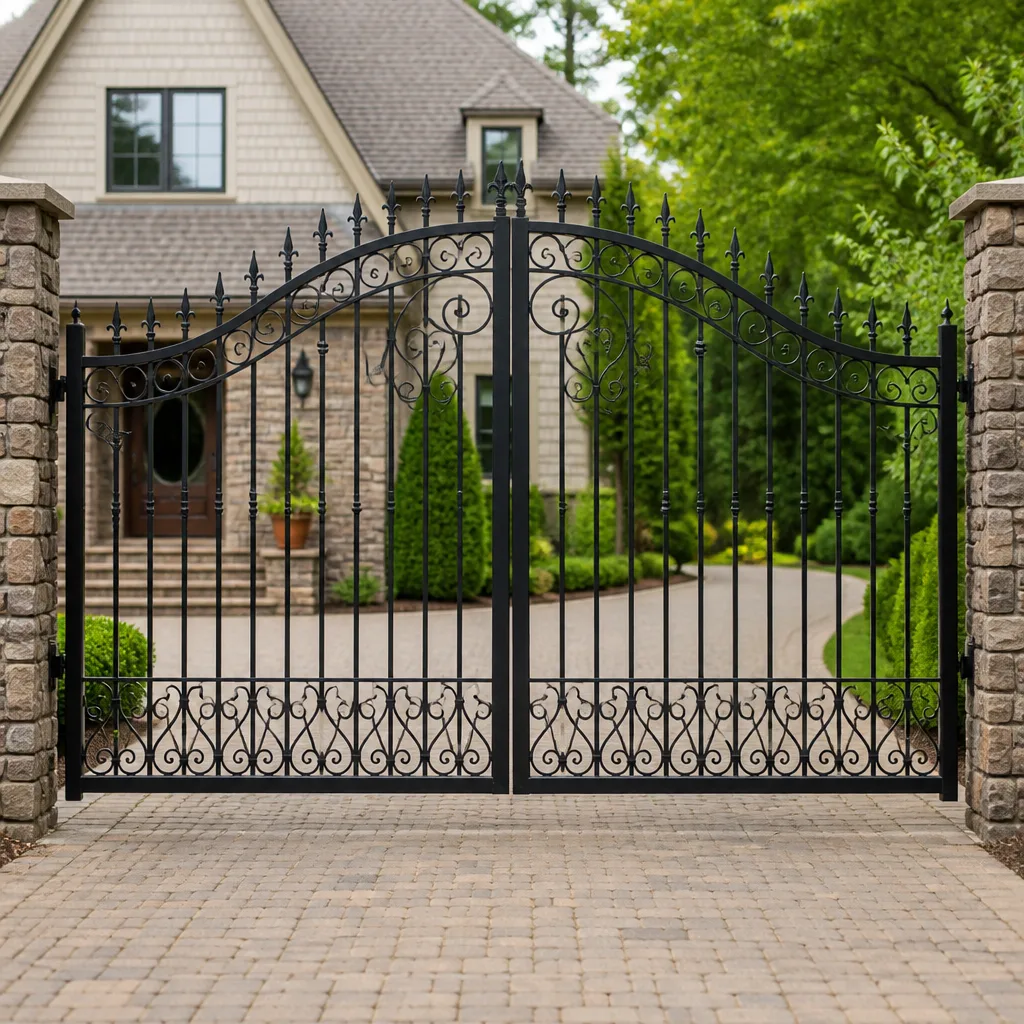
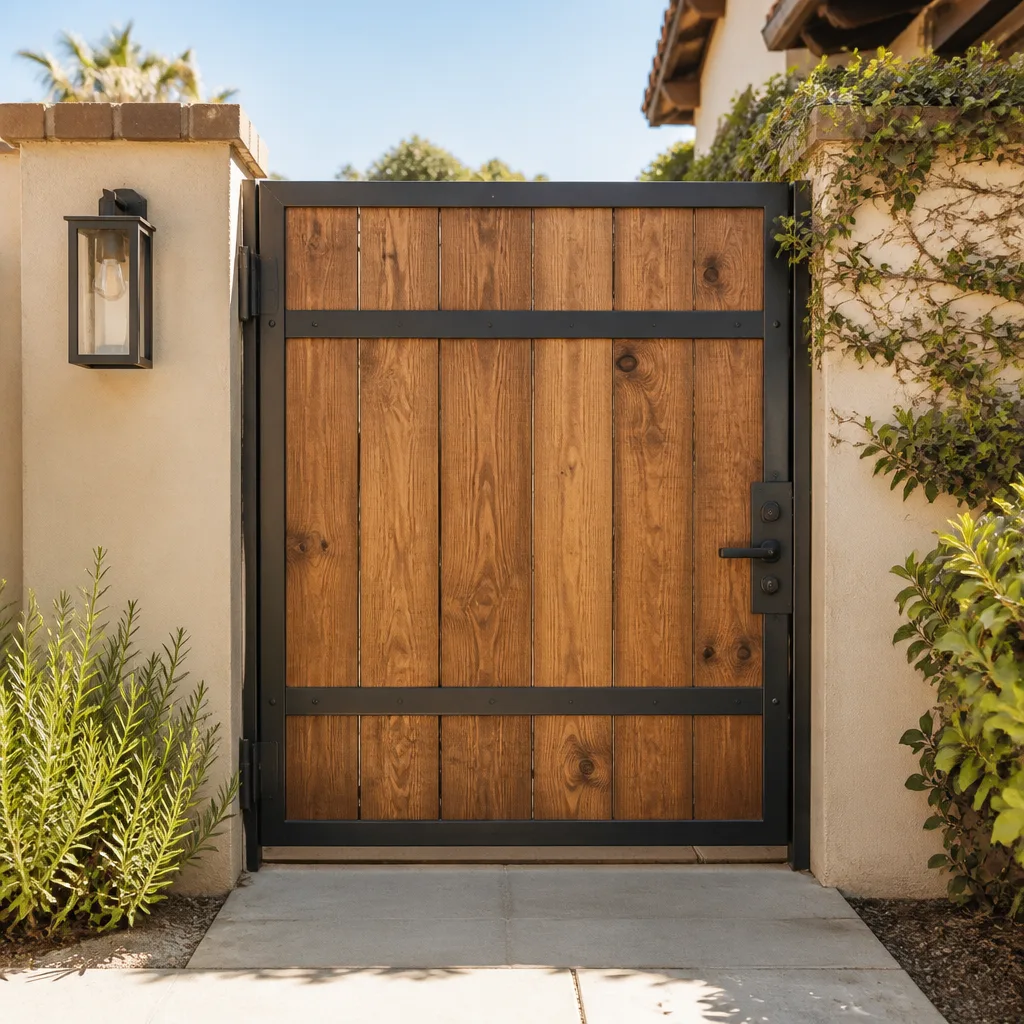
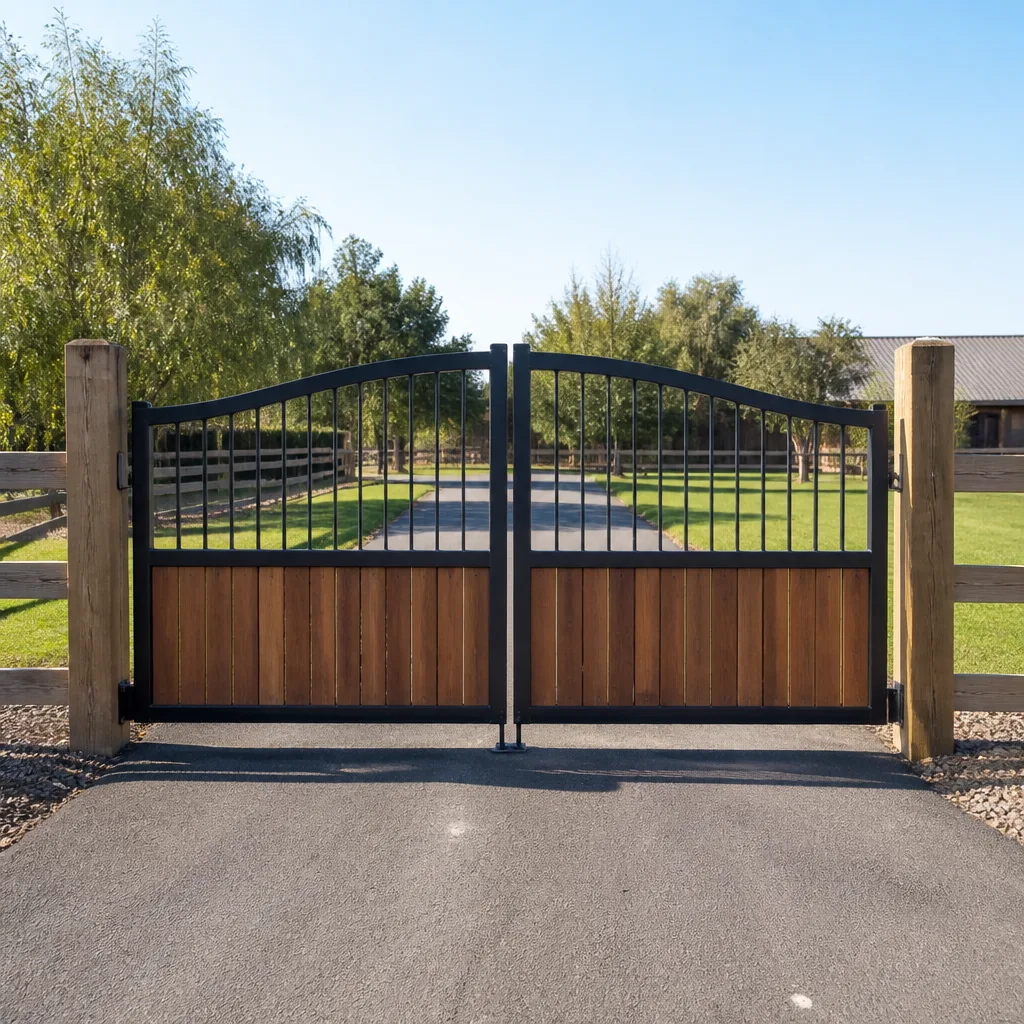
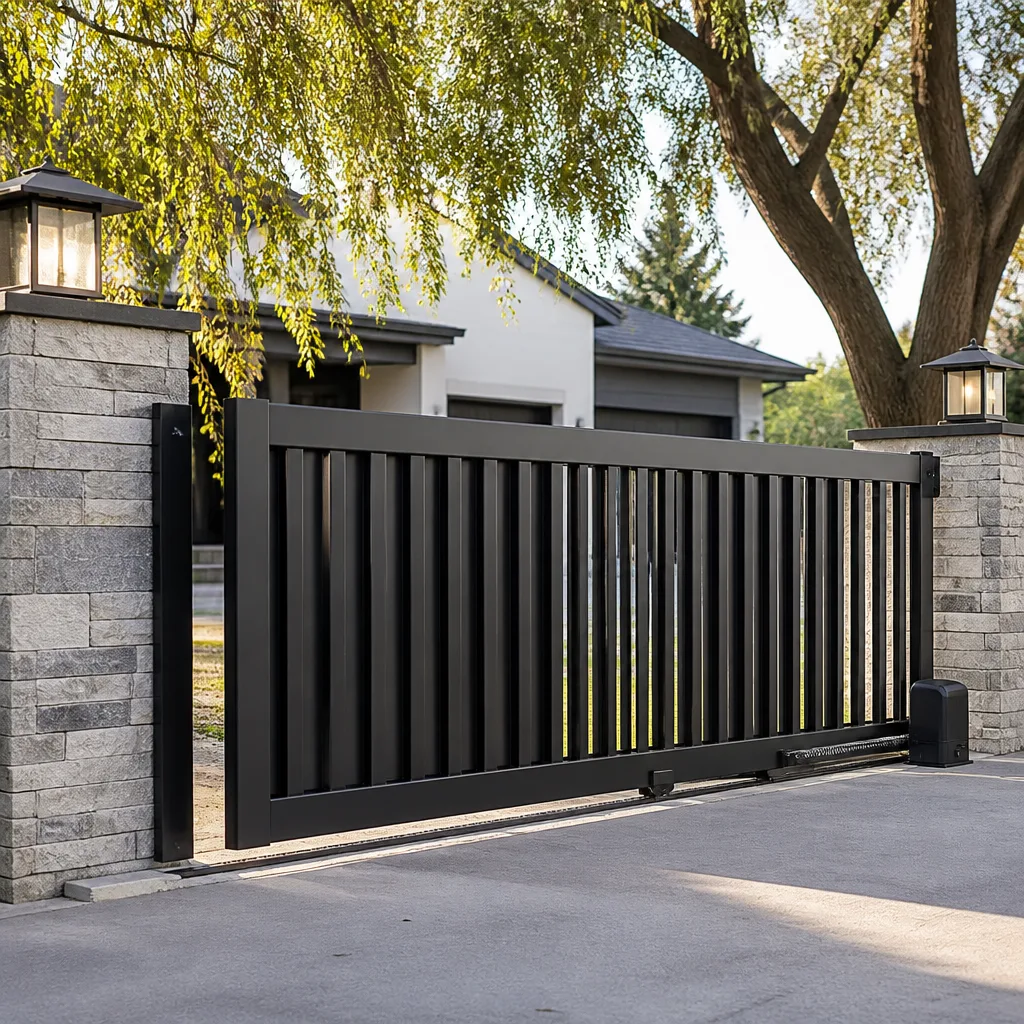
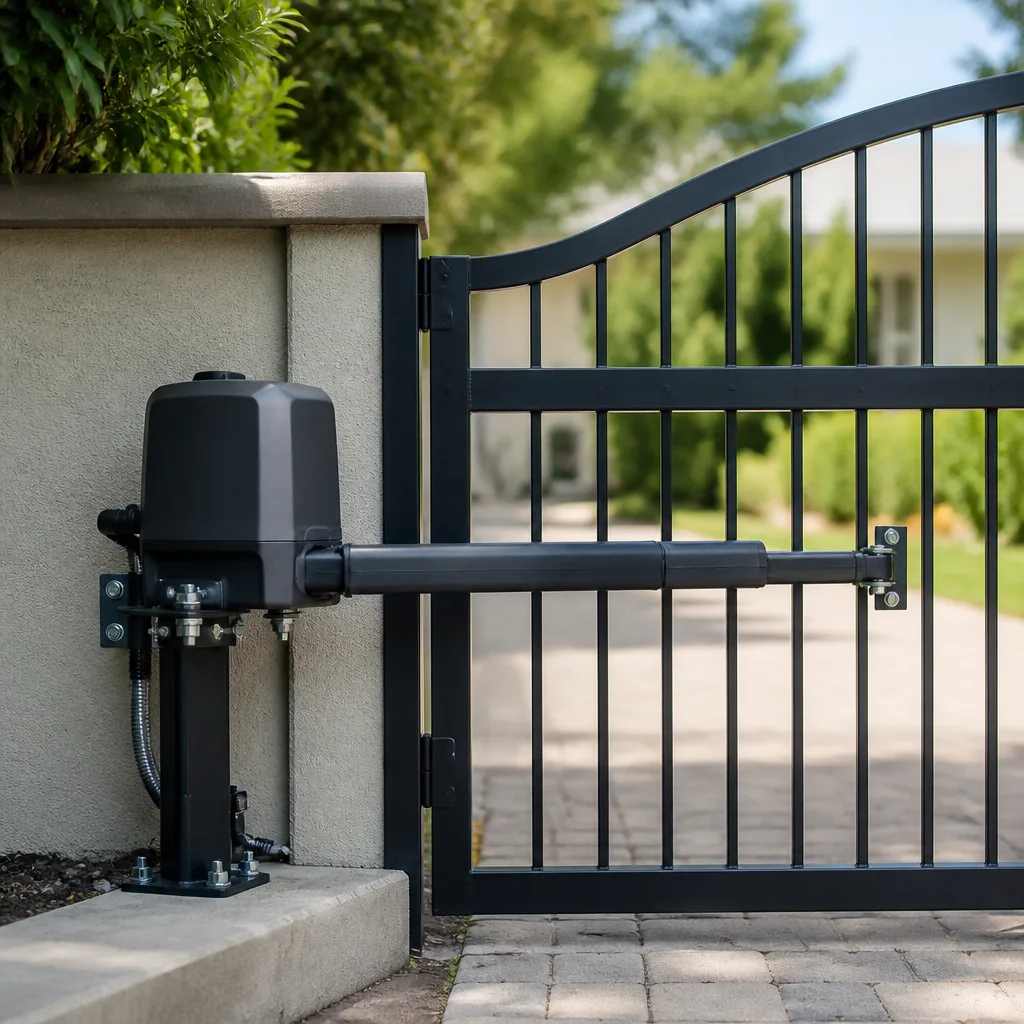
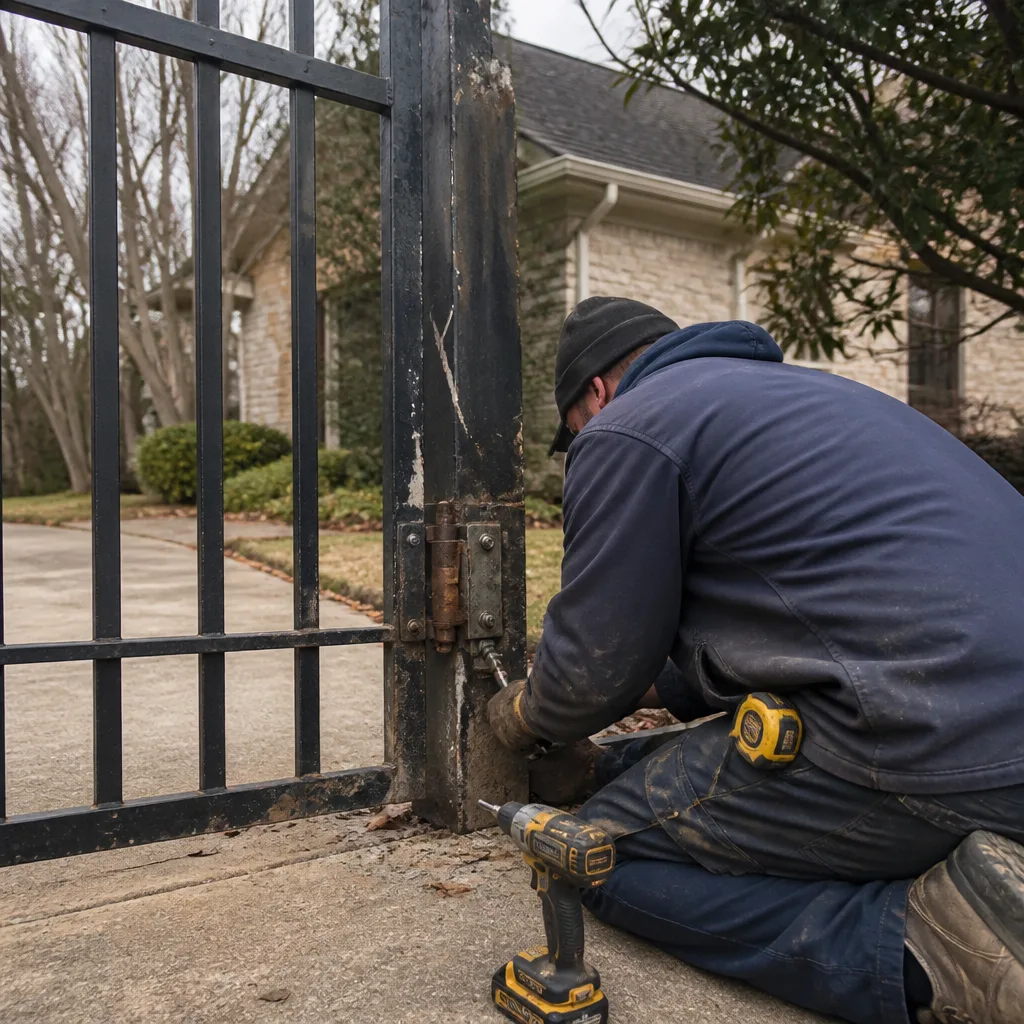 Before
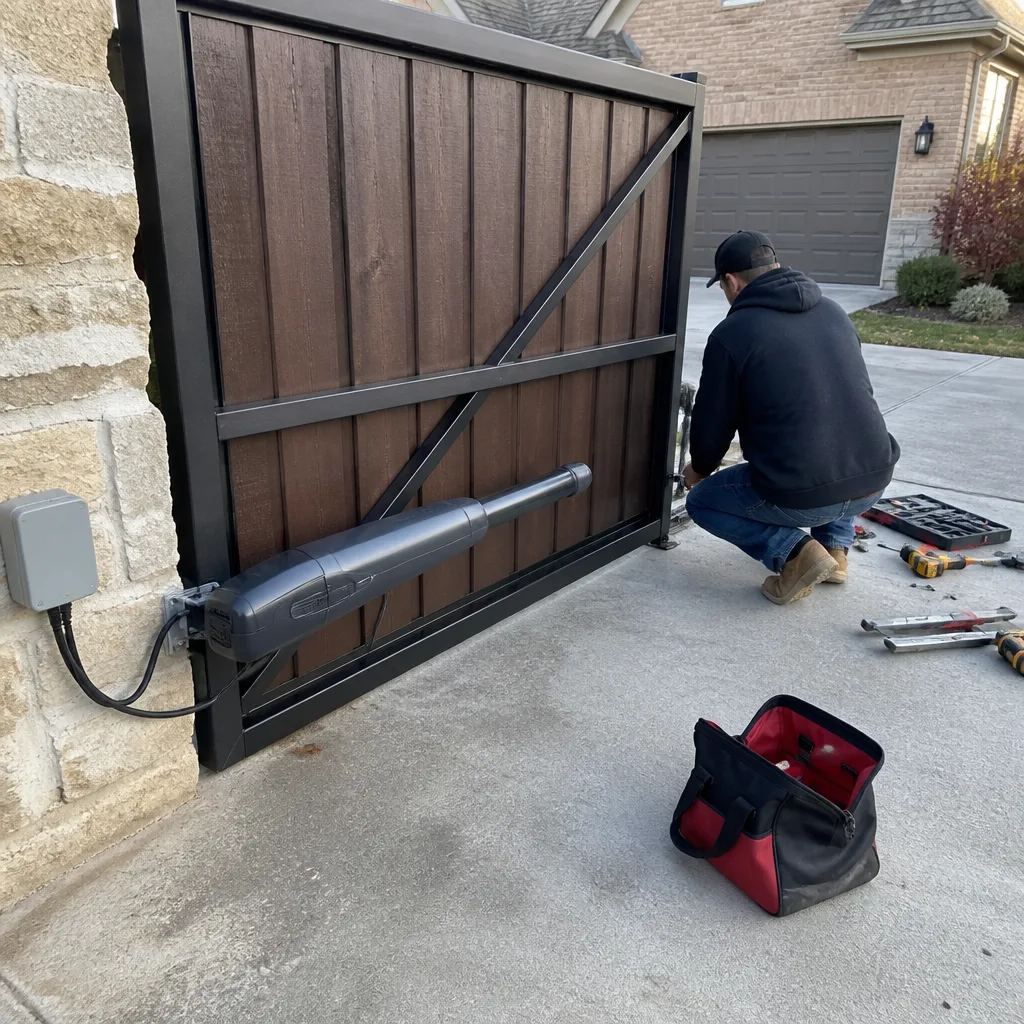 After
After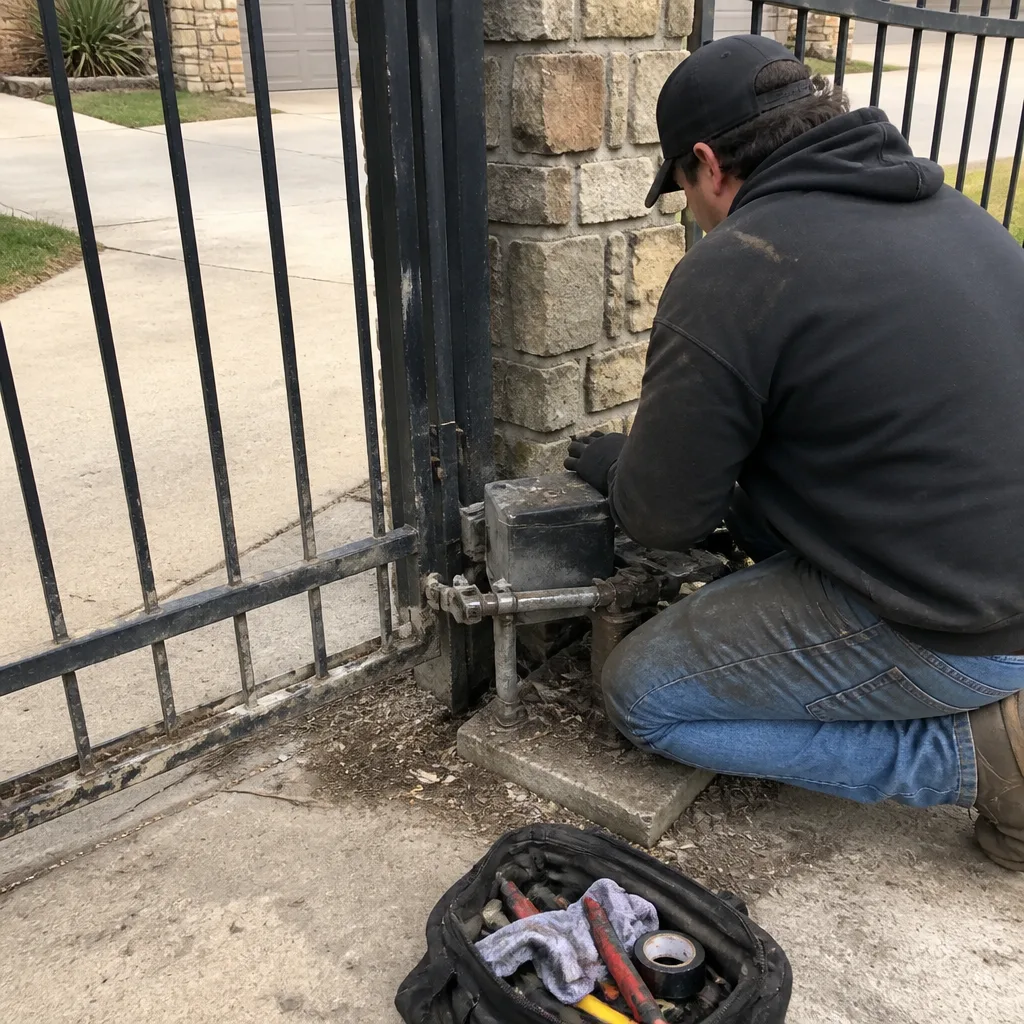 Before
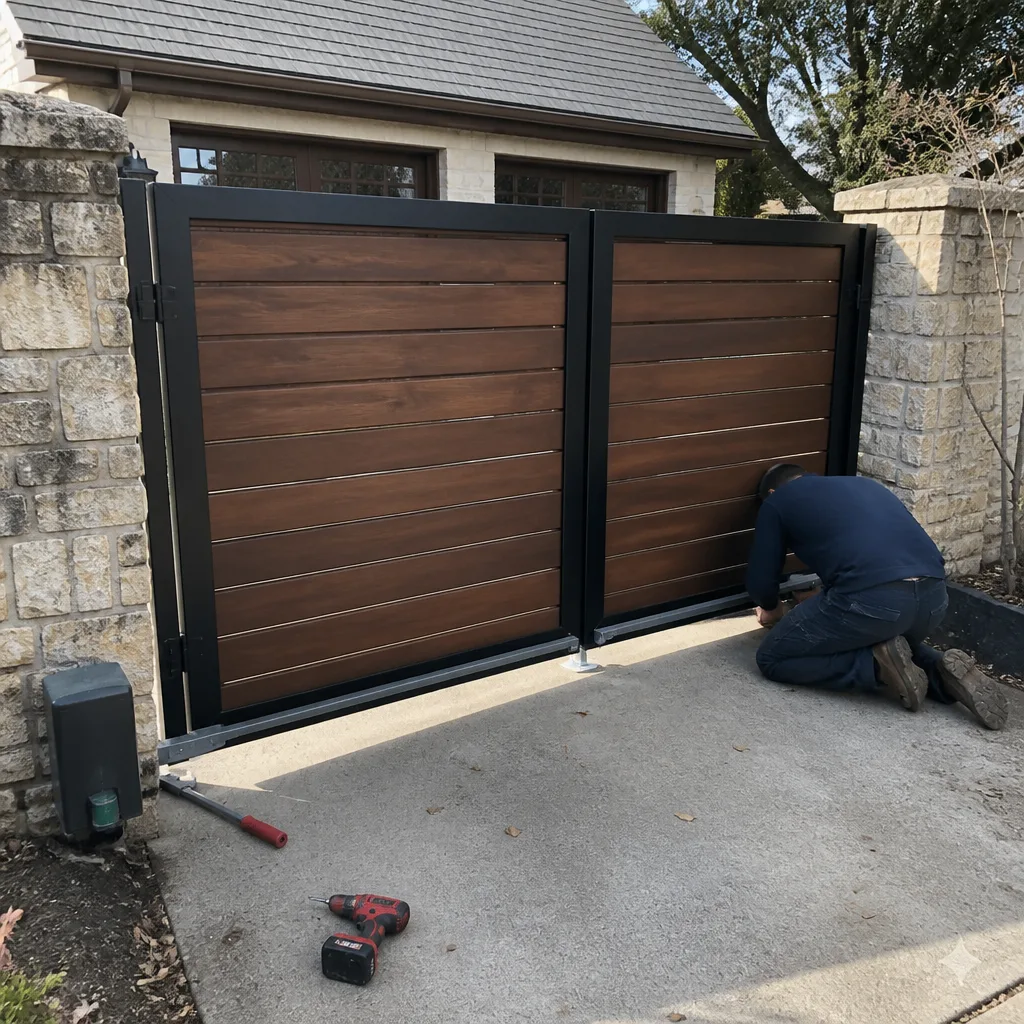 After
After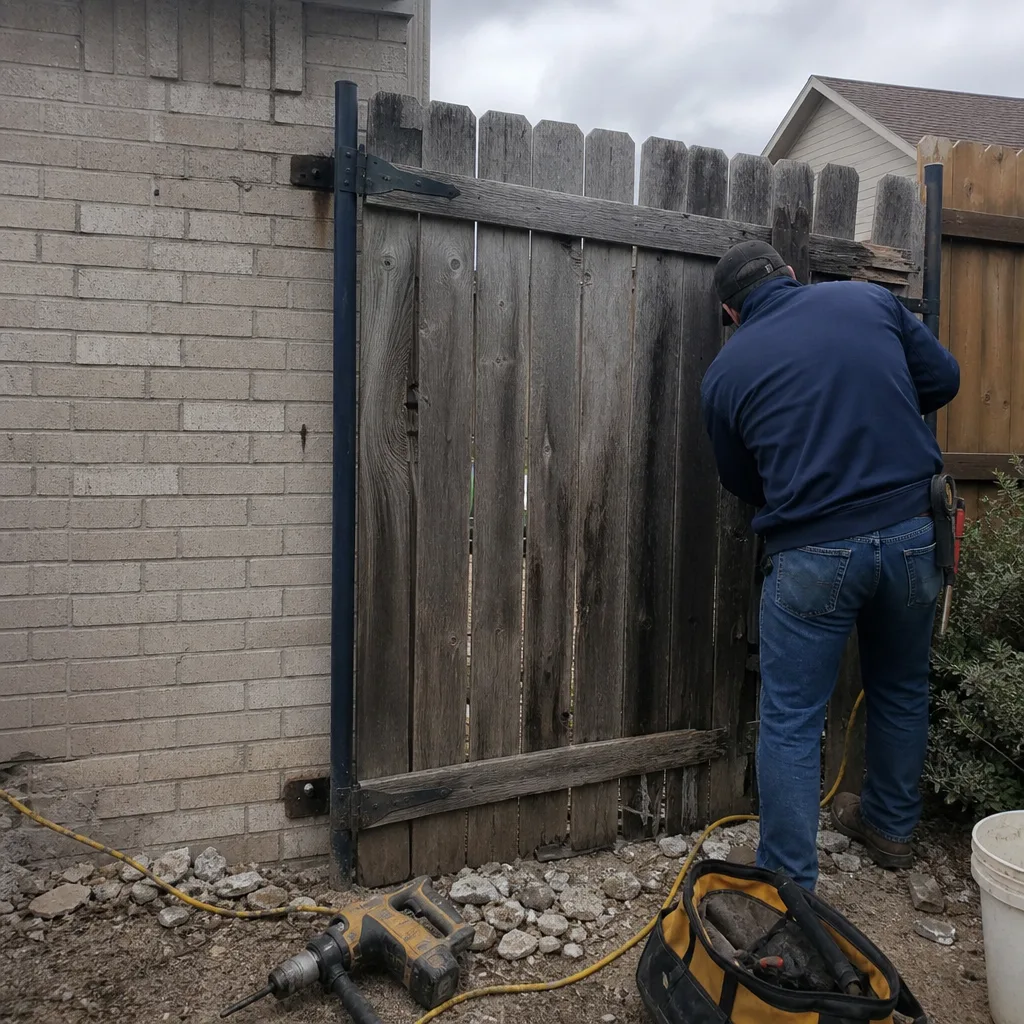 Before
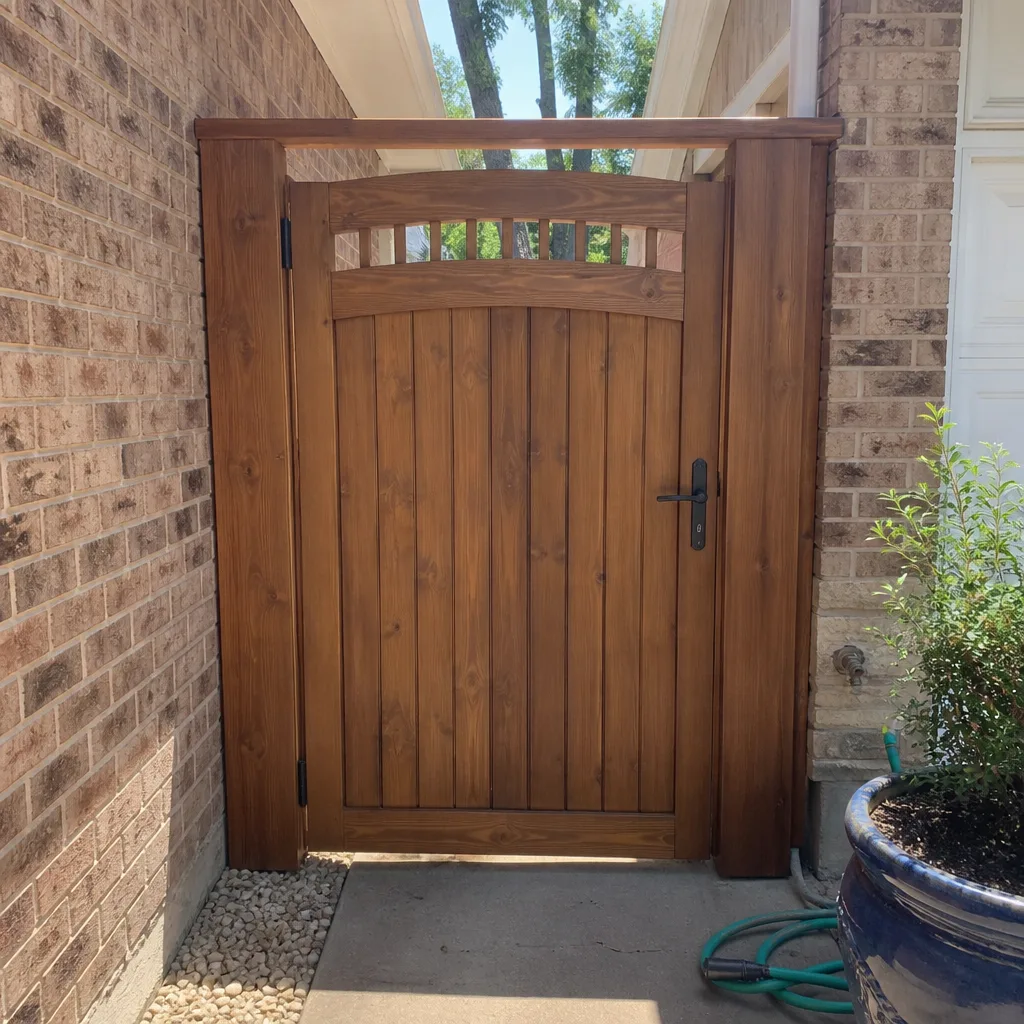 After
AfterThe Complete Guide to Gate Repair in Keller
Most automatic gate failures in Keller are not motor failures at all. In over four decades of working on driveway and estate gates across Tarrant County, we’ve found that roughly seven out of ten service calls trace back to something simple: a misaligned safety sensor, a tired battery in a keypad, a hinge that has settled out of square, or a limit switch that drifted out of adjustment. The motor still works fine. The gate just does not know it. This guide walks you through how Keller gates actually fail, what repairs cost in this market, which problems you can safely address yourself, and which ones call for a technician who has done this a few thousand times.
Quick Answer
Gate repair in Keller typically runs $150 to $450 for common fixes like sensor realignment, hinge replacement, or limit switch adjustment, while full operator replacement on a standard residential driveway gate runs $1,400 to $3,200 depending on the opener brand and gate weight. Most repairs are completed in one visit, and the price should be agreed in writing before any work begins. We offer free estimates across Keller and complete most jobs the same day we arrive.
Table of Contents
- How Driveway Gates Actually Fail in Keller
- Gate Repair Costs in Keller: What to Expect
- What You Can Safely Check Yourself (and What You Should Not Touch)
- The Opener Brands You Will Find on Keller Driveways
- How Keller Weather and Soil Affect Your Gate
- Getting It Fixed in One Visit: The Process
- Repair or Replace: A Straight Answer
- Common Mistakes to Avoid
- When to Call a Professional
- Frequently Asked Questions
- The Bottom Line
How Driveway Gates Actually Fail in Keller
Keller is a city of master-planned neighborhoods built largely between the 1990s and today, filled with custom homes on generous lots. The gates on those properties fall into two broad camps: older wrought-iron gates hung on steel posts set in concrete, and newer powder-coated steel or aluminum gates paired with modern automation. Each fails differently, and knowing which camp you are in tells you most of what you need to know about the repair.
Wrought-iron gates from the 80s and 90s are heavy, often 400 to 800 pounds, and they hang on hinges that have been carrying that weight for thirty years. The most common failure we see on those gates is simple metal fatigue: a hinge pin wears, the gate sags, and suddenly the latch no longer lines up with the receiver. Homeowners in neighborhoods like Hidden Lakes and Marshall Ridge call us describing a gate that “suddenly won’t close,” when what actually happened is the gate settled over years until one day it crossed the line from slightly out of square to fully nonfunctional.
Newer gates fail differently. The powder coat scratches at some point, a little moisture gets under the finish, and rust begins working its way along a weld seam. Or the automation gives up first: a circuit board fails after a lightning strike, a battery backup swells in the Texas heat, or a gear strips inside the operator housing. In North Keller and the newer estates off Rufe Snow Drive, we regularly replace openers on gates whose steel structure is still in fine condition.
Then there are the failures every Keller gate owner should know about regardless of age. Here is the most common list we work through on service calls:
- Misaligned photo eyes or safety edges - the gate thinks something is in the way and reverses or refuses to move.
- Stripped or worn drive gears - common on older FAAC and BFT operators that have run thousands of cycles.
- Failed limit switches - the gate opens too far, closes too hard, or stops halfway and beeps.
- Dead backup batteries - the control board shows a fault even though the gate runs fine on main power.
- Sagging hinges or cracked post welds - the gate drags on the ground or catches on the latch post.
- Keypad and intercom failures - bad weather sealing lets moisture into the keypad and the buttons stop responding.
A methodical technician diagnoses these in minutes. The reason most Keller homeowners end up replacing parts unnecessarily is that they start replacing parts instead of finding the cause. The cause is what matters. The part is just where the cause shows up.
Gate Repair Costs in Keller: What to Expect
Let’s talk straight about money. Gate repair prices in Keller vary with the equipment, the age of the install, and how far a technician has to travel, but the ranges below are honest numbers based on what we quote in this market every week.
Here is what common repairs cost in Keller right now:
- Sensor realignment or replacement: $85-$185. Usually a quick fix, often done in under an hour.
- Hinge replacement (single gate): $200-$450. Depends on gate weight and whether the post needs re-welding.
- Limit switch adjustment or replacement: $125-$275. Labor-heavy on operators with buried wiring.
- Keypad or receiver replacement: $150-$350. Includes programming to your existing remotes.
- Circuit board replacement: $250-$600. Price varies widely by brand; Linear and Viking boards run on the higher end.
- Full operator replacement (standard residential): $1,400-$3,200. Includes new arms, brackets, and programming.
- Weld repair on a cracked gate or post: $150-$400. We do this in-shop or on-site depending on the break.
One thing we tell every Keller client before we start: the price is settled before a bolt is turned. You will know the cost, in writing, before the work begins. If we find something else wrong while we are in there, we stop, explain it, and let you decide. No one at Ironworks Gate Co. ever hands you a surprise invoice. That is not how this trade should work, and it is not how we have done it since 1984.
For homeowners comparing quotes, here is what moves the number: gate weight and length, whether the operator is buried or pad-mounted, the brand of the existing control board, and whether the post has shifted. A 16-foot iron gate on a failing post is a different job than a 10-foot aluminum gate on solid concrete. Both are routine for us, but they do not cost the same.
We also run standing offers for Keller homeowners: $50 off any repair over $250, a free second opinion on any written estimate, and an $89 seasonal tune-up that catches small problems before they strand a car in the driveway. Seniors and veterans always get 5% off, every job, no expiration.
What You Can Safely Check Yourself (and What You Should Not Touch)
Some gate problems solve themselves with five minutes and a can of lubricant. Others have sent more than one well-meaning homeowner to urgent care. Knowing the difference is the whole game.
Here is what you can safely do on a Keller driveway without calling anyone:
- Clear the track and the photo eye lenses. Dust, grass clippings, and spider webs block the infrared beam. A dry cloth fixes it. If the lenses are scratched, replacement may be needed, but cleaning is safe.
- Check the keypad battery. Most keypads run on a 9-volt or AA batteries. If the buttons feel mushy or the backlight is dim, swap the battery. It takes two minutes and costs less than a sandwich.
- Lubricate the hinges and latch. Use a silicone-based or lithium spray, not WD-40, which displaces water but leaves little lasting lubrication. Work the gate back and forth as you spray.
- Look for obvious obstructions. A branch, a child’s toy, or a landscaping stone under the gate’s path triggers the safety reverse. Move it. The gate usually resumes normal operation.
- Test the manual release. Every operator has a release cord or key. Pull it, push the gate by hand, and feel for grinding, dragging, or catching. That tells you whether the frame is out of square.
Now the other list. These are the things you should not attempt on your own:
- Anything involving the torsion springs on a counterbalance system. These springs hold hundreds of pounds of tension. A released spring can break bone. This is a technician’s job, every time.
- Electrical work on the operator or control board. Gate openers run on line voltage in many Keller installs. Capacitors hold a charge even after power is cut. A shock is not worth the diagnostic fee you were trying to save.
- Welding on a cracked gate or post. A gate under load can shift while you are welding it, and a bad weld on a 600-pound gate is a safety hazard in waiting. This is blacksmith work, and it needs a blacksmith’s eye.
- Replacing a buried operator. Trenching exposes irrigation lines and low-voltage landscape wiring in many Keller yards. A mistake there costs far more than the labor you saved.
If the job involves high tension, line voltage, or weight in motion, call a trained professional. We would rather give you a free estimate on the phone than read about a garage-gate accident that could have been avoided.
The Opener Brands You Will Find on Keller Driveways
Keller homes carry a wide mix of gate automation, because this city grew in phases and each wave of builders used different equipment. In the older neighborhoods you see a lot of FAAC and BFT hydraulic operators, the kind that run smoothly for twenty years and then need a rebuild. In the 2000s-era developments, LiftMaster and Linear swing-arm operators dominate. On ranch and estate properties outside the city core, you will find Viking and DoorKing slide operators moving heavy custom gates.
We service all of them. Our technicians train on nine brands: LiftMaster, FAAC, BFT, Linear, Viking, Ghost Controls, DoorKing, Elite, and Mighty Mule. That matters because gate brands do not share parts, programming sequences, or failure patterns. A technician who only knows one or two brands will misdiagnose a third. We do not want that on our conscience or your driveway.
A note on brand-specific quirks, because this is the kind of thing that saves Keller homeowners money:
- FAAC operators use hydraulic rams that leak slowly as seals age. Low fluid causes the gate to creep or stop midway. Replacing the seal kit is a $200 fix. Replacing the whole operator is not.
- BFT control boards are sensitive to power surges, which Keller sees during spring storm season. A surge protector installed at the board is the cheapest insurance you can buy for one of these.
- Linear operators are workhorses, but their limit switches drift with temperature swings, which is why a gate that works fine in March acts up in August.
- Viking slide operators live outdoors in weatherproof cabinets, but the cabinet gaskets wear. A failing gasket lets Texas humidity into the housing and the board corrodes from the inside out.
When we arrive at a Keller home, we know which brand you have before we open the cabinet, because most of this equipment has been on the market for decades and the failure signatures are well documented. That means a faster diagnosis and a lower bill for you.
How Keller Weather and Soil Affect Your Gate
Keller sits near the top of the Dallas-Fort Worth metroplex, on clay-heavy soil that moves with rainfall. That soil is the quiet enemy of every gate post in this city. In dry spells, the clay shrinks and pulls away from concrete. In wet seasons, it swells and pushes sideways. Over a decade of that cycle, a gate post that was perfectly plumb at installation can lean an inch or more. A leaning post makes the gate drag on the latch side, which strains the operator, which shortens its life. The gate did not fail. Its foundation did.
Heat is the second factor. Keller summers regularly push past 100 degrees, and that heat ages electronics faster than the manufacturer’s spec sheets assume. Backup batteries that would last five years in Ohio last three in Texas. Circuit boards that might run a decade in a mild climate die in seven. The fix is not to avoid owning a gate. It is to buy equipment rated for the climate and to do the seasonal maintenance that catches heat fatigue before it strands the gate closed.
Storms are the third. Spring in Keller brings lightning, and lightning does not need a direct hit to damage a gate control board. A nearby strike sends a spike through the power lines, and the board absorbs it. If your gate stops working after a thunderstorm, that is usually the story. A whole-home surge protector helps, but a dedicated surge module at the operator is better. We install these on most of the Keller gates we service, and they cost less than one board replacement.
Here is the combined effect: a Keller gate gets more heat, more soil movement, and more electrical stress than the same gate would in most American cities. That is not a problem if you understand it. It is a maintenance schedule, and we can set one up that matches what the weather actually does here.
Getting It Fixed in One Visit: The Process
Nobody wants to take two days off work for a gate repair. We structure our service around completing most jobs in a single visit, because after 42 years in this trade we know what to bring and what to look for. Here is how it works from your side:
- Call us. A live person answers, 24 hours a day, 7 days a week. Not a recording, not a callback queue. You describe the symptom, we ask a few pointed questions, and we schedule a window that works for you.
- We arrive with the truck stocked. Our technicians carry common parts for nine opener brands, plus hinge stock, welding equipment, and programming tools. We do not show up, look at your gate, and tell you we will be back next week with a part. If a part is rare, we tell you before we dispatch.
- We diagnose and quote, in writing, before work begins. You know the price before a wrench is turned. If you choose not to proceed, that is fine. The diagnosis is free with the visit.
- We repair, test, and walk you through what we did. Every job gets a full cycle test: open, close, stop, reverse, obstruction test, and a check of all safety devices. You should see the gate run the way it ran on day one.
- We hand you the 90-Day Done Right Promise. It is a written guarantee, plain and simple: if it is not right, we come back and make it right. No paperwork, no arguing, no exceptions. The 400th job gets the same care as the first.
Most Keller gate repairs take one to three hours on site. Operator replacements run longer, typically a half day, and we schedule those at your convenience rather than promising a same-day turnaround on work that deserves to be measured and planned.
Repair or Replace: A Straight Answer
We are in the business of repair, so you would expect us to tell you to repair everything. We do not. Some gates have told us everything they have to say, and the honest answer is replacement. Here is the rule of thumb we use when a Keller homeowner asks us whether to fix or replace:
Repair makes sense when:
- The gate structure is sound and the failure is in a wearable component: a hinge, a sensor, a limit switch, a keypad, a gear.
- The operator is less than ten years old and the control board is the only thing that failed.
- Replacement parts are readily available, which is true for every brand we service.
- The repair cost is less than half the cost of a comparable new system.
Replacement makes sense when:
- The gate itself is rusted through at the welds or the post has shifted and the concrete footer is cracked.
- The operator is more than fifteen years old, the parts are discontinued, and you have had two or more failures in the past year.
- You want to upgrade from a keypad to full access control: vehicle detection loops, phone app control, video intercom, or integration with a home system.
- The gate is underbuilt for its size, which is common on older Keller installs where a standard residential operator was asked to move a 900-pound iron gate.
When we recommend replacement, we do a full measure, quote the complete job in writing, and schedule the work as a planned installation, not an emergency response. You get a gate sized correctly for the opening, an operator rated for the gate weight, and the same 90-Day Done Right Promise on the new work.
Common Mistakes to Avoid
Over the years, we have watched Keller homeowners make some expensive decisions with good intentions. Here are the mistakes we would steer you away from:
- Replacing the operator before checking the gate itself. If the gate drags, the new operator will fail too. The gate comes first. We have seen a homeowner spend $2,000 on a new opener for a gate that needed a $50 hinge adjustment.
- Buying the cheapest opener online. A budget operator on a heavy iron gate rarely lasts three Texas summers. You pay twice: once for the opener and once for the service call to replace it.
- Ignoring a gate that moves slower than it used to. Slow movement is the first sign of hinge wear, low hydraulic fluid, or a failing capacitor. Ignoring it turns a $150 repair into a $1,800 replacement.
- Attempting a DIY weld on a load-bearing hinge or post. A gate is a moving structure. A cosmetic weld that fails under load is a safety hazard for anyone nearby, and it voids most manufacturer warranties on the operator.
- Not testing the safety reverse after a repair. If the gate cannot detect an obstruction and reverse, it is dangerous. Every repair we complete includes a full safety test, and you should test yours monthly.
- Waiting to fix a sagging gate because “it still opens.” Gravity does not negotiate. The longer a gate sags, the more damage it does to the hinges, the latch, the operator, and the post. Early repair is the cheapest repair.
When to Call a Professional
Some situations are not judgment calls. Call a trained gate technician if your gate is stuck halfway and blocking a vehicle, if it reverses on its own and you cannot identify the cause, if you see sparks or smell burning plastic near the operator, if the gate has come off its hinges entirely, or if a post is visibly leaning. These are not maintenance items. These are failures that get worse and costlier the longer they wait.
You should also call if you simply do not know what is wrong. A ten-minute diagnostic by someone who has seen thousands of Keller gates is cheaper than a weekend of guessing and a box of parts that did not fix the problem. Ironworks Gate Co. offers free estimates in Keller, and a live person answers the phone 24 hours a day at (254) 330-8718. We will be there when we say.
Frequently Asked Questions
Gate repair in Keller typically costs $150 to $450 for common issues like sensor realignment, hinge replacement, or limit switch work, while full operator replacement runs $1,400 to $3,200. We quote every job in writing before work begins, and we offer $50 off any repair over $250 for Keller homeowners. Call (254) 330-8718 for a free estimate.
In most cases, yes. For typical repairs like sensor issues, keypad failures, or hinge adjustments, we complete the work in a single visit, often the same day you call. A live person answers 24 hours a day at (254) 330-8718, and we will give you an honest arrival window when you book.
A full installation includes a site measure, removal of the old gate and operator if needed, new gate fabrication or selection, post setting in concrete, operator installation, safety device setup, programming of remotes and keypads, and a full test cycle. We quote the complete job in writing before any work starts, and the 90-Day Done Right Promise covers the finished project.
Yes, absolutely. In most cases our technicians can identify the brand and model in minutes from the operator housing, motor, or control board. We service nine major brands, including FAAC, BFT, Linear, and Viking, so whatever is on your Keller driveway, we have almost certainly worked on it before.
Yes, we install and repair everything from basic keypads to full access control systems with video intercom, phone app control, and vehicle detection loops. In the Keller area we regularly upgrade older keypad-only systems to modern phone-based access, and the work is quoted in writing before it begins.
We serve all of Keller including Hidden Lakes, Marshall Ridge, North Keller, and the estates off Rufe Snow Drive, plus the surrounding communities across Tarrant County. We have been serving Keller since 2013 and this part of Texas for over 42 years. Call (254) 330-8718 and a live person will answer, any hour, any day.
The Bottom Line
Most Keller gate failures are small problems caught late, not big problems that arrive without warning. The fix is to look at your gate the way you look at your HVAC or your roof: it is a mechanical system that needs an occasional check, and the check costs less than the failure. If your gate is slow, noisy, sitting crooked, or not responding, call someone who has done this longer than most Keller homes have been standing. We will give you a straight answer, a written price, and a repair that holds up. That is the job. That is the whole job.
Written by Victor Salinas, Owner at Ironworks Gate Co., serving Keller since 2013. Learn more on the Ironworks Gate Co. home page.