
Last updated August 25, 2026
Free on-site gate assessment - hinges, posts, and your LiftMaster or Nice gate operator checked before anything is quoted
The assessment is free and the quote is the invoice.

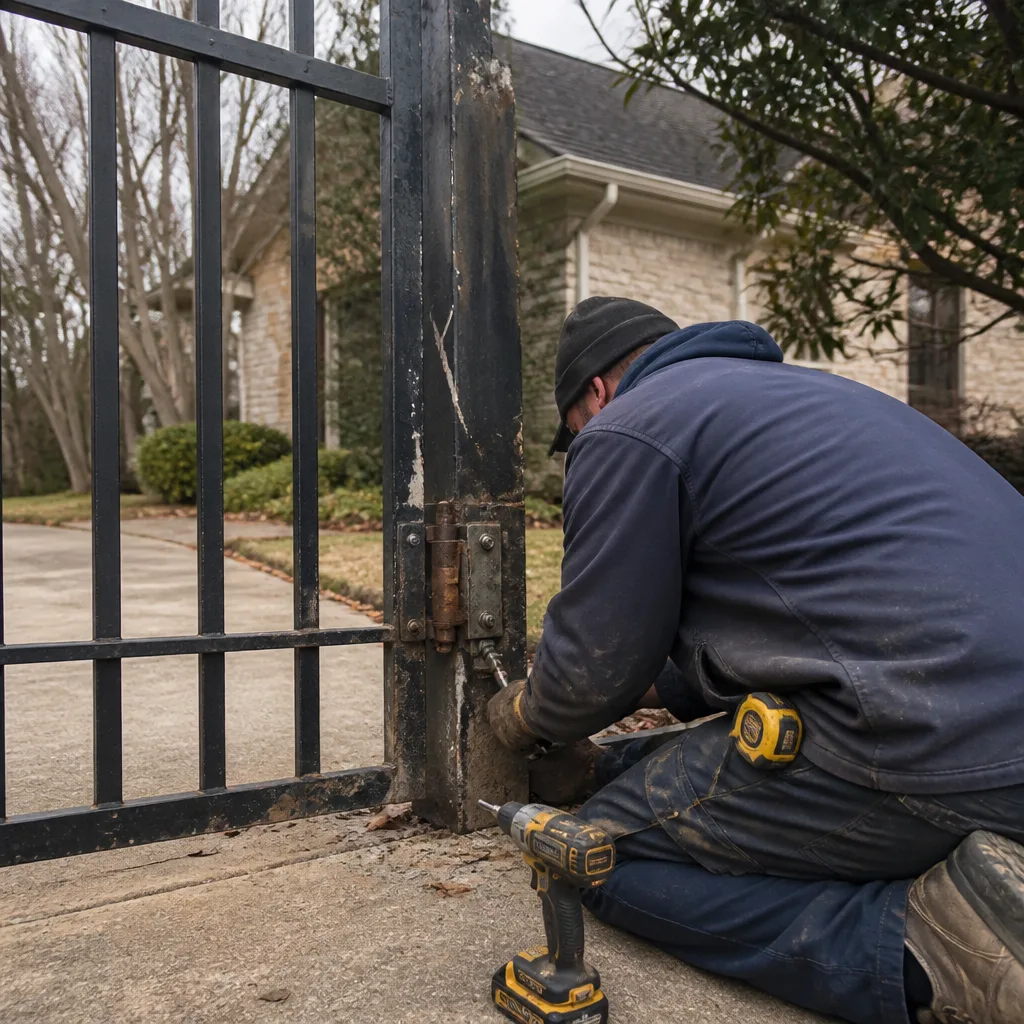 Before
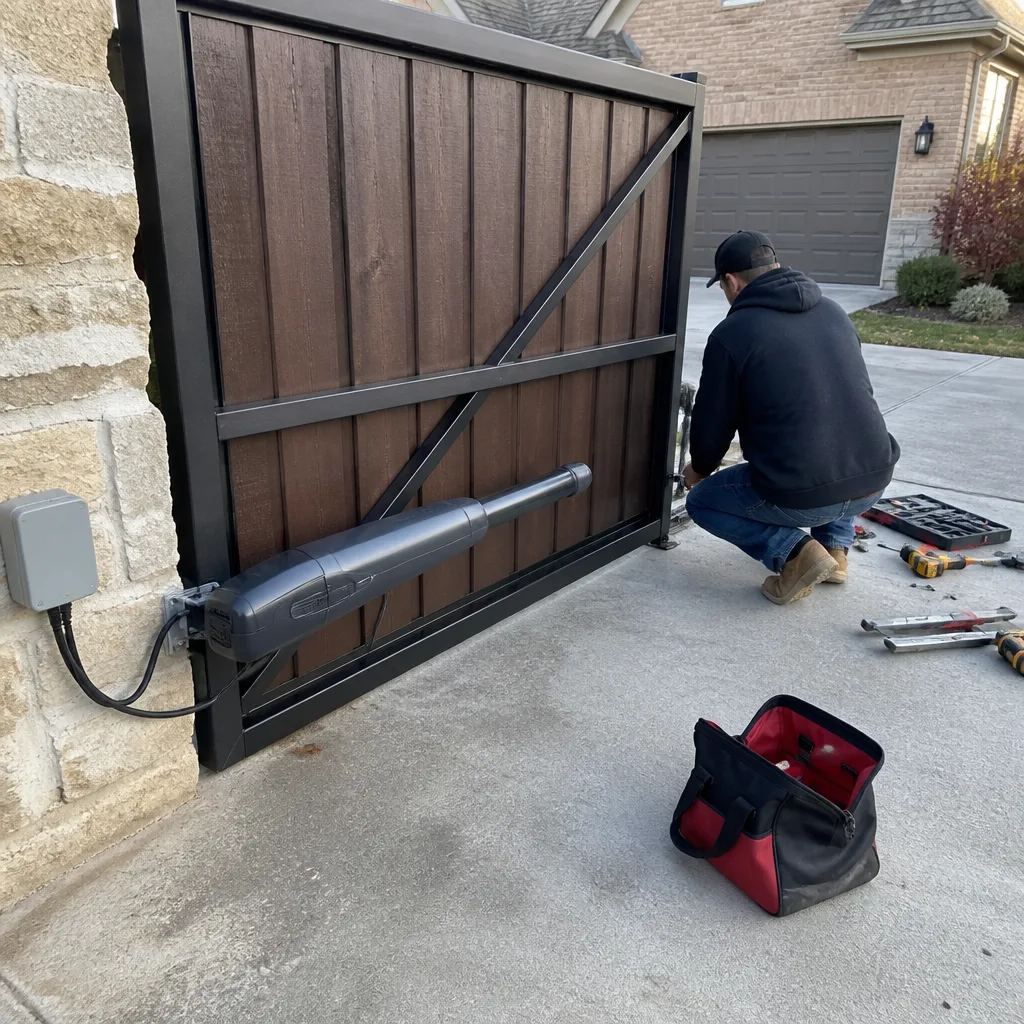 After
After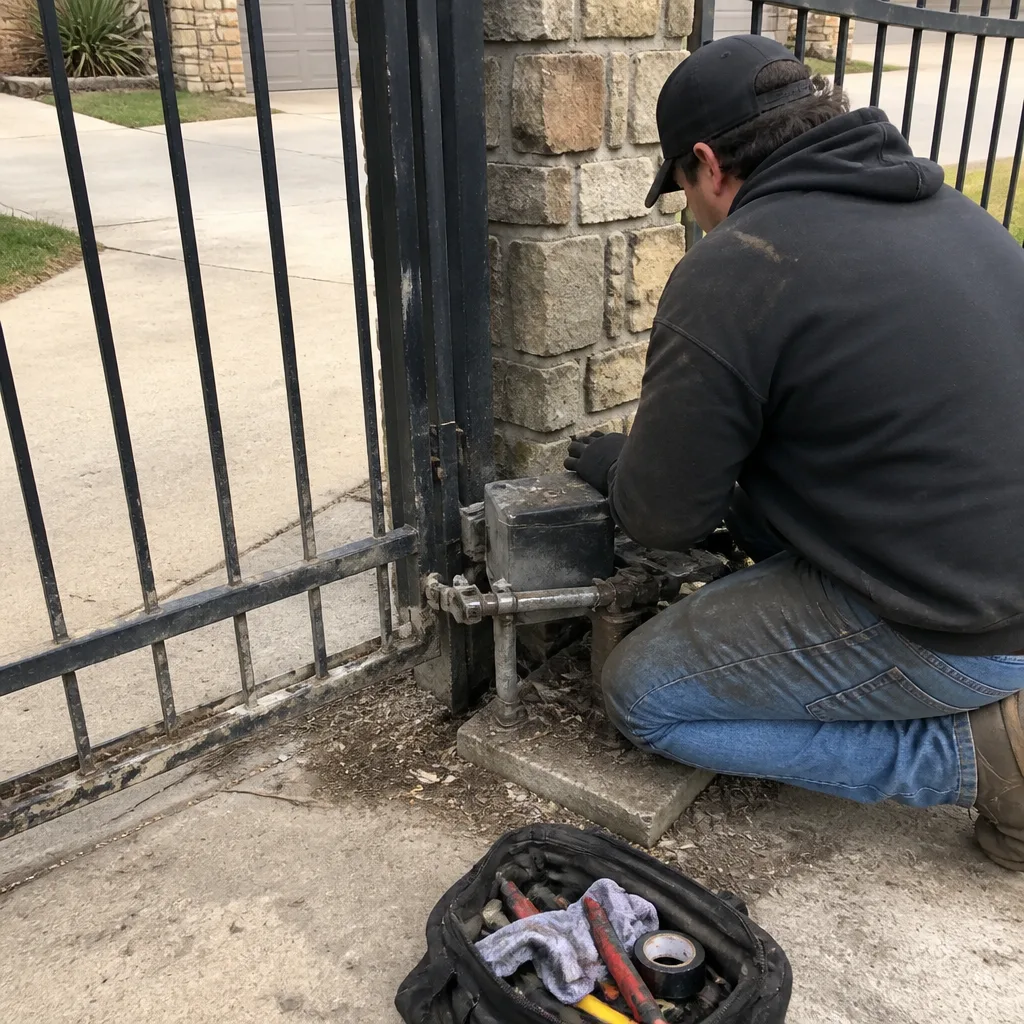 Before
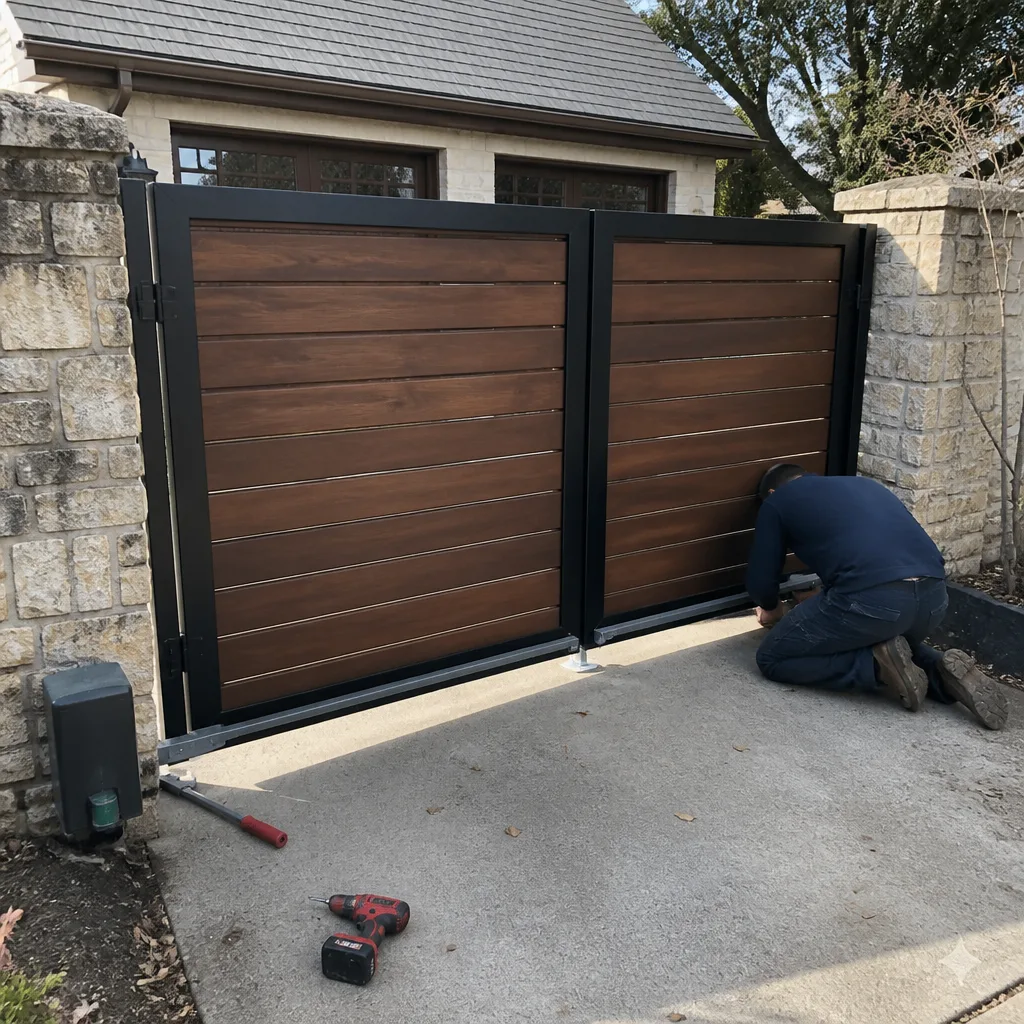 After
After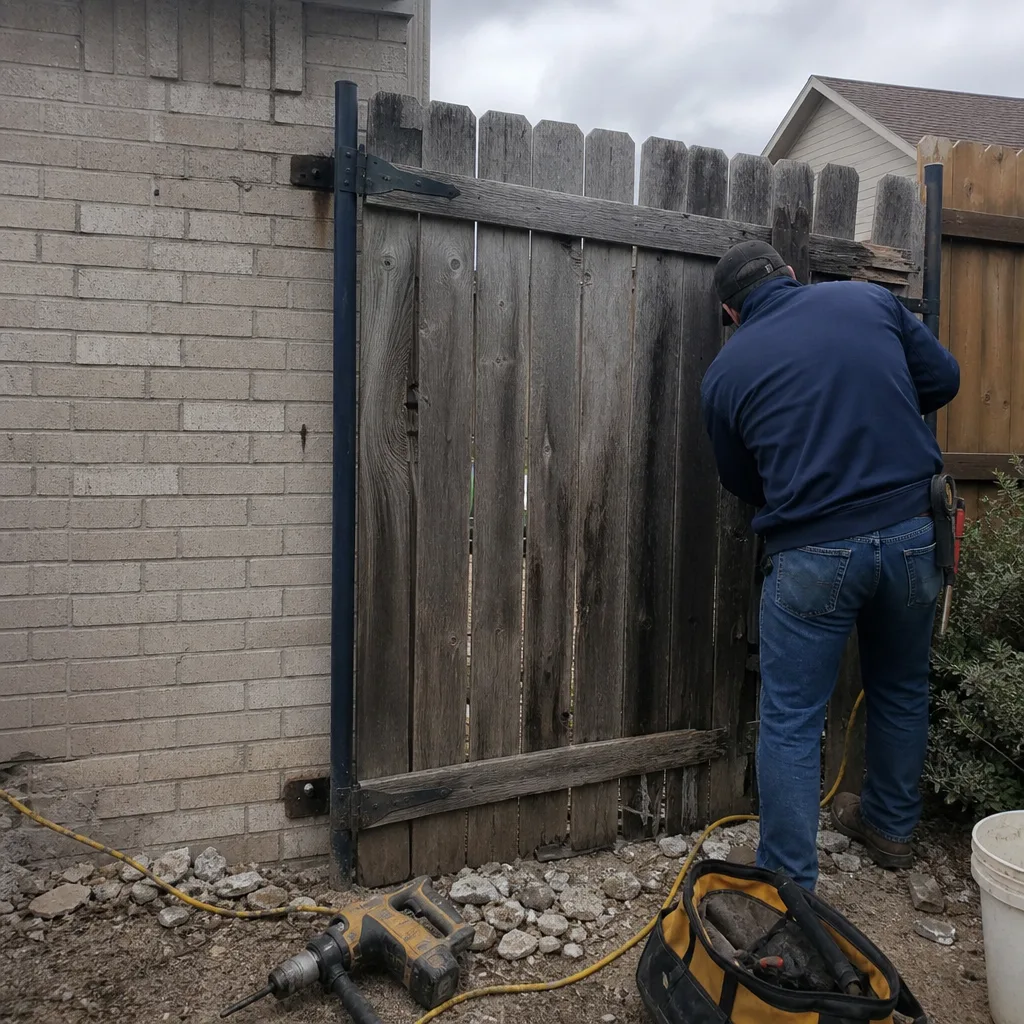 Before
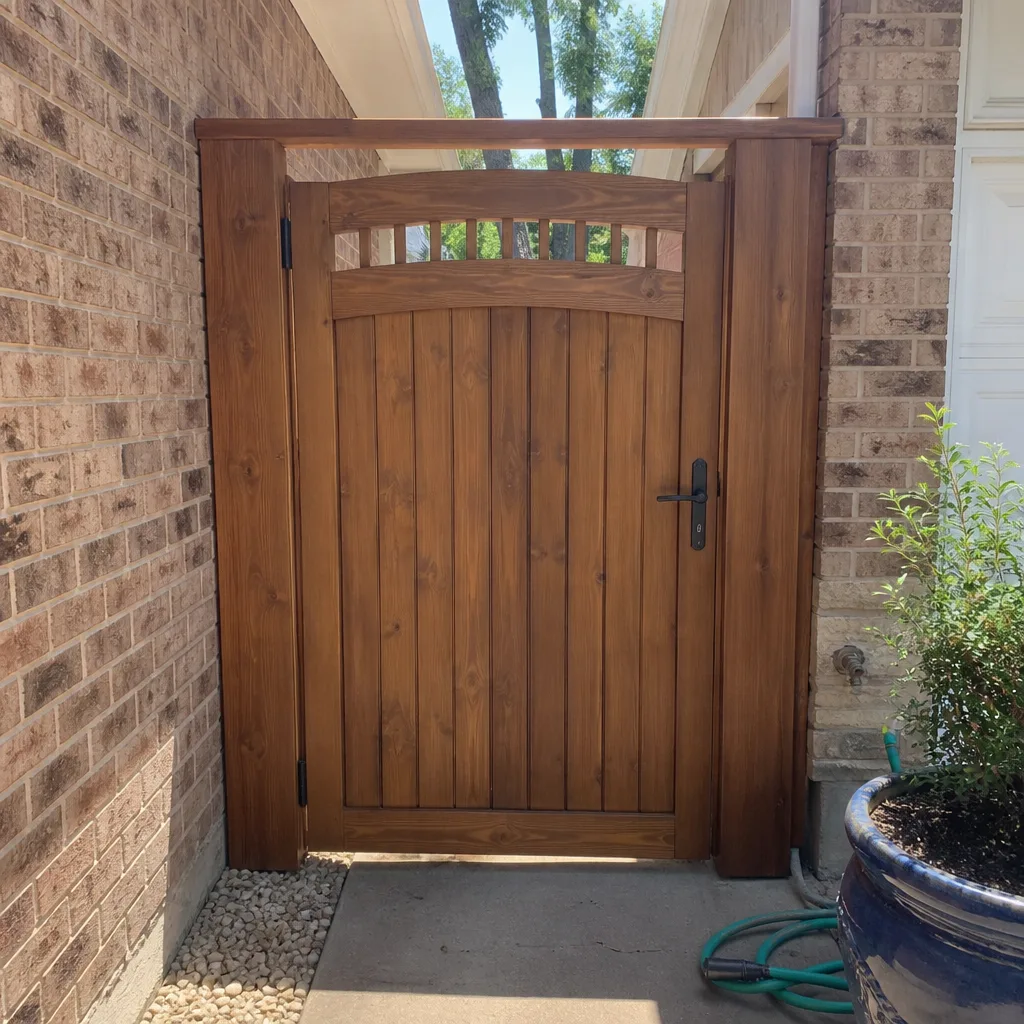 After
AfterSeasonal Gate Repair Care for Keller: Year-Round Homeowner’s Guide
Most Keller homeowners assume their automatic gate fails because the motor gives out. In over four decades of working on driveway gates across this city, we have found the opposite to be true: the motor is usually the last thing to go. What actually kills a gate in Keller, month after month, is neglect of the simple mechanical parts, the hinges, the wheels, the track, the battery, overlooked until a $40 part seizes and burns out a $900 opener. This guide walks you through what your gate needs each season, what you can safely do yourself, what signals a real problem, and when to bring in someone who works on gates every day.
Quick Answer
Seasonal gate care in Keller means doing four small maintenance checks per year, one at each change of season, focused on hinges, track, motor, and safety sensors. Done consistently, this routine adds ten to fifteen years to the life of an automatic gate and prevents the majority of repair calls we see, which usually trace back to a simple issue that was ignored for six months too long. The most important seasonal tasks are lubricating moving parts, clearing the track, checking the battery, and testing the safety reverse.
Table of Contents
- What Keller’s Climate Does to Your Gate
- Spring Gate Maintenance After Texas Storms
- Summer Heat and Gate Electronics: What Actually Fails
- Fall Preparation: Getting Your Gate Ready for Winter
- Winter Gate Care in Keller: Freezing Temps and Cold Starts
- A Simple Lubrication Schedule That Works
- Battery Care for Gate Openers: The Most Overlooked Component
- Common Mistakes to Avoid
- When to Call a Professional
- Frequently Asked Questions
- The Bottom Line
What Keller’s Climate Does to Your Gate
Keller sits in a part of Texas that punishes outdoor equipment quietly. The summers are long and hot, with sustained stretches above 100 degrees. The winters are mild compared to the Panhandle, but the temperature swings are what do the damage. A Keller winter can see a 40-degree drop between afternoon and night, and the gate hardware expands and contracts with every swing. That repeated movement loosens bolts, stretches chains, and works open tiny gaps in welds.
The soil here is another factor homeowners rarely connect to gate problems. Expansive clay soils throughout Keller, particularly in areas like Hidden Lakes, Marshall Ridge, and the older lots near Bear Creek, swell when wet and shrink when dry. Over a few seasons, that movement can shift gate posts enough to throw a gate out of alignment. The gate will still open and close, but with more drag each month until the motor starts to strain. We have repaired hundreds of gates in Keller where the root cause was not the opener or the hinges, but a post that had drifted less than half an inch in the clay.
Then there is the wind. Keller sits in North Texas storm country, and spring brings the kind of gust fronts that turn a full-height iron gate into a sail. A gate that is slightly loose on its hinges in March will be banging and flexing by April. The damage compounds. A homeowner who spends fifteen minutes tightening four hinge bolts in early spring avoids a snapped weld in June.
So the climate is not extreme in any single way. It is persistently hard on gates in three ways: thermal expansion, clay soil movement, and spring storm wind. All three are predictable, and all three are manageable with the seasonal routine described below.
Spring Gate Maintenance After Texas Storms
Spring is the most important maintenance season for a Keller gate, because it is the season when small problems reveal themselves loudly. After the first few thunderstorms roll through, you will know whether your gate weathered winter properly.
Start with a visual inspection after the first heavy rain. Walk to both sides of the gate and look at the post bases. In Keller’s clay soil, standing water around a post is a warning sign. If you see a gap forming between the post and the surrounding concrete or soil, water is getting down alongside the post and destabilizing the footing. That is not a do-it-yourself fix, but catching it early means a $200 repair instead of a $1,500 post reset later.
Next, check the gate’s swing path. A gate that scrapes the driveway after a storm has either settled in the wet soil or shifted on its hinges. Run the gate open and closed a few times and listen. A grinding noise at one specific point in the travel usually means a wheel bearing or hinge pin is binding. A uniform hum is normal. A growl is not.
Here is a spring checklist that takes under twenty minutes:
- Inspect both gate posts for new cracks or gaps at the base. If you see daylight between the post and the footing, call a professional before the next heavy rain.
- Tighten all hinge bolts and check the hinge pins. A pin that has walked up out of the hinge barrel needs to be driven back down and secured. Loose hinge bolts let the gate sag, and a sagging gate tears up motors.
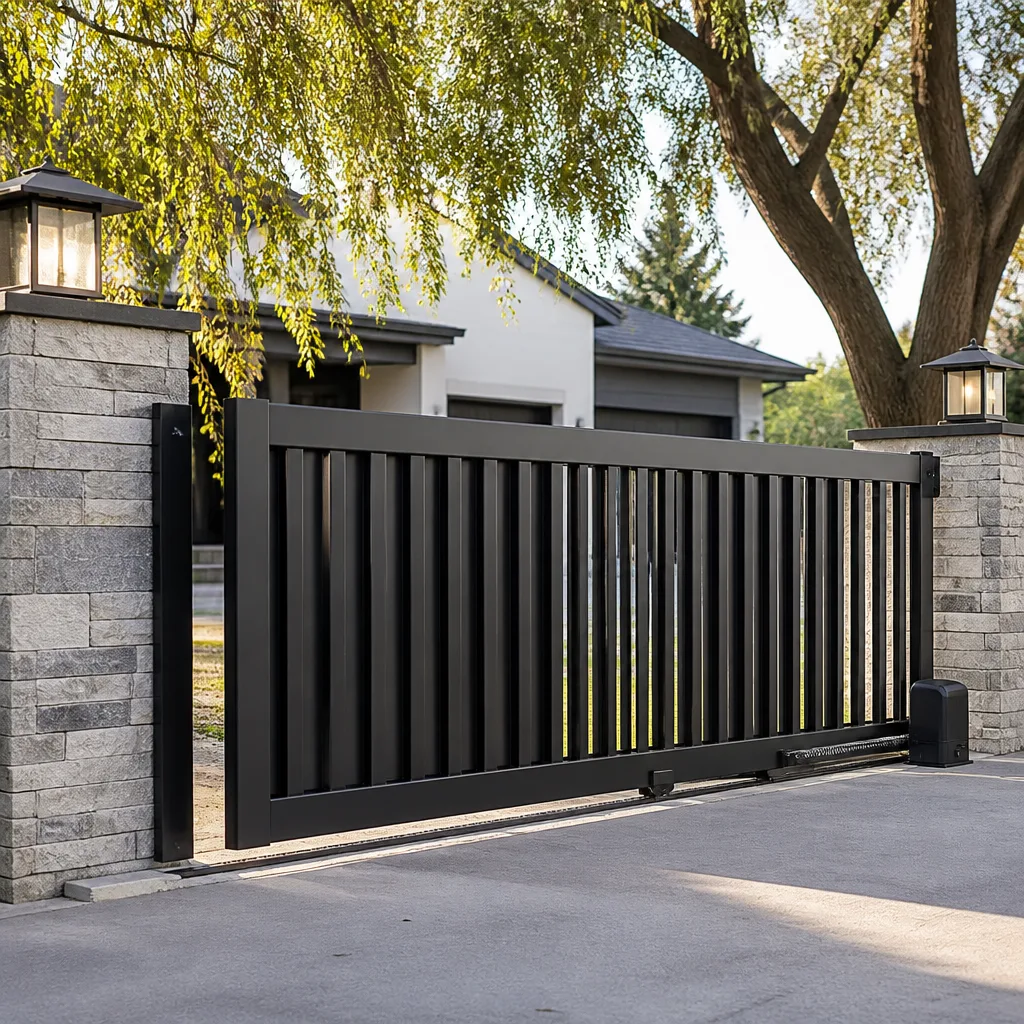
- Clear the track of storm debris. Twigs, leaves, and gravel get blown into slide gate tracks during spring storms. Each piece of debris adds friction the motor has to overcome.
- Test the safety reverse. Place a cardboard box in the gate’s path and close the gate. It should reverse within two seconds of contact. If it does not, stop using the gate and schedule a service call, because a safety sensor failure is a liability, not just an inconvenience.
- Wipe down and inspect the photo-eye sensors. Pollen and dust coat the lenses in spring. A soft cloth restores the beam.
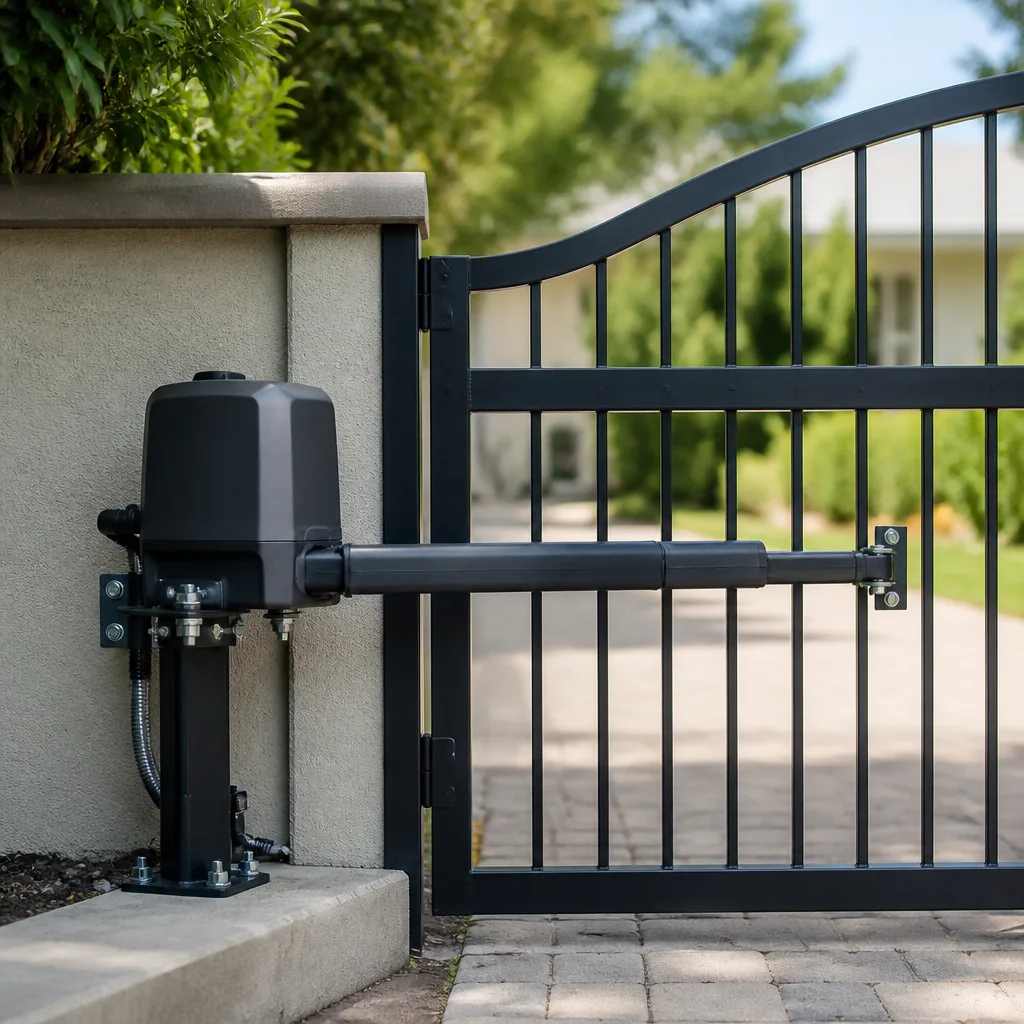
One more Keller-specific note: spring is when we see the most gate arms bent by wind. If your gate has an opener arm attached to a swinging gate, inspect the arm after every storm. A bent arm will stress the motor mount and eventually crack it. If the arm is visibly bowed, have it replaced before it fails completely.
Summer Heat and Gate Electronics: What Actually Fails
Keller summers hit gate electronics hard. The control board inside the opener box sits in an enclosed metal housing, often in direct sun. On a 105-degree day, the internal temperature can reach 140 degrees or more. Electronic components degrade faster in sustained heat, and the most common summer failures we see are control board capacitors and battery chargers on solar-powered gate openers.
But the failure homeowners notice first is usually not electronic. It is mechanical. In extreme heat, the metal in the gate itself expands. A gate that was perfectly hung in mild weather can drag slightly at 3 p.m. in July. That added friction means the motor works harder, runs hotter, and trips its thermal overload more easily. If your gate stops working in midafternoon and works again by evening, that is a textbook symptom: the motor is overheating because the gate is dragging in the heat.
There are two simple summer tasks that protect your gate. First, re-check the gate’s swing or slide in the hottest part of the day, not in the morning cool. If it binds at 3 p.m., the expansion is the cause, and a gate adjustment is the fix. Second, keep the opener housing shaded if possible. A piece of shade cloth mounted above a gate opener box can lower the internal temperature by twenty degrees. It is a small thing that adds years to the control board.
For solar-powered gates, which are common on the larger acreage properties on the outskirts of Keller and toward Haslet, summer brings a different issue. The heat reduces battery capacity while the extended daylight keeps the panel producing. The battery runs in a constant state of partial charge, which shortens its life. If your solar gate opener acts sluggish after two or three consecutive overcast days, even in summer, the battery is nearing the end of its life. A quality sealed AGM or lithium replacement will last far longer in Keller heat than a standard lead-acid battery.
The summer routine, then, is short: test the gate at peak heat, lubricate the moving parts (more on that below), and make sure the opener enclosure has ventilation. Airflow matters more than most people think. A one-inch vent hole top and bottom on the opener box prevents the heat sink effect that cooks control boards.
Fall Preparation: Getting Your Gate Ready for Winter
Fall in Keller is the best season for gate work, and the smartest homeowners do their heavier maintenance in October and November, before the first hard freeze and before the holiday season when schedules tighten.
Start with the track on slide gates. Fall leaves and grass clippings accumulate quickly here, and Keller’s mature oak trees along streets like Bancroft Road and Johnson Road drop a surprising amount of debris. A track packed with wet leaves will hold moisture against the gate wheels all winter, accelerating rust. Scoop out the track with a narrow trowel, then flush it with a garden hose. Let it dry completely before winter sets in.
Next, check the chain or belt tension on slide gate openers. A chain that has stretched over summer will slap and jump on the sprockets. It should have no more than an inch of deflection when pressed firmly at the midpoint. A belt should feel snug without being guitar-string tight. Both are simple adjustments, but if you are not comfortable doing it, a seasonal tune-up covers it.
Fall is also the time to inspect weatherstripping and seals on the opener housing. Keller’s winter weather, while mild by northern standards, brings enough cold rain and occasional ice that a control board exposed to water will fail fast. Check the gasket around the opener’s access panel. Replace it if it is cracked or compressed. A five-dollar gasket prevents a four-hundred-dollar control board replacement.
Here is the fall checklist in order:
- Clean and flush the track on slide gates. Remove all leaves, twigs, and dirt. Let dry.
- Check chain or belt tension. Adjust to manufacturer spec or have it adjusted.
- Lubricate all moving parts with a proper gate lubricant (details in the lubrication section below).
- Inspect the opener housing seal. Replace cracked or missing gaskets before the winter rains.
- Test the keypad and all remotes. Cold weather makes marginal batteries fail. Swap out remote batteries now.
- Run the gate through five full open-close cycles. Watch for hesitation, unusual noise, or a slowing in the middle of travel. Any of those three warrants a service call before winter.
One more note for Keller specifically: fall is when we see an uptick in keypad failures. The rubber keypad membranes on exterior keypads crack in the summer heat, then the fall rains get into the electronics. If your keypad starts requiring multiple presses or only works part of the time in October or November, that is a failing membrane. Replace the keypad now rather than getting locked out in the cold.
Winter Gate Care in Keller: Freezing Temps and Cold Starts
Keller winters are short, but they include enough hard freezes to damage gates. The memorable February 2021 freeze, when temperatures in Keller dropped into the single digits for days, left thousands of gates across North Texas inoperable. Most of the damage came from ice, not cold alone. Ice binds wheels to track, freezes hinge pins, and locks gates tight. When the opener then tries to move a frozen gate, something has to give, usually the motor mount, the chain, or the control board when the stalled motor draws excessive current.
There is one winter rule that prevents more damage than anything else: if the gate does not move freely when the opener tries to operate it, turn the opener off and wait for the thaw. Never force it. A stalled motor draws three to five times its normal current, and that spike burns out control boards and overheats windings in seconds.
Before the season begins, apply a light coat of spray lubricant to the hinge pins and wheel bearings. It displaces water and reduces ice adhesion. Do not use anything heavy or greasy; in cold weather, grease thickens and actually makes the opener work harder. A light machine oil or a purpose-built gate lubricant is the right product.
For battery-backup openers, which many Keller homeowners installed after the 2021 outages, cold weather cuts battery capacity. A battery that holds eight hours of standby in summer may hold four in a hard freeze. If your gate has battery backup, test it in January, not in March. Run the gate off battery power alone for five full cycles. If it cannot complete the fifth cycle at full speed, the battery is marginal and should be replaced before the next ice event.
Finally, keep the track clear of ice after a winter storm. A quick pass with a plastic ice scraper along the track edges, not the wheels themselves, releases the gate and lets the opener do its job. Do not pour hot water on a frozen gate; the thermal shock can crack powder coating and, in extreme cases, warp the metal. Let the sun do its work, which it generally does within a day or two in Keller.
A Simple Lubrication Schedule That Works
Lubrication is the single highest-value maintenance task a Keller homeowner can perform on their own gate. Most gate failure we see traces to dry metal parts dragging against each other. The fix is cheap, takes ten minutes, and needs doing four times a year.
Use the right product. WD-40 is not a gate lubricant; it is a solvent and moisture displacer. A proper gate lubricant is a light, penetrating oil or a lithium-based spray designed for outdoor metal. For hinge pins and wheel bearings, a light machine oil works. For chains and slide tracks, use a dry or silicone spray that will not hold dirt.
Here is the four-season schedule we recommend for Keller homeowners:
- March: Lubricate all hinge pins and wheel bearings after winter. This replaces any lubricant washed away by winter rain and loosens any surface rust that formed.
- June: Light lubrication of chain or belt tensioner points. In summer heat, lubricant thins and evaporates faster. A light mid-summer application keeps things moving.
- October: Full lubrication of all moving parts ahead of winter. This is the most important application of the year, trapping lubricant in the tight spots before cold weather arrives.
- January: A light spray on hinge pins only, to displace water and reduce ice adhesion during any freeze events.
One caution: do not over-lubricate. A heavy coat of grease on a slide gate track collects Keller’s fine, gritty dust, and that creates an abrasive paste that wears the wheels faster. Apply lubricant lightly, wipe away the excess, and the parts will stay cleaner and last longer.
If you are not sure which lubricant to use for your specific gate, ask a gate professional. The wrong product causes as much damage as no product at all. Our Ironworks Gate Co. home team fields these questions routinely, and we would rather tell you the right answer on the phone than have you guess.
Battery Care for Gate Openers: The Most Overlooked Component
Every automatic gate opener has a battery, either a primary power source for solar gates or a backup for AC-powered gates. Most Keller homeowners do not think about that battery until the day the gate will not open and they are standing outside in the rain. Batteries are the most overlooked wear component on a gate, and they have a predictable lifespan in our climate: three to five years for a quality battery, less for cheap ones.
Heat is the primary killer. Keller’s summers push battery chemistry hard, especially in solar installations where the battery sits inside a metal enclosure in direct sun. A battery that operates regularly at 130 degrees internal temperature loses roughly half its service life compared to one that runs at 90 degrees. That is why shade and ventilation on the opener box matter as much as the battery brand.
There are three signs that your gate’s battery is failing:
- The gate slows noticeably. A gate opener running on a weak battery moves like it is tired. The travel is slower, and the gate may hesitate halfway through the cycle. This is the earliest and most common warning sign.
- Backup power lasts less time than it used to. If your gate used to operate for a full day on backup and now quits after two hours, the battery is done.
- The opener beeps or shows a low-battery indicator. Many newer LiftMaster and FAAC models have this feature, but some older BFT and Linear units do not, so a slow gate on an older opener is your signal.
Replacement is straightforward for a professional. The old battery is disconnected, the new one installed, and the opener’s charging parameters verified. A homeowner can do it, but there are two cautions: first, a battery wired backward destroys the control board instantly, and second, the replacement battery must match the opener’s voltage and amp-hour rating exactly. For most homeowners, paying a professional to replace the battery is cheaper than replacing a control board after a mistake.
Common Mistakes to Avoid
In our years working on gates in Keller, we have seen the same homeowner mistakes repeated hundreds of times. Here are the most expensive ones, with what to do instead:
- Forcing a frozen or stuck gate. When a Keller freeze locks a gate in place, running the opener against it is the fastest way to burn out a motor or control board. Turn the opener off and wait for the thaw.
- Using WD-40 or heavy grease as a lubricant. WD-40 washes away real lubricant, and heavy grease collects North Texas grit. Use a light oil or purpose-built gate lubricant.
- Ignoring a slow gate. A gate that gradually slows over weeks is telling you something: a failing battery, a dragging wheel, or a motor on its way out. Waiting until it stops completely turns a $100 fix into a $700 one.
- Disconnecting the safety sensors because they are annoying. The photo-eye sensors exist to protect children and pets. Bypassing them is a serious liability. If your sensors are misfiring, the issue is alignment or wiring, not the sensors themselves.
- Attempting to straighten a bent gate arm. A bent opener arm weakened the metal. Straightening it cold re-weakens it further and it will fail soon. Replace the arm.
- Adjusting a slide gate track with a hammer. Track alignment requires precision. Hammering a track “back into place” almost always makes the binding worse and damages the rail.
- Waiting until the gate stops working to call. Most of the expensive repairs we do in Keller are on gates that showed warning signs for months. The homeowners simply did not know what to watch for, which is exactly why we wrote this guide.
When to Call a Professional
Some gate work is safe for a homeowner. Lubricating hinges, clearing a track, testing a keypad, replacing a remote battery: all reasonable DIY tasks. But certain issues require a trained professional, and the line is usually clear: anything involving the gate’s weight, the motor, or the electrical system is professional territory. A swinging gate weighs hundreds of pounds. A slide gate can weigh over a thousand. When a gate comes loose or a spring breaks, the stored energy is enough to cause serious injury or death. Do not attempt to remove, re-hang, or repair a gate under tension on your own.
In Keller, Ironworks Gate Co. offers free estimates on all gate repair and replacement. Call (254) 330-8718 and a live person answers, any time, day or night. A technician will inspect your gate, tell you what is wrong, and quote the price before any work begins. If the gate is unsafe to operate, we will tell you that plainly and advise you on the safest path forward.
Frequently Asked Questions
Most gate repairs in Keller fall between $150 and $800, depending on the issue. A hinge replacement or track cleaning runs $150 to $250, a new control board or battery runs $200 to $500, and a full opener replacement on a large double gate can reach $1,500 or more. Every Ironworks Gate Co. quote is written and agreed to before work starts. Call (254) 330-8718 and a live person answers, any time, day or night.
We recommend a professional inspection and tune-up once a year, in fall, with simple homeowner checks each season in between. The Texas clay soil, summer heat, and spring storms in Keller make gates here more likely to shift and bind than gates in more stable climates. A $89 Seasonal Tune-Up catches the growing problems before they become repair bills.
In most cases, yes. Ironworks Gate Co. completes the majority of gate repairs in a single visit, and a live person answers the phone 24 hours a day, 7 days a week, so you will never leave a voicemail and wait. Call (254) 330-8718 and we will tell you when a technician can be at your Keller home.
We service and repair all major gate opener brands, including LiftMaster, FAAC, BFT, and Linear, among others. Whatever opener is on your driveway, our technicians arrive with the right parts and training to fix it correctly on the first visit. A wrong diagnosis on a Viking or Ghost Controls opener costs you time and money, and our 90-Day Done Right Promise means the fix is guaranteed in writing.
That is almost always heat expansion, and it is one of the most common summer complaints we hear in Keller. The gate metal expands in the hottest part of the day, and a gate that was fine at 70 degrees binds slightly at 105. The fix is a gate adjustment, not a new motor. If you are dealing with this, have a professional adjust the gate before the motor takes the strain.
Not usually. A slow gate more often points to a failing battery, a dragging wheel, low fluid in the opener’s transmission, or a gate out of alignment. A professional diagnosis sorts out which one it is. Replacing a motor on a guess is an expensive way to be wrong. In Keller, we see far more battery and alignment issues than true motor failures.
The Bottom Line
Your gate will last decades in Keller if you give it four small checkups a year and act on what they tell you. Lubricate the moving parts. Keep the track clear. Watch for a slowing gate. Test the safety reverse. None of this is complicated, and none of it takes long. The alternative, waiting until the gate quits on a cold morning or a stormy night, is how a $40 fix becomes an $800 repair. And when a job does go beyond what you are comfortable handling yourself, a gate specialist who carries the right parts and stands behind the work is the difference between fixing it once and fixing it again. In Keller, that is what we do.
Written by Victor Salinas, Owner at Ironworks Gate Co., serving Keller since 2013.