
Last updated August 25, 2026
Free on-site gate assessment - hinges, posts, and your LiftMaster or Nice gate operator checked before anything is quoted
The assessment is free and the quote is the invoice.
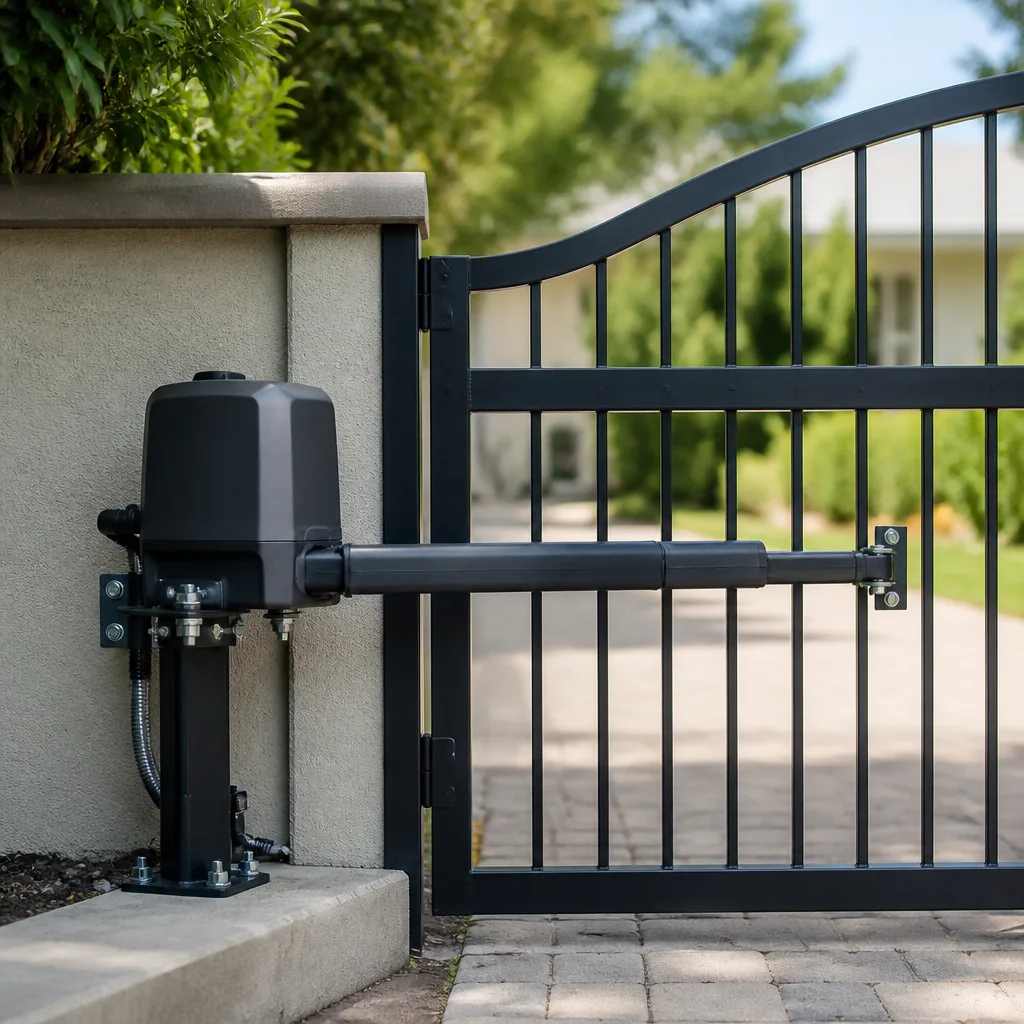
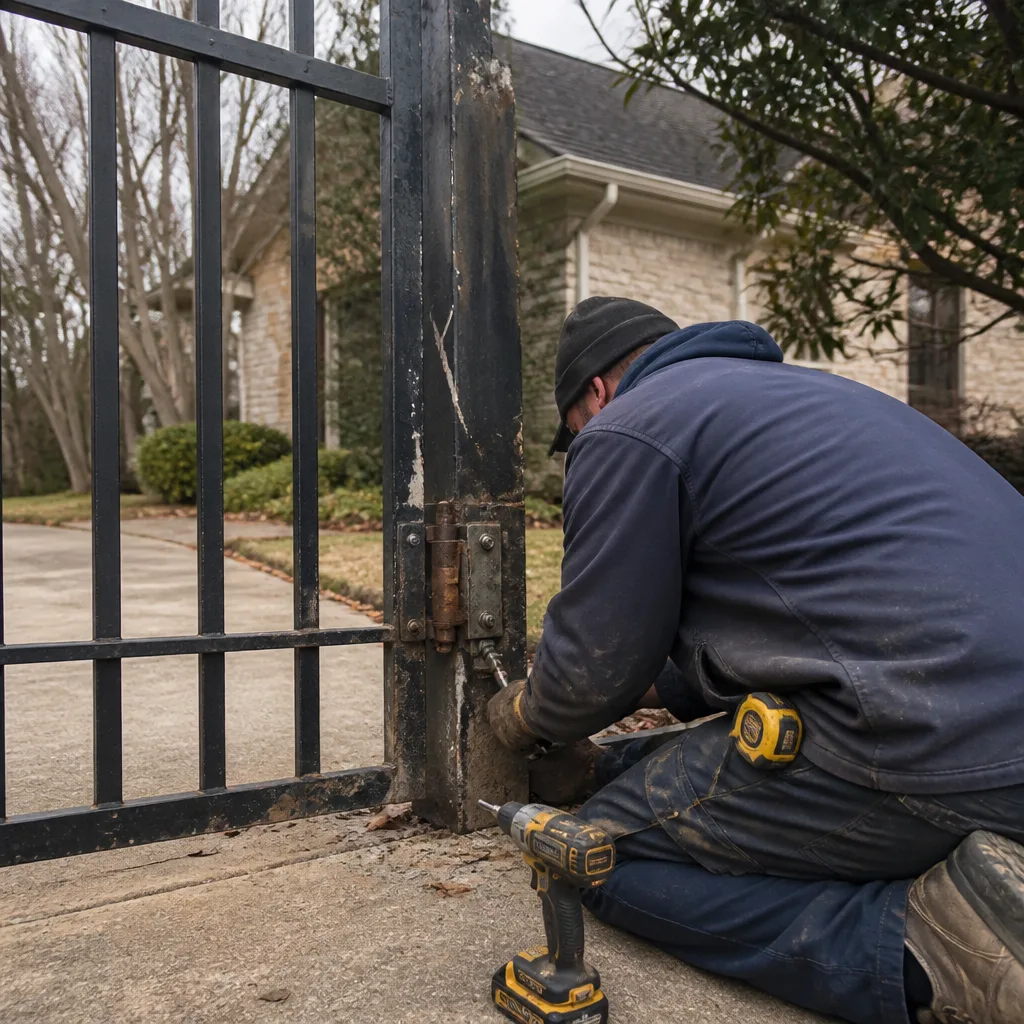 Before
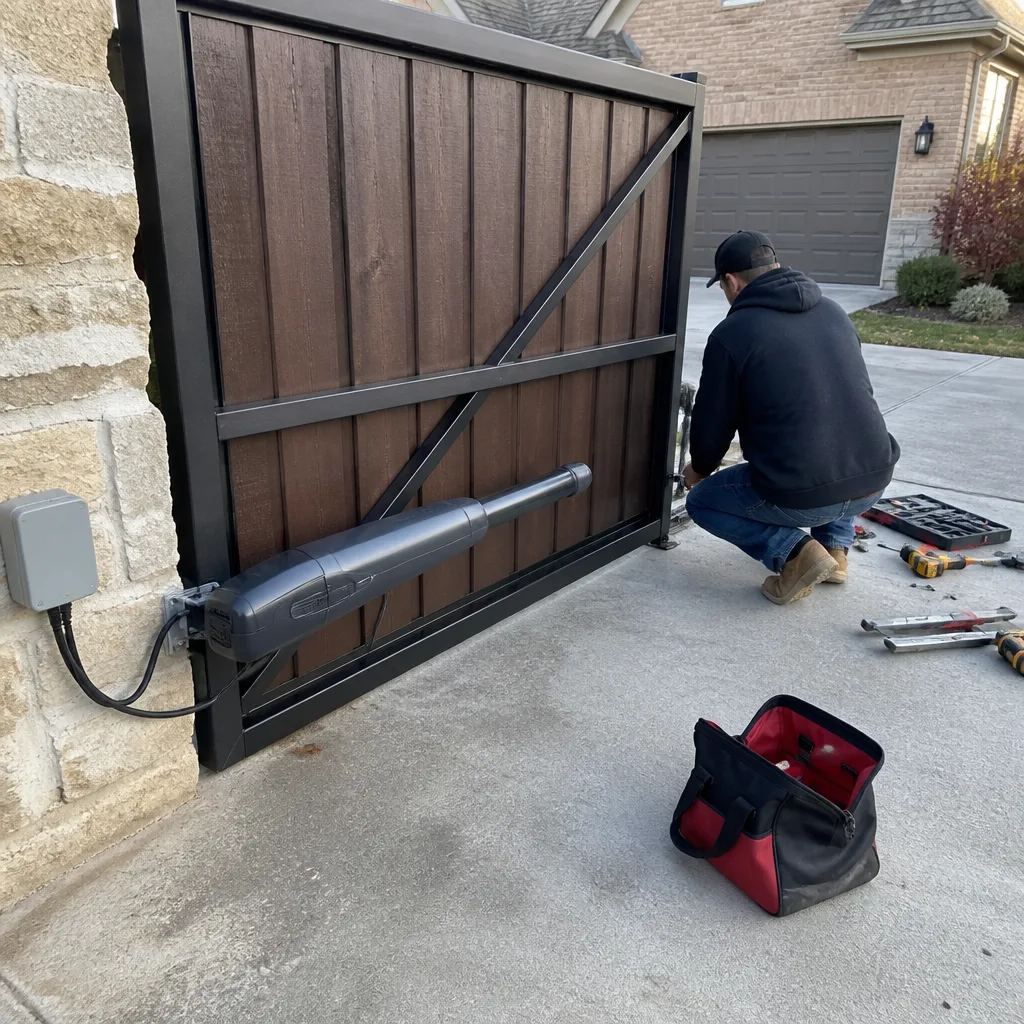 After
After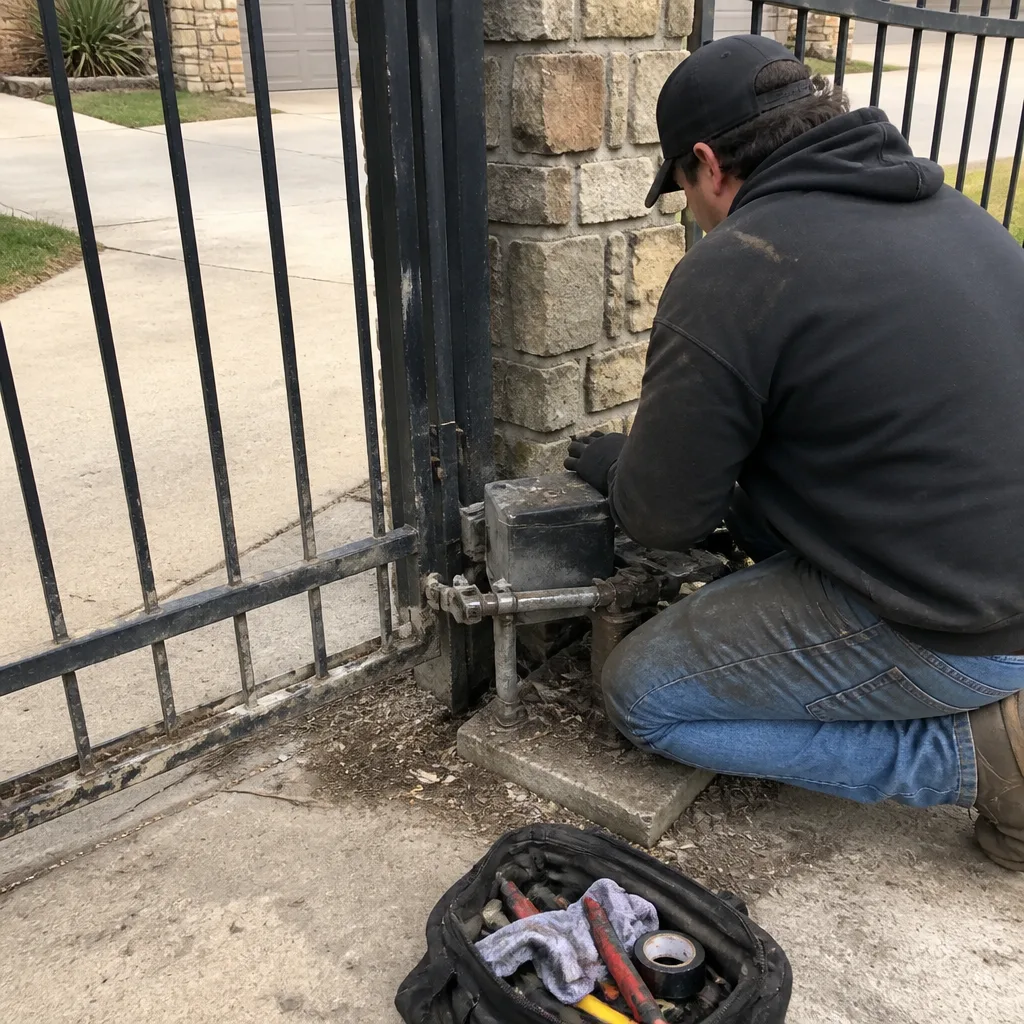 Before
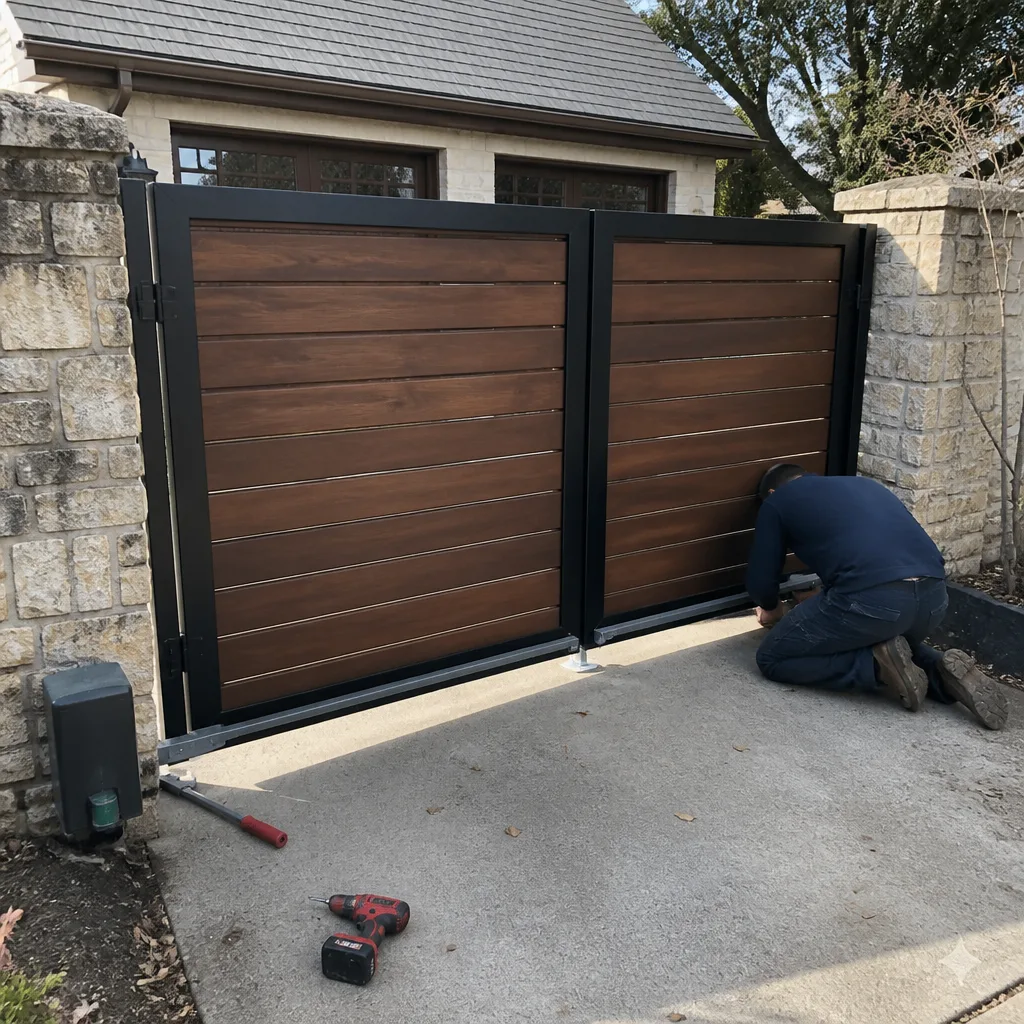 After
After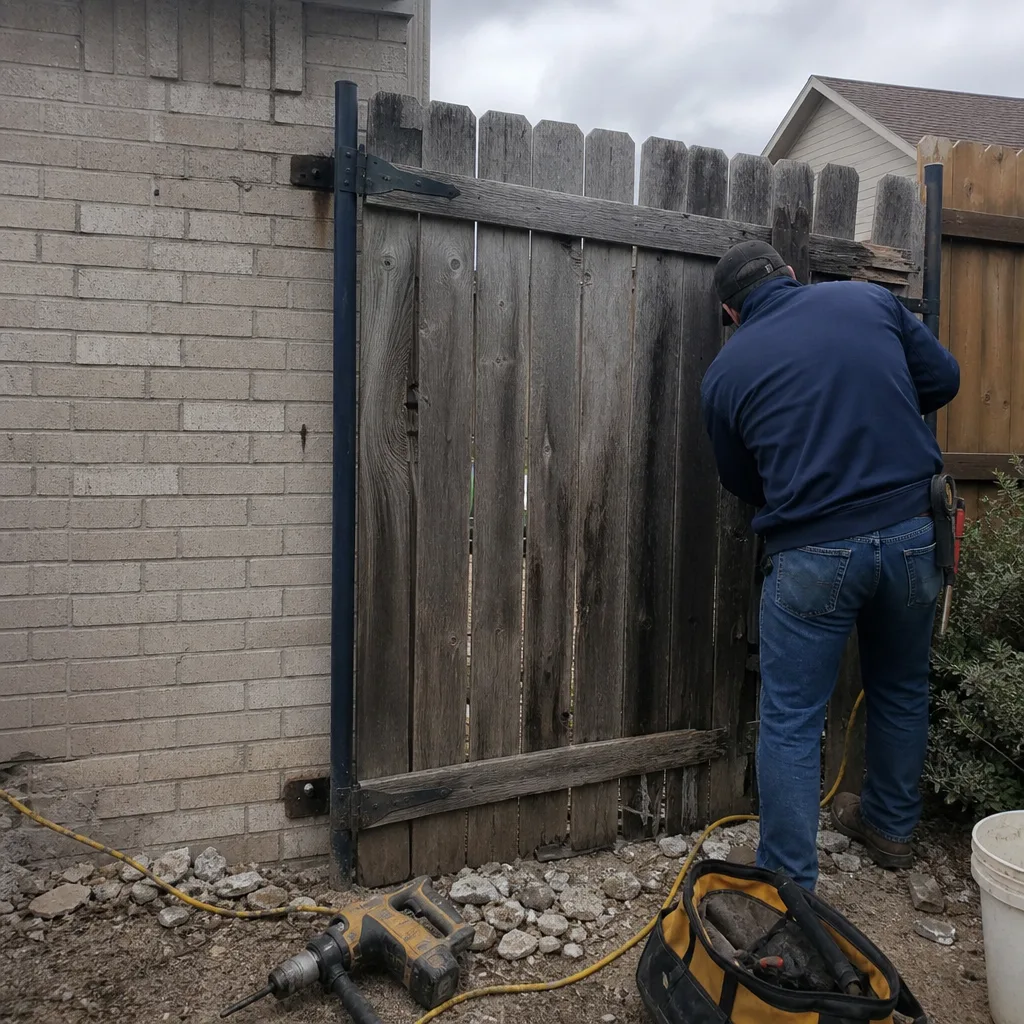 Before
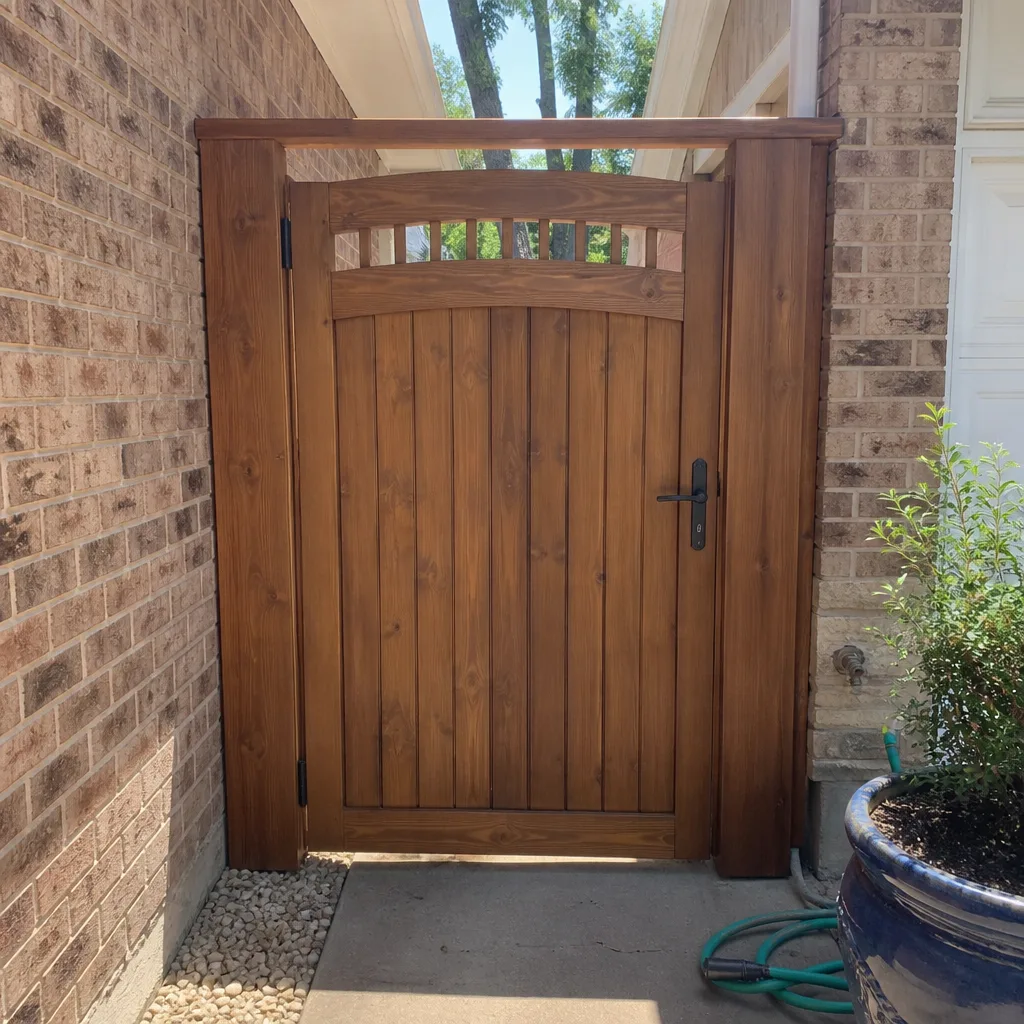 After
AfterGate Repair Cost Breakdown: The Keller Homeowner’s Reference for 2026
Here’s a number most Keller homeowners don’t expect: a gate that won’t close properly can add $400 to $900 to a repair bill if the problem is ignored long enough for a motor to burn out. The cheaper failure, a sagging hinge, runs $150 to $300 when caught early. Most gates don’t fail suddenly. They fail slowly, and the cost difference between noticing early and noticing late is the difference between a service call and a replacement. This guide lays out what gate repair actually costs in Keller in 2026, what drives those numbers, which problems are common in this climate, and when a repair makes more sense than a replacement. By the end, you’ll know what to expect before you pick up the phone.
Quick Answer
Gate repair in Keller, Texas typically costs between $180 and $750 for most common problems, with hinge repairs running $150 to $300, opener motor replacements at $400 to $900, and full gate replacement starting around $1,800. Repairs are usually completed in a single visit. The final price depends on the gate’s weight, the opener brand, and whether the problem involves the mechanical hardware or the automation electronics.
Table of Contents
- What Gate Repair Costs in Keller in 2026
- The Five Factors That Drive Gate Repair Prices
- Hinge and Hardware Repairs: The Most Common Call
- Gate Opener and Motor Repair Costs
- How Keller’s Climate Affects Gate Wear and Repair Costs
- Repair vs. Replacement: How to Decide
- What a Proper Gate Repair Includes
- Common Mistakes to Avoid
- When to Call a Professional
- Frequently Asked Questions
- The Bottom Line
What Gate Repair Costs in Keller in 2026
In our experience across Keller, most gate repairs fall into three tiers. The first tier is mechanical hardware: hinges, brackets, wheels, and latch adjustments, which typically run $150 to $300 including the service call. The second tier is opener and automation work: circuit boards, receivers, limit switches, and motor capacitors, which land between $250 and $650 depending on the brand. The third tier is motor replacement or significant steel repair, which starts at $400 and can reach $900 or more on heavy estate gates. Here’s a structured breakdown:
- Hinge replacement or weld repair: $150 to $300 per hinge, including service call
- Gate wheel or roller replacement: $120 to $220
- Latch or lock adjustment: $90 to $180
- Circuit board replacement: $250 to $500, brand-dependent
- Remote or keypad programming: $85 to $150
- Opener motor replacement: $400 to $900, depending on gate weight and brand
- Steel frame repair or re-welding: $300 to $800, depending on extent
- Full gate replacement: $1,800 to $5,000+, depending on material, size, and automation
These ranges reflect what we see on Keller driveways: subdivision gates in neighborhoods like Hidden Lakes and Marshall Ridge tend lighter and hit the lower end, while custom wrought iron estate gates in areas like Melody Hills or along Randol Mill Road run heavier and cost more to repair properly. The price is quoted and agreed before any work starts. That’s how we’ve operated since 1984, and it’s the only way Victor Salinas will run a job.
The Five Factors That Drive Gate Repair Prices
No two gate repairs cost the same, but the variables are predictable. Here’s what actually moves the number.
- Gate weight. A 14-foot wrought iron driveway gate can weigh 400 to 800 pounds. Heavier gates strain hinges, wheels, and opener motors harder. A hinge on a 300-pound pedestrian gate is a quick job. A hinge on a 700-pound estate gate needs reinforcement, and the price reflects that.
- Opener brand. A LiftMaster or FAAC board is a straightforward swap if the tech carries it. A BFT or Linear board may need to be ordered. Parts availability changes the timeline and sometimes the labor. That’s why we stock common boards and receivers for the brands we service most in Keller.
- Access and clearances. A gate that’s drifted into the driveway or sits on uneven ground takes longer to work on. Slope affects how a gate hangs, and correcting the geometry of a sagging gate is more involved than swapping a part.
- Age of the installation. Gates installed 20 or 30 years ago often have welded hinges that were never meant to be serviced. If the original installer welded everything solid, the repair involves cutting and re-welding, which is skilled work and priced accordingly.
- What failed first. This is the one that surprises people. A gate that sags puts load on the opener motor. The motor works harder, overheats, and fails. If the hinge sag isn’t fixed, the new motor fails again in a year. We always fix the root cause, not just the symptom, because fixing only the motor means seeing that same Keller homeowner again next spring.
Hinge and Hardware Repairs: The Most Common Call
Hinge failures account for more than half of the gate repair calls we run in Keller. The reason is simple: most gates are steel, and steel hinges wear against steel pins thousands of times a year. Add the clay-heavy Keller soil, which shifts with moisture and temperature, and a gate that was hung perfectly in 2010 is now pulling against its own hardware. In neighborhoods like Villages of Woodland Springs, we regularly see hinge wear from soil movement that has shifted the gate post by half an inch or more.
Here’s what a hinge repair typically involves:
- Assessment. We measure the gate’s lean, check the post for movement, and inspect the hinge welds and pin wear.
- Lifting and supporting. The gate is braced so it can’t drop during the repair. This is a safety step we never skip.
- Removing worn hardware. Old hinges are cut or unbolted depending on how they were installed.
- Installing new hinges. New hinges are welded or bolted into position, set to correct the gate’s original swing.
- Adjusting the opener. Once the gate hangs right, the opener’s limit switches are reset so the motor isn’t fighting a gate that now moves differently.
Hinge work on a standard double-swing driveway gate in Keller runs $150 to $300 per hinge, and most gates need two to four hinges replaced. If the post itself has moved, that’s a separate fix involving concrete work, and we’ll tell you before touching anything.
Gate Opener and Motor Repair Costs
Gate opener problems split into two categories: electronics and motors. Electronics, meaning circuit boards, receivers, and limit switches, usually cost $250 to $500 to repair. Motor replacement runs higher, $400 to $900, because the motor is the most expensive component in the system, and the labor includes removing the old unit, mounting the new one, and reprogramming limits and remotes.
Here’s what we see across the brands common in Keller:
- LiftMaster and FAAC: Parts are readily available. Board replacement at $250 to $450. Most repair visits are single trips.
- BFT and Linear: Solid units, but boards are less commonly stocked, so a repair can take a few days if a part needs to be ordered. Boards run $300 to $500.
- Viking: Heavier-duty openers often found on estate gates. Motor replacement on a Viking unit usually sits at the top of the range, $650 to $900.
We’re trained and equipped on nine major gate-automation brands: LiftMaster, FAAC, BFT, Linear, Viking, Ghost Controls, DoorKing, Elite, and Mighty Mule. That means when a Keller homeowner tells us what’s on the driveway, the correct part usually goes on the truck before we leave the shop. When the board is on hand, most opener repairs finish in one visit.
One thing worth saying plainly: don’t replace a motor without checking the gate itself. A gate that’s out of square destroys opener motors. If you put a new motor on a gate that doesn’t hang right, you’ll be calling someone again in twelve months. We fix the gate first, then the motor. That order matters.
How Keller’s Climate Affects Gate Wear and Repair Costs
Keller sits on expansive clay soil, and that soil moves. It swells when wet and shrinks when dry, and over a North Texas year it can move a gate post enough to change how a gate closes. We see the pattern every summer: dry July and August bring soil shrinkage, posts tilt slightly, and gates that worked fine in spring start dragging or failing to latch.
The other factor is heat. Keller regularly tops 100 degrees in July and August, and gate opener electronics live inside metal boxes bolted to that heat. Capacitors and circuit boards age faster here than in cooler climates. A control board that might last twelve years in Ohio can fail in eight in Keller. When a board fails from heat stress, the fix is replacement, which is why we stock common boards for the brands we service most.
Rust is less of an issue in Keller than on the Gulf Coast, but it still shows up at weld points and on gate wheels, especially on low spots where water pools after spring storms. A homeowner who notices surface rust early on a hinge can often get years more from the hardware. Let it go, and the rust breaks down the steel until the hinge fails structurally. The $150 hinge becomes a $400 weld repair.
The practical takeaway: in Keller, check your gate twice a year, once after the spring rains and once in late summer after the dry stretch. Catch a sagging hinge or a dragging wheel early, and the repair is cheaper. Ignore it, and the motor pays the price.
Repair vs. Replacement: How to Decide
Most gates in Keller are repairable. The question is whether repair is the right financial decision. Here’s the rule we use: if the repair cost is less than half the cost of a comparable replacement, repair makes sense. If the gate has multiple failing components, structural rust, or a frame that’s been hit by a vehicle, replacement may cost less over the next ten years.
Here’s a practical checklist:
- Repair if: The gate has one or two worn hinges, a failed opener board, a sagging wheel, or a latch that no longer catches. These are mechanical fixes, and the gate’s structure is sound.
- Repair if: The gate is a custom wrought iron piece with sentimental or architectural value. Replacement won’t match it.
- Replace if: The steel frame has rusted through in multiple places, the gate has been hit and torqued, or the cost of repairing hinges, wheels, and the opener exceeds 50 to 60 percent of a new gate.
- Replace if: You’re planning to stay in the home less than a few years and want the warranty and clean look of a new installation.
A full gate replacement in Keller starts around $1,800 for a basic steel pedestrian gate and runs to $5,000 or more for a double-swing driveway gate with automation. The range is wide because gate size, steel weight, finish, and the opener all move the number. We quote replacements only after measuring the opening and the existing posts, and the price is written and agreed before work begins. No surprises on the bill, ever.
What a Proper Gate Repair Includes
A gate repair done right in Keller includes more than the part swap. Here’s what we do on every repair visit:
- Full inspection of the gate, hinges, posts, and opener. We don’t fix only the reported symptom. We check everything because a gate is one system, and the failure you see is often downstream of a failure you don’t.
- Written quote before work begins. The price is set before a single bolt is touched. You know what you’re paying before we start.
- The repair itself. Hinge replacement, motor swap, board replacement, weld repair, whatever the gate needs.
- Opener adjustment and reprogramming. After any mechanical repair, the opener limits and safety settings must be checked. A gate that’s repaired but not rebalanced will fail again.
- Cleanup and testing. The work area is left clean, and the gate is cycled several times to confirm it opens, closes, and reverses properly.
Every job we complete in Keller is covered by our 90-Day Done Right Promise. It’s written, it’s simple, and there’s no paperwork to file and no argument to have. If it’s not right, we come back and make it right. That’s the Keystone Standard, applied to every gate job, from a $89 seasonal tune-up to a full estate gate replacement.
Common Mistakes to Avoid
- Ignoring a sagging gate. A gate that drags or leans is telling you a hinge or post is failing. Wait too long, and the opener motor burns out fighting the extra load. The $200 hinge fix becomes a $700 motor replacement.
- Greasing a gate that’s already sagging. Grease reduces noise, but it doesn’t fix geometry. If the gate is out of square, grease just hides the sound while the wear continues underneath.
- Replacing the opener without checking the gate. This is the most expensive mistake we see in Keller. A new motor on a binding gate fails again, often within a year, and the warranty won’t cover it because the gate’s mechanical condition caused the failure.
- Hiring a general handyman for a welded steel gate. Welding is a skill. A repair that’s bolted together where the gate needs a proper weld will fail at the worst time, and the gate may be damaged further by the time it’s corrected.
- Not asking what the repair includes. Some quotes cover only the part. Others include adjustment, reprogramming, and testing. Ask before you agree, because a low price that doesn’t include reprogramming just means a second service call.
- Skipping the annual tune-up. For $89, a seasonal tune-up catches worn hinges, low batteries, and misaligned sensors before they become repair bills. Keller’s soil shifts enough that a once-a-year check is cheap insurance.
- Attempting a spring replacement yourself. Some gates use extension or torsion springs to counterbalance weight. These springs are under high tension and can cause serious injury if released incorrectly. This is not a DIY repair. Call a trained professional.
When to Call a Professional
Call a gate professional when the gate starts dragging, binding, making grinding noises, or failing to close completely. Call the same day if the gate won’t open at all and you need the car out. Call before touching anything yourself if the problem involves springs, cables under tension, or the opener’s electrical connections. Gates are heavy, springs are dangerous, and openers carry significant electrical load. We’ve seen what happens when a gate comes down on a hand, and it’s not worth the saved service call. A Keller homeowner with a gate that’s suddenly failed should call a specialist, not a general handyman. The gate is on posts that shift with the soil, it’s wired to an opener with safety edges and sensors, and it’s holding back several hundred pounds of steel. That’s a system, not a handyman job. Ironworks Gate Co. offers free estimates in Keller. Call (254) 330-8718 and a live person answers, 24 hours a day, 7 days a week.
Frequently Asked Questions
Most gate repairs in Keller cost between $180 and $750. Hinge repairs run $150 to $300, control board replacements $250 to $500, and opener motor replacements $400 to $900. The price is quoted and agreed before work begins. Call (254) 330-8718 for a free estimate on your specific gate.
Yes, most hinge, latch, and opener board repairs are completed in a single visit, often the same day you call. If a specific motor or board needs to be ordered, we’ll tell you before the visit and keep the timeline honest. A live person answers the phone 24 hours a day at (254) 330-8718, so you’ll know the plan before we arrive.
In Keller’s heat, a quality gate opener typically lasts 8 to 12 years before the motor or control board needs replacement. Extreme summer temperatures accelerate capacitor and board aging. Regular tune-ups and keeping the gate properly balanced extend opener life.
A full gate installation includes measuring the opening, fabricating or ordering the gate, setting or repairing posts, hanging the gate, installing the opener, and programming remotes, keypads, and safety edges. We handle the power run and the safety edges as part of the job. Prices start around $1,800 for a basic pedestrian gate and higher for driveway gates with automation. Every installation includes a written quote before work starts and the 90-Day Done Right Promise after.
Yes. We handle the electrical power run, the safety edges, the photo sensors, and the programming. The safety edges are the part that stops the gate if a vehicle or person is in the way, and they must be installed and tested properly. It’s all included in the written quote.
Usually, yes. If the gate’s frame and structure are sound, repairing hinges, wheels, or the opener costs significantly less than a full replacement. Only when multiple components have failed or the steel has rusted through does replacement become the better financial decision. We’ll give you an honest answer either way, not the answer that sells the bigger job.
The Bottom Line
Gate repair in Keller in 2026 runs $180 to $750 for most jobs, with hinge work on the low end and motor replacement on the high end. The climate matters: clay soil shifts posts, summer heat strains electronics, and catching problems early keeps costs down. A gate is a system, and the cheapest repair is the one made before the failure cascades from a $200 hinge into a $700 motor. When the repair is done right, the gate closes like the day it was hung, and the bill matches the quote. If your gate needs attention, call (254) 330-8718 for a free estimate. We’ll tell you what’s wrong, what it costs, and we’ll stand behind the work in writing.
Written by Victor Salinas, Owner at Ironworks Gate Co., serving Keller since 2013.