
Last updated August 25, 2026
Free on-site gate assessment - hinges, posts, and your LiftMaster or Nice gate operator checked before anything is quoted
The assessment is free and the quote is the invoice.
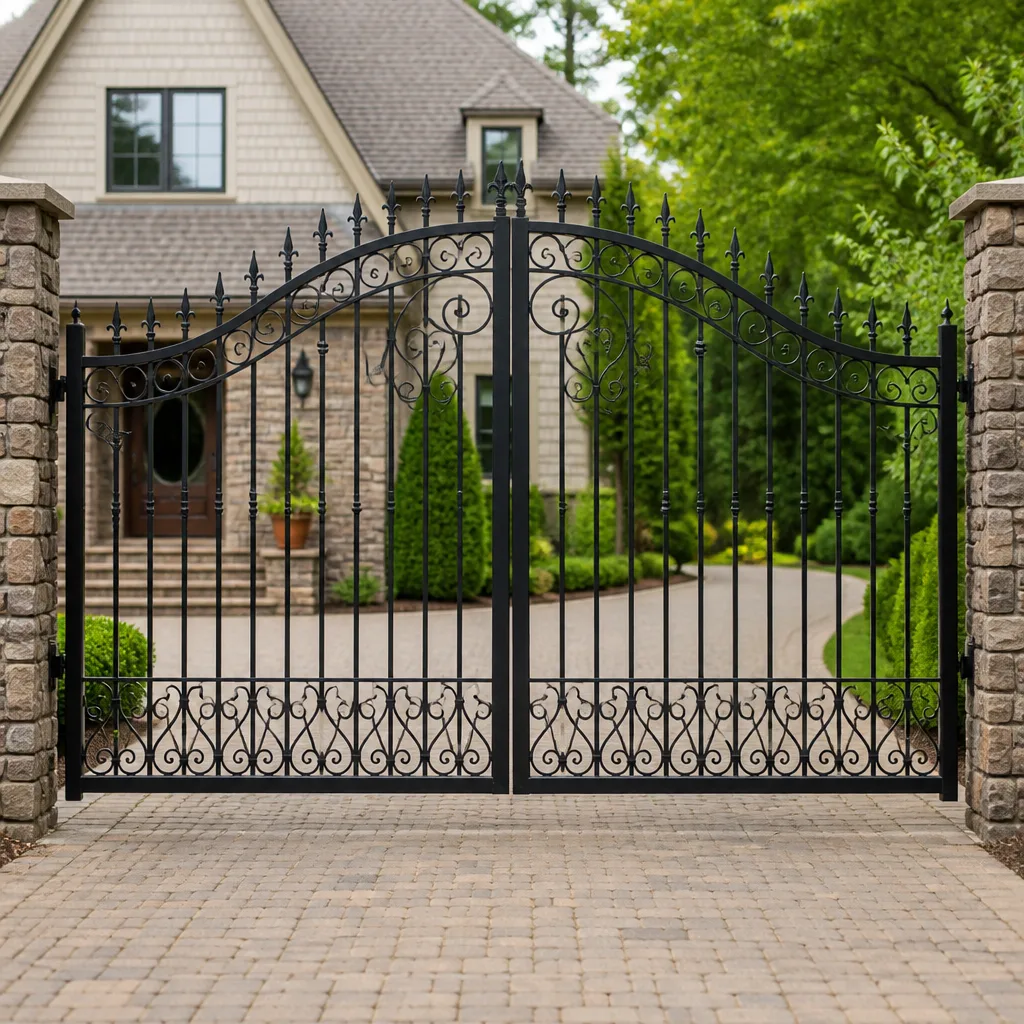
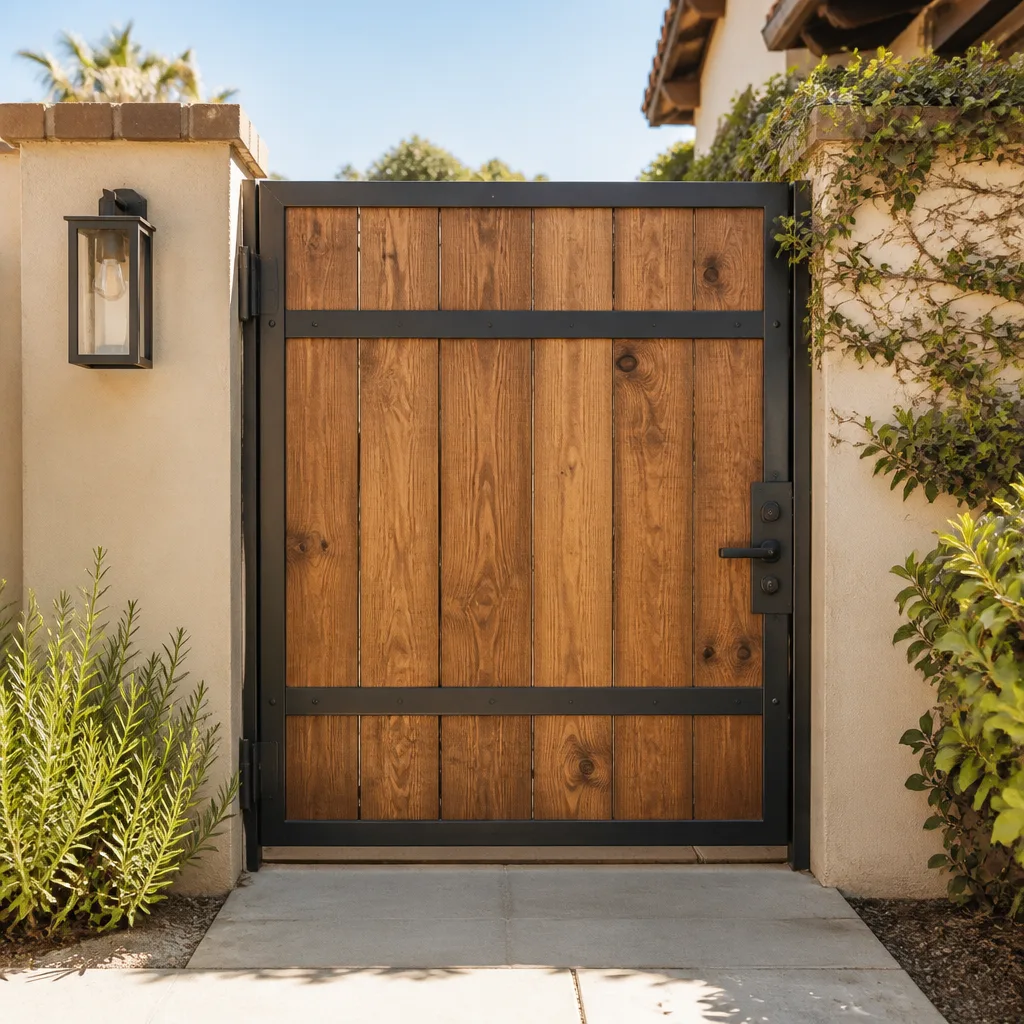
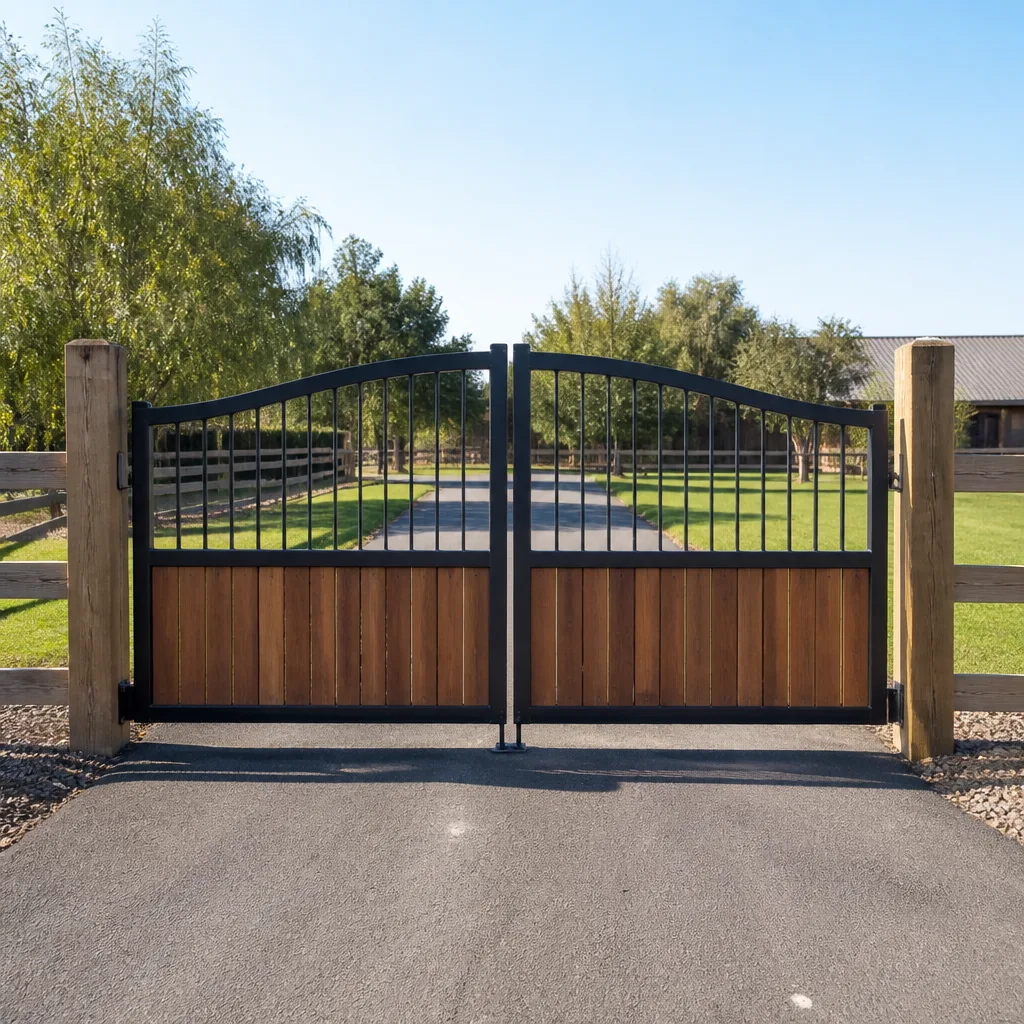
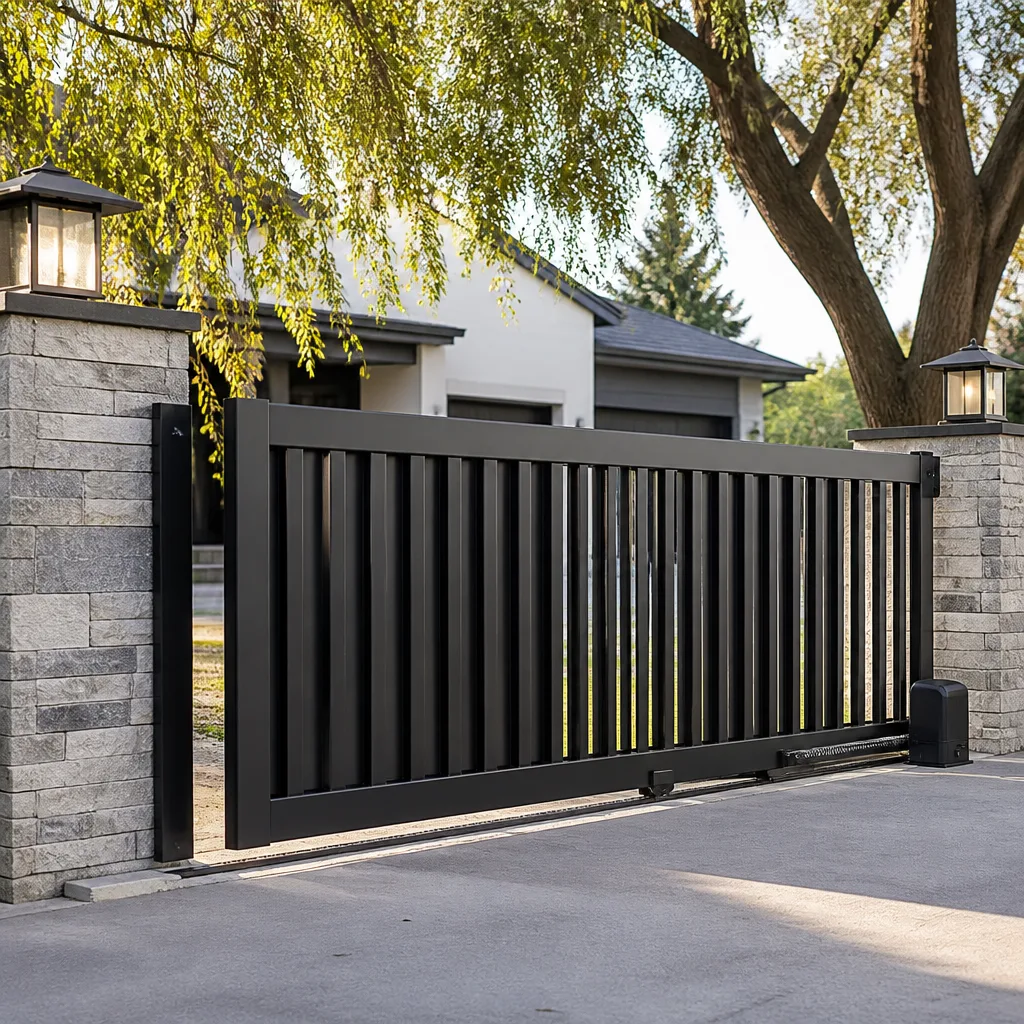
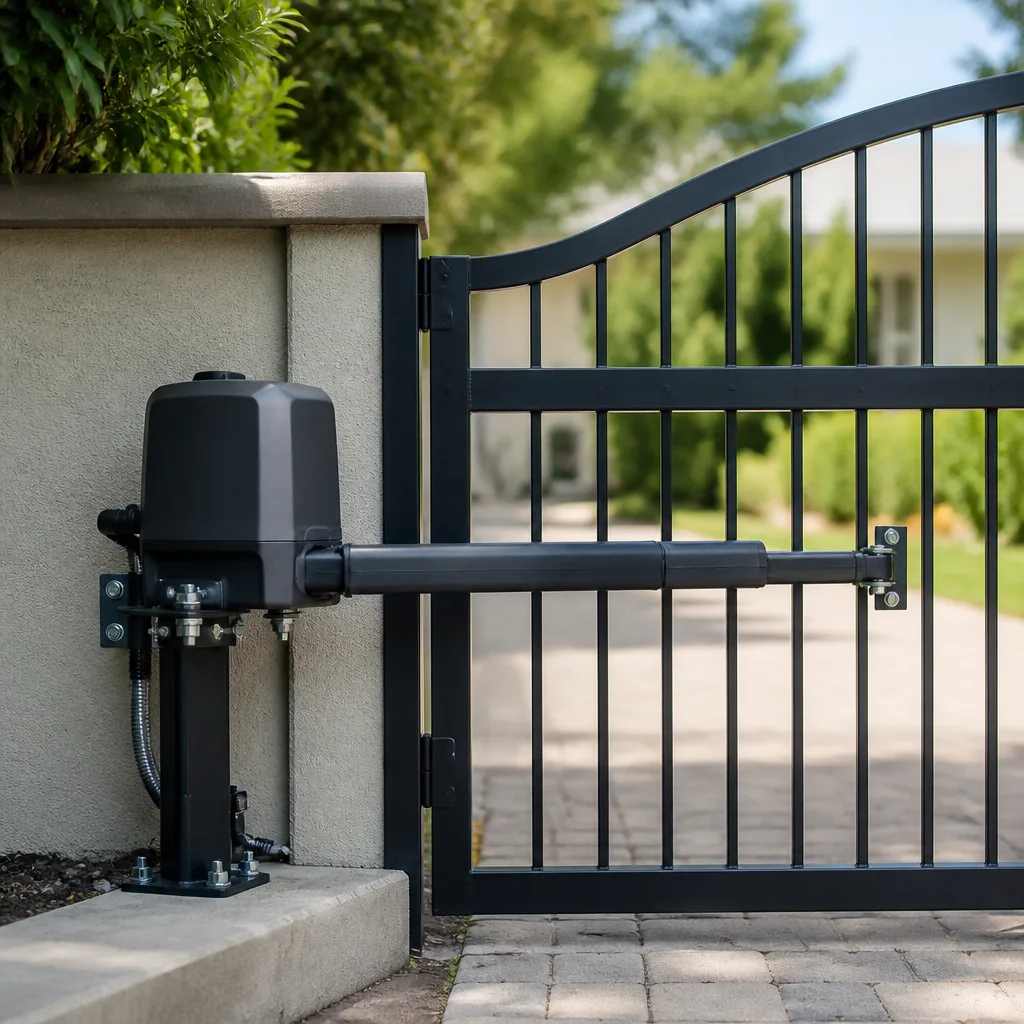
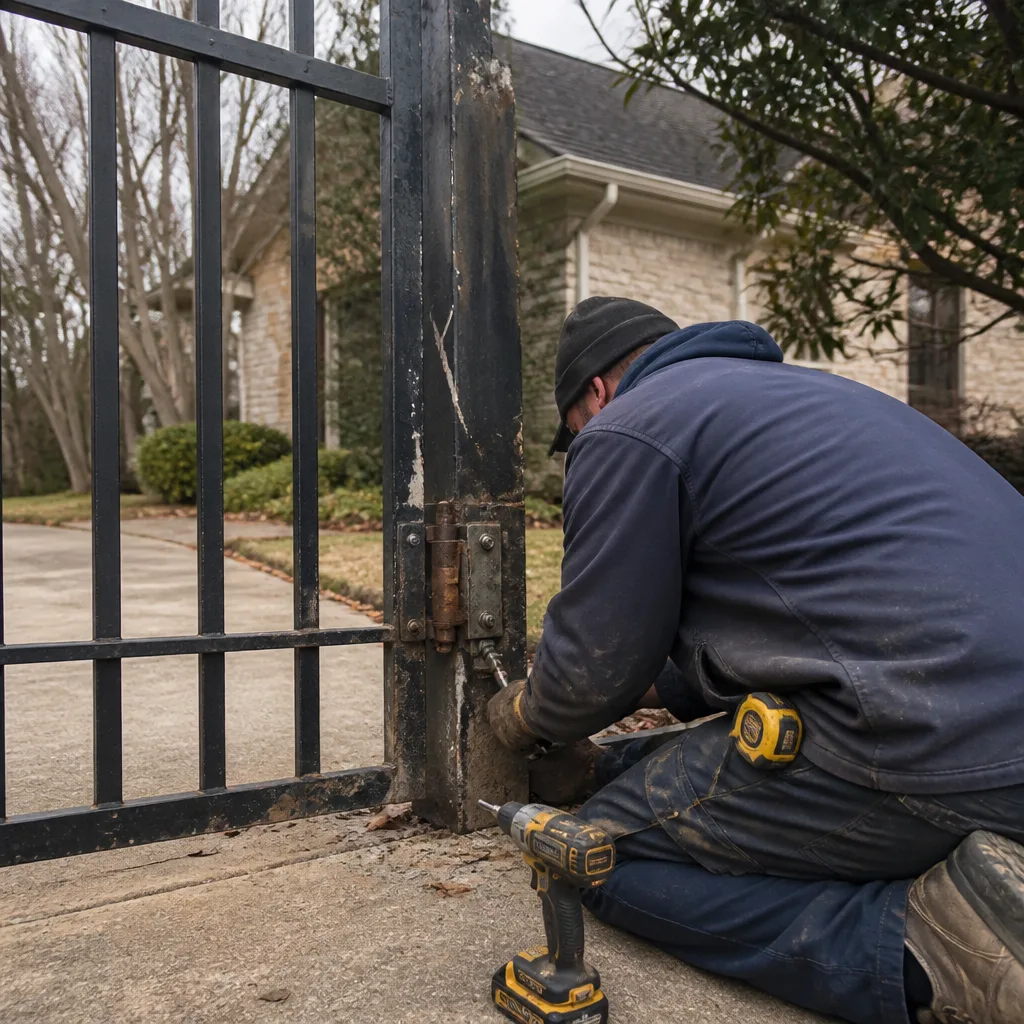 Before
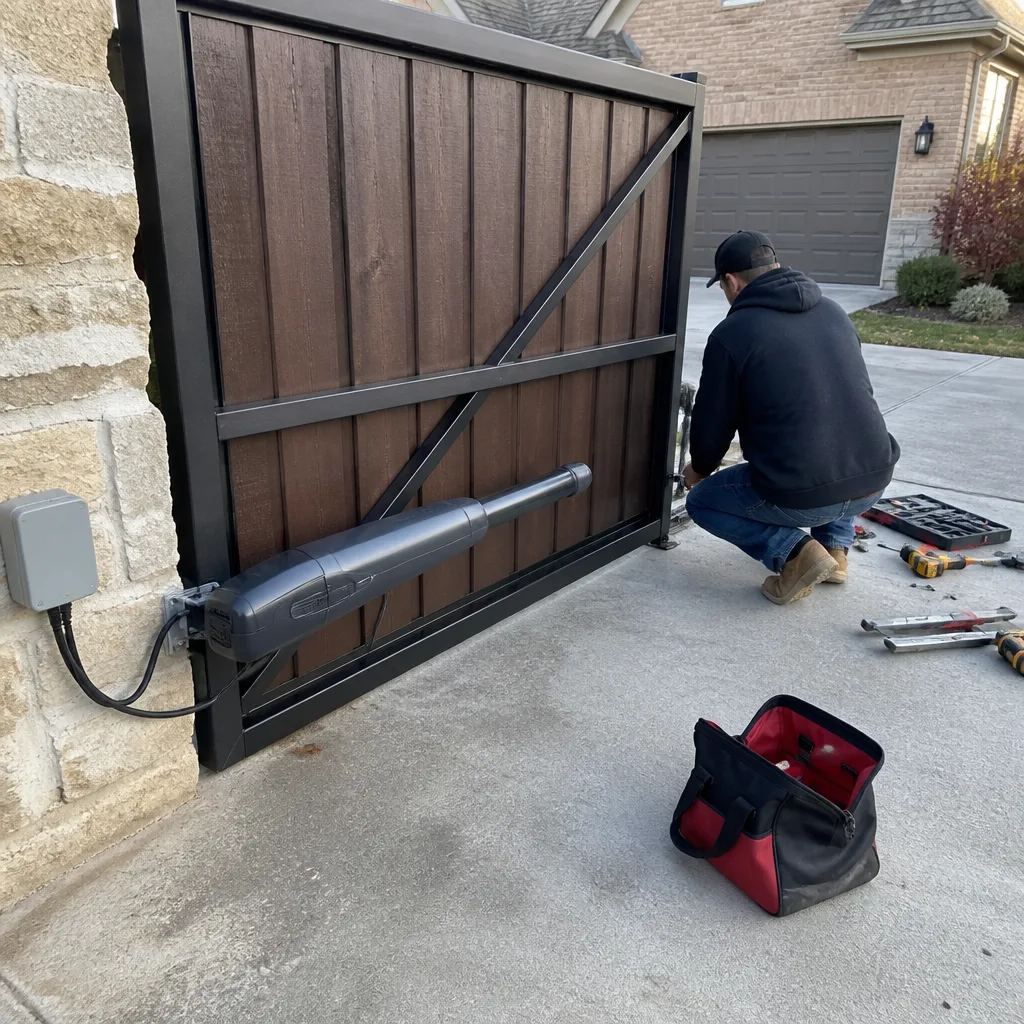 After
After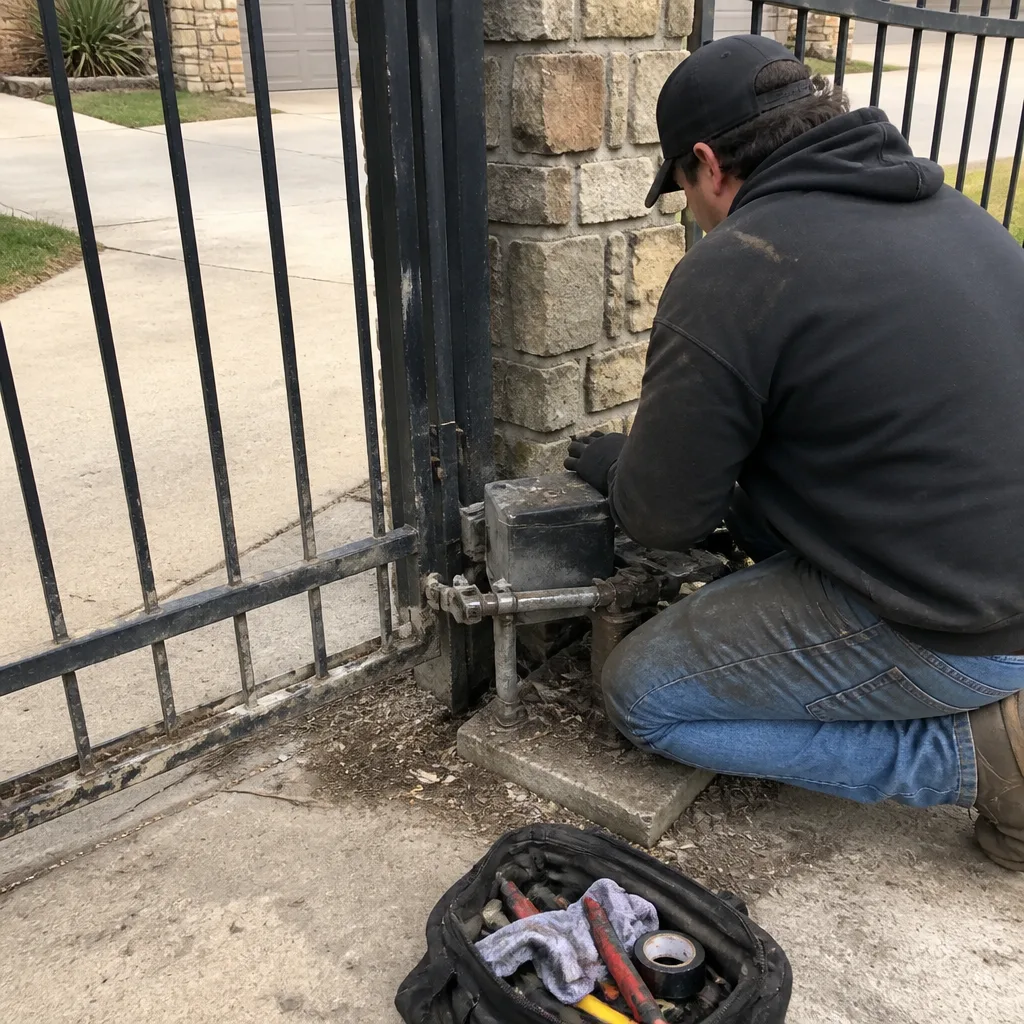 Before
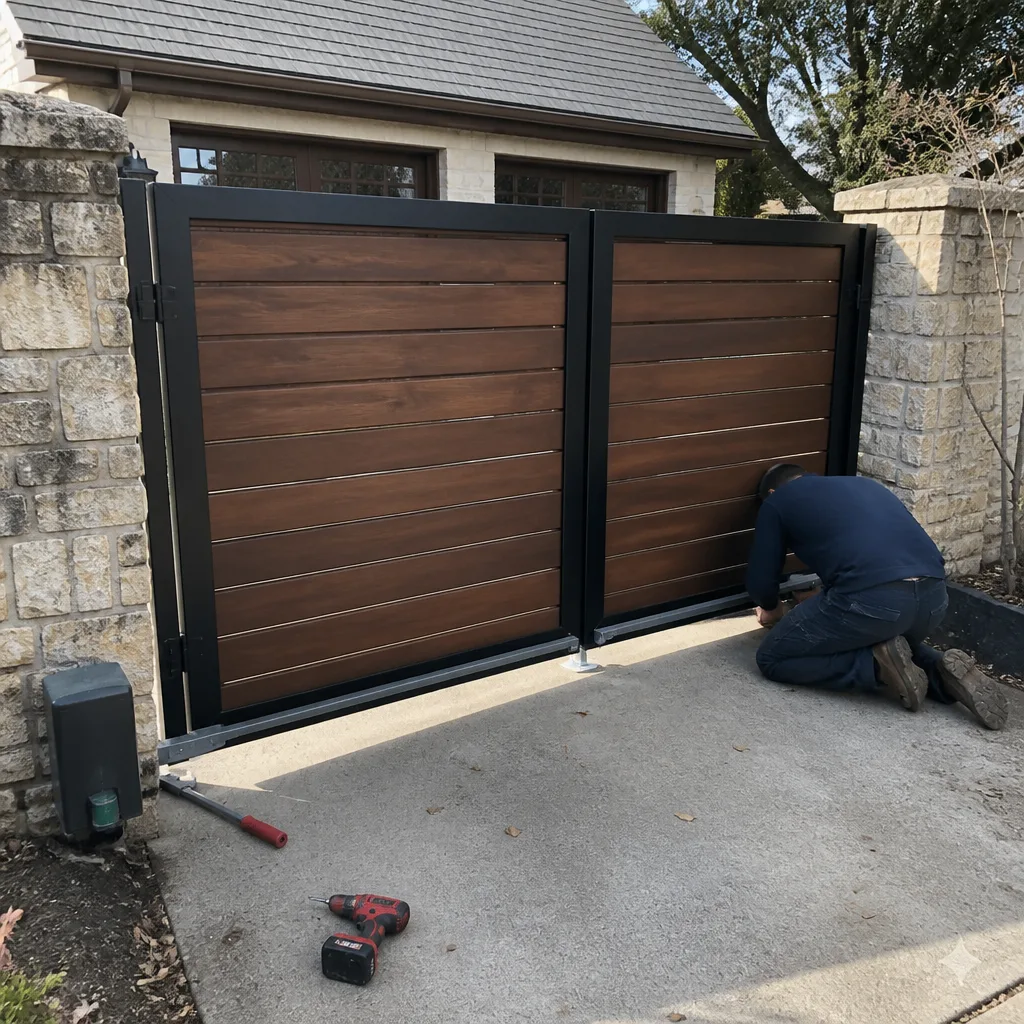 After
After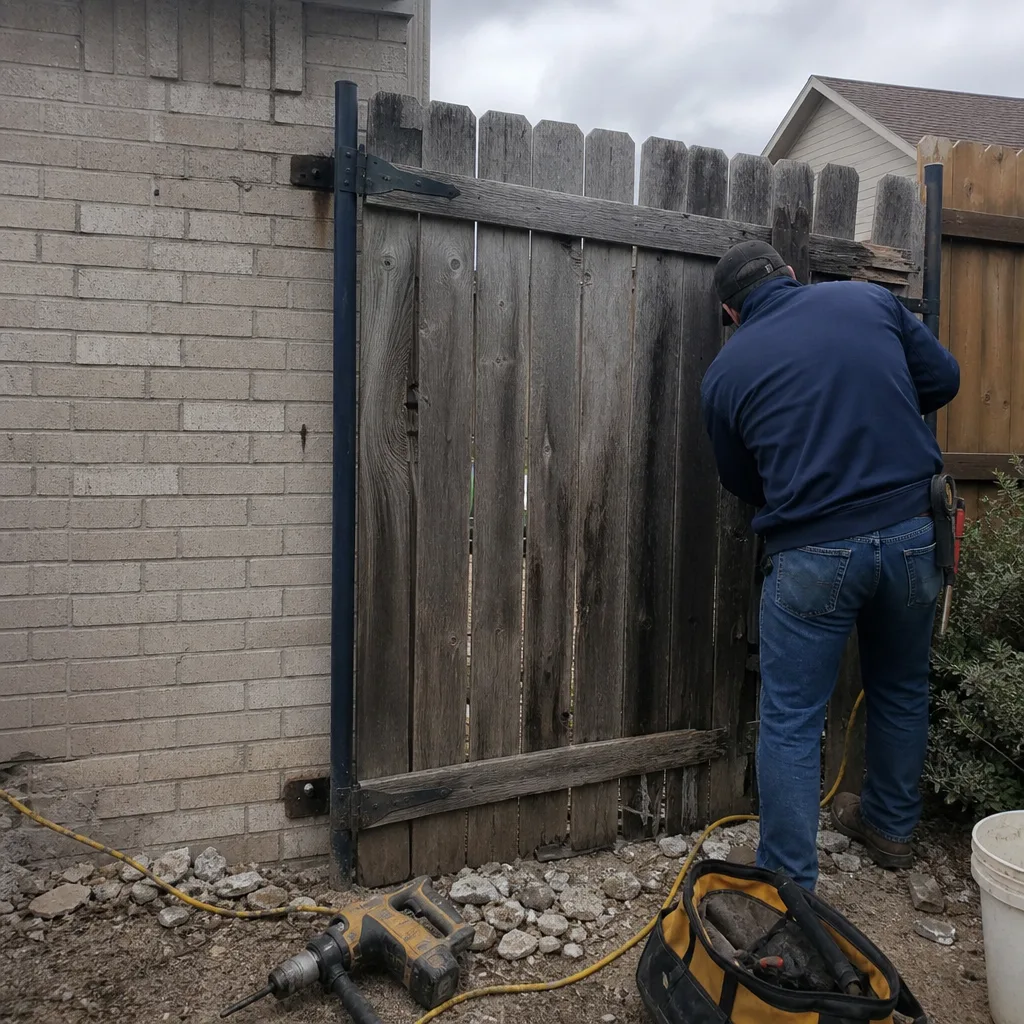 Before
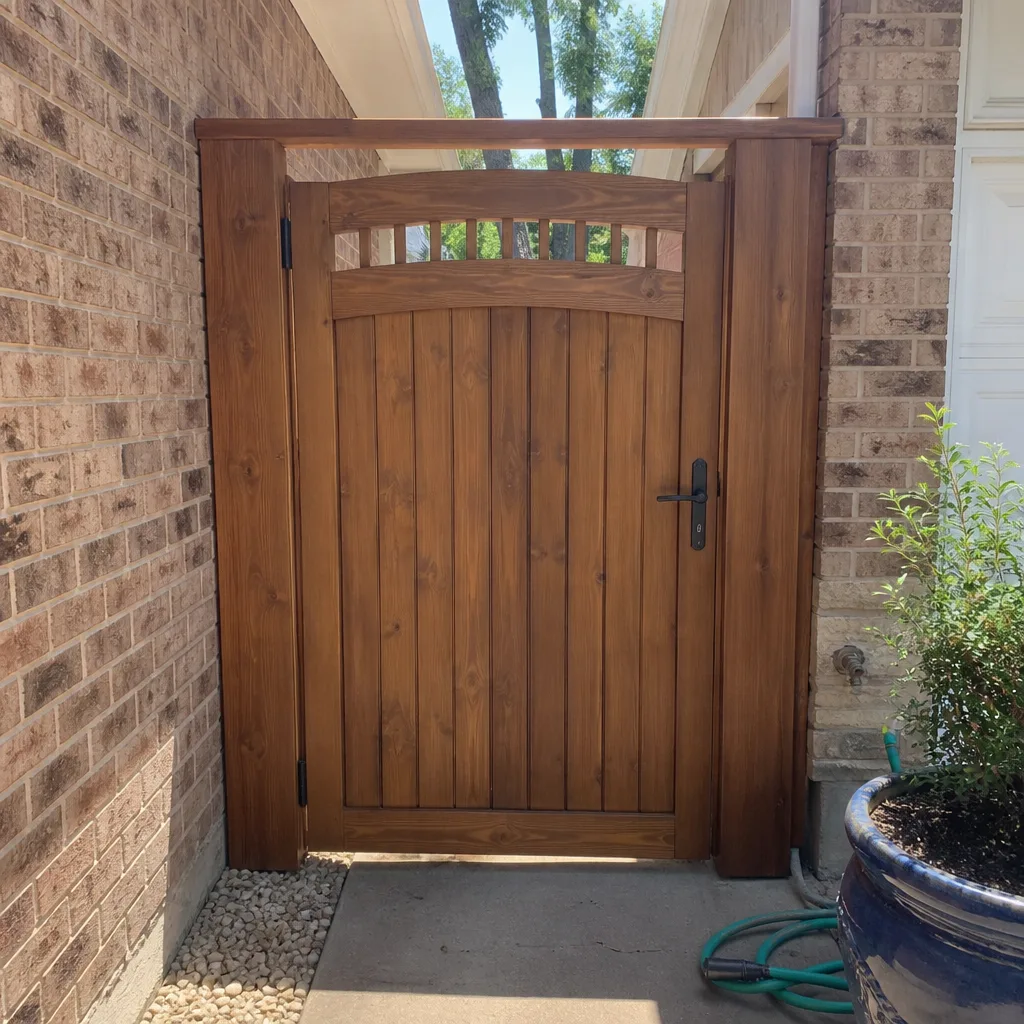 After
AfterDIY vs Professional Gate Repair: The Keller Homeowner’s Decision Guide
Most Keller homeowners assume a sagging gate needs new hinges. In our experience, the actual culprit is usually the post itself shifting in North Texas clay soil. That one misdiagnosis leads to hundreds of dollars in unnecessary parts and a gate that still scrapes the driveway two months later. This guide walks through what you can safely handle yourself, what you should not touch, and how to tell the difference before a small problem becomes an expensive one. By the time you finish, you will know exactly what your gate needs and whether to pick up a wrench or pick up the phone to a gate specialist in Keller.
Quick Answer
DIY gate repair is reasonable for cosmetic tasks like tightening visible bolts, lubricating hinges, and replacing keypad batteries. Professional gate repair in Keller becomes necessary when the issue involves structural welds, post movement in clay soil, opener motors, or safety sensor alignment. Most jobs that involve the automation system or the gate’s weight-bearing structure should be handled by a trained technician because a failure there can damage the motor, the gate, or a vehicle in the driveway.
Table of Contents
- Why Keller Gates Fail: Climate, Soil, and Time
- What a Keller Homeowner Can Safely Handle
- What DIY Should Not Touch: Welds, Springs, and Motors
- The Real Cost of Getting It Wrong
- The Tool and Skill Reality Check
- Opener and Sensor Work: Why Brand Training Matters
- The Difference a Written Guarantee Makes
- Common Mistakes to Avoid
Why Keller Gates Fail: Climate, Soil, and Time
Keller sits on expansive clay soil that moves with every wet-dry cycle. That soil swells after a spring storm and shrinks during an August heat wave. A gate post set in concrete can shift a quarter inch in a single season, and that quarter inch translates to a gate that drags on the driveway or a latch that no longer lines up. Homeowners in Hidden Lakes, Marshall Ridge, and the older lots near Bear Creek Park deal with this more than almost any other gate issue we see.
The other factor is heat. Keller regularly sees stretches above 100 degrees in July and August. That heat accelerates wear on plastic gear components inside opener motors, dries out lubricant on hinge pins, and causes steel gate frames to expand enough to change the gap between the gate and the post. A gate that swings freely in January may bind in July, and the homeowner who ignores that binding ends up with a burned-out motor by September.
Then there is simple time. Many gates in Keller were installed when the home was built, and a lot of those homes went up in the 1990s and early 2000s. A gate that is twenty or twenty-five years old has outlasted its original hardware. The hinges wear, the post bases corrode below grade, and the opener’s limit switches drift. None of this is a reflection of poor installation. It is simply what happens when metal, motor, and North Texas weather share the same driveway for two decades.
What a Keller Homeowner Can Safely Handle
There is a short, honest list of gate tasks that a careful homeowner can do without special training. These are the jobs that require nothing more than basic hand tools, a can of lubricant, and about an hour on a Saturday morning. We are glad to see homeowners handle these themselves because regular attention at this level prevents the bigger failures that bring us out for emergency calls.
- Tightening visible fasteners. Over time, the bolts on hinge brackets and latch plates work loose from repeated opening and closing. A socket set and ten minutes can snug these back down. Do not overtighten; you want the bolt firm, not stripped.
- Lubricating hinge pins and latch mechanisms. A dry hinge squeaks and eventually binds. A lithium-based spray lubricant applied to each hinge pin twice a year keeps a manual gate swinging quietly. Wipe off the excess so it does not collect dust and turn into grit.
- Replacing keypad batteries. If the keypad works intermittently or the display dims, the battery is usually the culprit. Open the case, note the battery type, and swap it. The keypad will typically keep its codes, so no reprogramming is needed.
- Trimming vegetation around the gate path. Overgrown shrubs and ground cover push against the gate and add load to the opener. Keeping the gate’s swing path clear is a simple chore that extends the life of every component.
- Cleaning the photo-eye sensors. The small sensors near the bottom of the gate track or posts get dusty and spider-webbed. A dry cloth often fixes a gate that reverses for no visible reason when closing.
These five tasks cover about eighty percent of what a homeowner in Keller should attempt on their own. They are safe, they are cheap, and they make a real difference. The remaining twenty percent is where people get hurt or cause damage that costs more than the original repair would have.
What DIY Should Not Touch: Welds, Springs, and Motors
We say this with respect for every capable homeowner in Keller: some gate work is not a weekend project. The line is drawn at anything involving structural welds, counterbalance springs, or the automation system. These are the repairs where a mistake stops being an inconvenience and starts being a safety hazard or a multi-thousand-dollar replacement.
Welded steel gates crack at stress points. The crack usually starts small, at a hinge mount or a corner joint, and grows with every open-close cycle. Repairing that crack properly means grinding out the old weld, re-welding the joint, and often adding a reinforcing gusset plate. This requires a welder, a grinder, and enough experience to know when the metal around the crack has fatigued past the point where a simple bead will hold. A homeowner with a hardware-store flux-core welder can make the crack look closed for a few weeks. Then the gate breaks again, this time in a new spot.
Safety note: A cantilever gate or a heavy ornamental gate under spring tension stores enough energy to cause serious injury if a spring or cable lets go during disassembly. We do not provide step-by-step instructions for spring replacement because we do not want a homeowner learning this lesson the hard way. Call someone who does this work daily.
Opener motors are the other category where we consistently talk homeowners out of DIY. A gate motor is not a garage door opener bolted to a post. It is a gear-driven unit that must be matched to the gate’s weight, length, and duty cycle. Replacing one involves setting limit switches, adjusting force sensitivity, and aligning the safety sensors. Get any of those wrong and the gate can close on a car, or a child, or the family dog. The stakes are simply too high to learn on the fly.
The Real Cost of Getting It Wrong
Here is the number nobody talks about. A homeowner in Keller who attempts a structural gate repair and gets it wrong typically spends between $75 and $250 on parts and materials before calling us. Then the actual repair costs the same as it would have on day one, because we must undo the attempted fix before we can do the job correctly. The DIY savings vanished before the first technician rolled up the driveway.
The worse scenario is the gate that fails after an amateur weld. A 400-pound gate breaking loose from its post can take out a car bumper, damage the driveway surface, or injure a person in its path. The repair bill on that scenario runs into the thousands, and it is not a gate repair anymore. It is a gate replacement plus a vehicle repair plus possibly a medical bill.
The most common hidden cost is the opener that gets burned out by a gate that was never properly balanced after a DIY hinge replacement. The homeowner saves $300 on the hinge job and spends $1,200 on a new opener six months later. We see this pattern often enough that we have stopped being surprised by it.
For reference, here is what typical gate repair pricing looks like in the Keller market:
- Hinge replacement (per hinge, standard ornamental gate): $85-$160
- Latch and strike plate repair: $95-$185
- Post stabilization or reset (in clay soil): $250-$600
- Weld repair (single crack, reinforcement plate added): $150-$350
- Opener motor replacement (standard single gate): $700-$1,400
- Photo-eye sensor replacement or realignment: $95-$220
Every price above is quoted and agreed upon before any work begins. That is not a sales gimmick. It is how a gate company in Keller should operate, and it is how we have operated since Victor Salinas set the standard for this company. The homeowner should never open an invoice and find a number that was not discussed at the kitchen table before the first tool came off the truck.
The Tool and Skill Reality Check
Before any Keller homeowner picks up a wrench to fix a gate, we suggest an honest inventory of the tools sitting in the garage. Most households have a socket set, a hammer, a cordless drill, and maybe a circular saw. That collection is enough for the maintenance tasks listed earlier. It is not enough for most structural or automation work.
A proper structural gate repair requires a 220-volt welder, an angle grinder with cutoff and flap discs, a hammer drill for post work, a rotary laser for setting the post plumb, and clamps heavy enough to hold a gate frame square while it is being welded. That is three to five hundred dollars of specialty tools for a job that will take a first-timer all weekend and still look like a first-timer’s work when it is done.
Skill matters more than tools. Welding a gate that will hold for a decade is not the same as welding a trailer hitch that just needs to not fall off on the highway. A gate cycles thousands of times a year, and every cycle flexes the weld. A weld that looks fine to an untrained eye can be shallow, cold, or porous, and it will fail under repeated load. The technicians who work on Keller gates see these failures every month. The homeowner who made the weld usually says the same thing: it looked like the YouTube video.
Opener and Sensor Work: Why Brand Training Matters
Keller driveways have a mix of gate opener brands, and they are not all the same machine. A FAAC unit from a home built in 2005 has different limit-setting procedures than a BFT unit from 2018. A Viking opener on a heavy estate gate needs different force-sensitivity calibration than a Linear unit on a lightweight ornamental gate. The brand name on the motor is not just a logo; it is a repair procedure.
We carry training and service documentation on all of these systems because a homeowner cannot be expected to. When a technician arrives at a Keller home with a gate opener that is not functioning, the first hour of diagnosis is often spent simply identifying what brand and model is in the box, what revision the control board is, and what parameter needs to change. Homeowners who try to handle this themselves are working from a single YouTube video that may show a different revision of the same brand, with different buttons and different menus.
The safety sensors add another layer. Modern gate systems in Keller are required to have a primary and secondary entrapment protection system. That typically means photo-eye sensors and a contact edge or an obstruction-sensing circuit. When these systems are not aligned or calibrated correctly, the gate behaves unpredictably: it reverses for no reason, or it does not reverse when it should. A homeowner can spend an entire afternoon adjusting a sensor that was never the problem, while the actual fault is a failing control board that should have been diagnosed in twenty minutes by someone who sees these systems daily.
The Difference a Written Guarantee Makes
Every gate repair has a quiet window after the technician leaves. The gate works. The invoice is paid. And then a week passes, and a month passes, and the question sits in the back of the homeowner’s mind: was this fixed or just patched. That question is why a written guarantee matters, and it is why we put our 90-Day Done Right Promise on every job we complete in Keller and the surrounding communities.
Here is how the promise works. If the repair we performed is not right within 90 days, we come back and make it right. No paperwork, no phone tree, no argument about what was covered. The guarantee is written on the invoice, and it applies to every job, from a simple hinge replacement to a full opener installation. This is the standard Victor Salinas has held this company to since its founding in 1984, and it is the reason a Keller homeowner can call us without dreading the conversation.
We mention this because the DIY decision is not just about the repair. It is about what happens after the repair. A homeowner who fixes a gate on a Saturday has no one to call on Tuesday when the same problem reappears. A homeowner who uses a company with a written guarantee makes one call and the matter is handled. That difference is worth something, and in our experience it is worth more than the few hundred dollars saved on a questionable DIY attempt.
For more about how we approach gate work and what we cover, visit the Ironworks Gate Co. home page.
Common Mistakes to Avoid
After four decades of working on gates in the Keller area, we have a clear picture of the mistakes that lead to failed repairs and avoidable expenses. Most of them come from good intentions and a lack of specific knowledge about how gates work. Here are the ones we see most often.
- Lubricating the opener’s drive chain with WD-40. WD-40 is a penetrant and water displacer, not a lubricant. It strips the proper grease off the chain and leaves it dry within weeks. Use a chain-specific lubricant, or better yet, leave opener internals alone.
- Shimming a sagging gate with washers instead of fixing the post. In Keller’s clay soil, a sagging gate almost always means the post has moved. Washers behind the hinge plate are a temporary fix that stops working the next time the soil shifts.
- Replacing an opener with a “same-looking” unit from a big-box store. Gate openers are matched to gate weight and usage. A residential garage door opener or a light-duty gate opener will fail early on a heavy ornamental gate, sometimes within months.
- Forcing a gate that has stopped mid-travel. When a gate stops partway and will not move, forcing it by hand or repeatedly pressing the remote can strip the drive gear or damage the limit system. The correct move is to disengage the opener and determine why it stalled.
- Welding galvanized steel without proper ventilation and grinding. Galvanized steel releases zinc fumes when welded, which causes metal fume fever. The coating also contaminates the weld. We have talked to homeowners who made themselves sick in their own driveway doing this.
- Ignoring a gate that is getting slower. A gate that opens noticeably slower than it did six months ago is telling you something. Usually it is a matter of friction at the hinges or a motor working harder than it should. Waiting until it stops completely turns a maintenance item into a replacement.
- Replacing safety sensors with generic units that do not match the opener brand. Different brands use different sensor communication protocols. A generic sensor may click in and appear to work while the opener has actually defaulted to a failsafe mode, causing constant nuisance reversals.
When to Call a Professional
Call a gate professional when the problem involves anything that carries the gate’s weight or controls its movement. A cracked weld, a leaning post, a grinding opener, a gate that reverses when it should not, a keypad that will not program, or any repair that requires lifting the gate off its hinges. Also call when the gate has injured anyone or damaged a vehicle; that is the point where a thorough inspection matters more than a quick fix. Ironworks Gate Co. offers free estimates in Keller, call (254) 330-8718.
Frequently Asked Questions
Gate repair in Keller typically costs between $85 and $600 depending on the repair: hinge replacement runs $85-$160 per hinge, a single weld repair runs $150-$350, and post stabilization runs $250-$600. Opener replacement is the high end at $700-$1,400 for a standard single gate. Every job we quote in Keller is priced and agreed upon before work begins, so the number on the invoice matches the number discussed upfront. Call (254) 330-8718 for an exact quote – estimates are free.
Yes, in most cases a sagging gate can be repaired without replacing the gate itself. The fix usually involves resetting or stabilizing the post, replacing worn hinges, or re-welding a cracked joint. Keller’s clay soil is the most common cause of sagging, and addressing the post is often the entire cure.
A gate that reverses before it fully closes usually has a photo-eye sensor that is misaligned, dirty, or receiving interference from direct sunlight. In Keller’s summer heat, sun glare on the sensor lens is a frequent culprit. The sensor alignment and the opener’s force settings should both be checked before replacing any parts.
No, welding a structural gate crack is not a safe DIY project for a homeowner without formal welding training and proper equipment. A failed weld on a heavy gate can release suddenly and cause serious injury, and the zinc coating on galvanized steel produces toxic fumes when welded. This is a job for a professional welder.
A quality gate opener that is properly matched to the gate and installed correctly should last 10 to 15 years in Keller’s climate. Heat is the main threat, followed by a gate that is out of balance and forces the motor to work harder than designed. Regular lubrication of hinges and prompt attention to any change in the gate’s movement extend the opener’s service life.
Yes, Ironworks Gate Co. provides free estimates for gate repairs and replacements in Keller and the surrounding area. We also offer a free second opinion on any written estimate from another company. Call (254) 330-8718 and a live person will answer, any hour of the day or night.
The Bottom Line
The Keller homeowner deciding between DIY and professional gate repair should start with a simple question: does this job involve the structure or the automation. If it does, the smart money calls a professional. The cost of a failed DIY repair, in parts, time, and often a burned-out opener or damaged vehicle, exceeds the cost of doing it right the first time. For forty-two years we have repaired gates in Keller the same way: a fair price settled before the work starts, a live person on the phone, and a written 90-day guarantee behind every job. That is the standard, and it is why homeowners who call us once rarely need another gate company. Call (254) 330-8718 for a free estimate, and keep the wrench for the jobs that belong on the weekend list.
Written by Victor Salinas, Owner at Ironworks Gate Co., serving Keller since 2013.