
Last updated August 25, 2026
Free on-site gate assessment - hinges, posts, and your LiftMaster or Nice gate operator checked before anything is quoted
The assessment is free and the quote is the invoice.

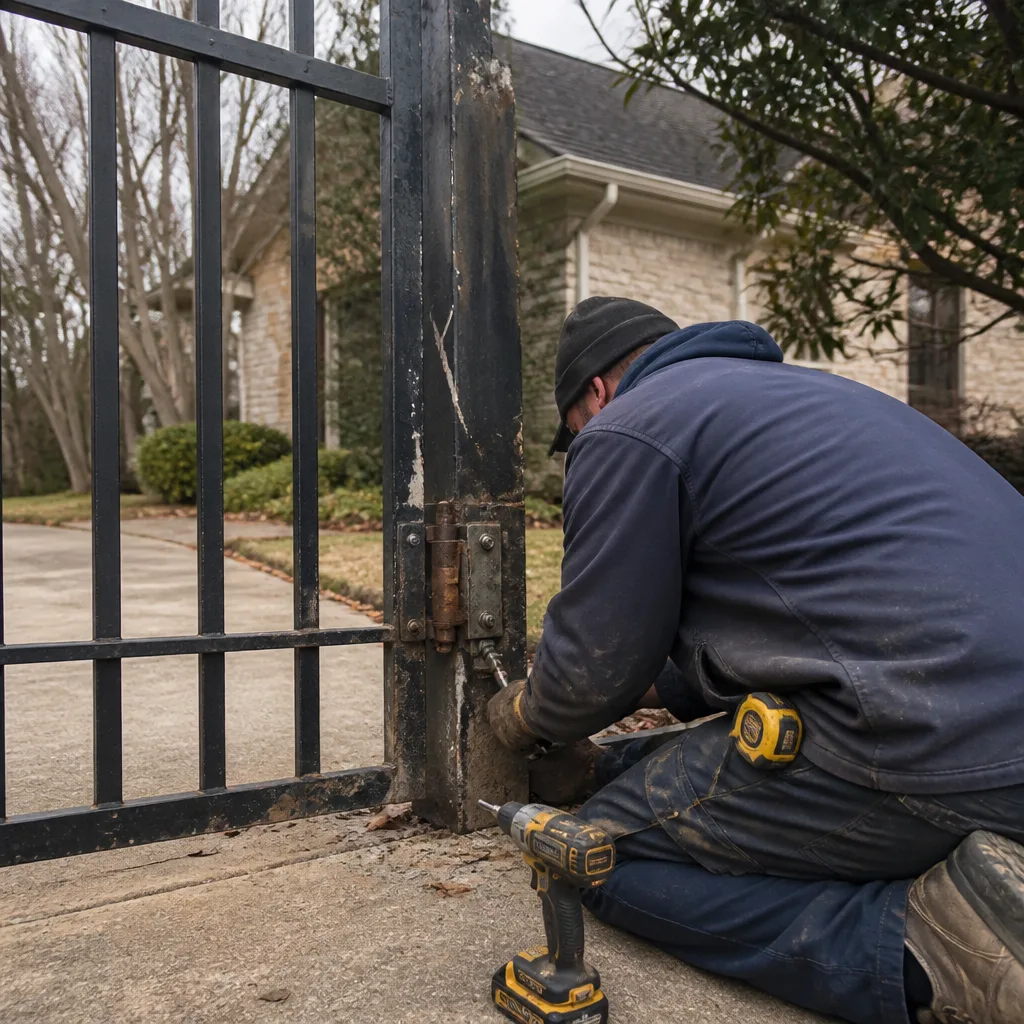 Before
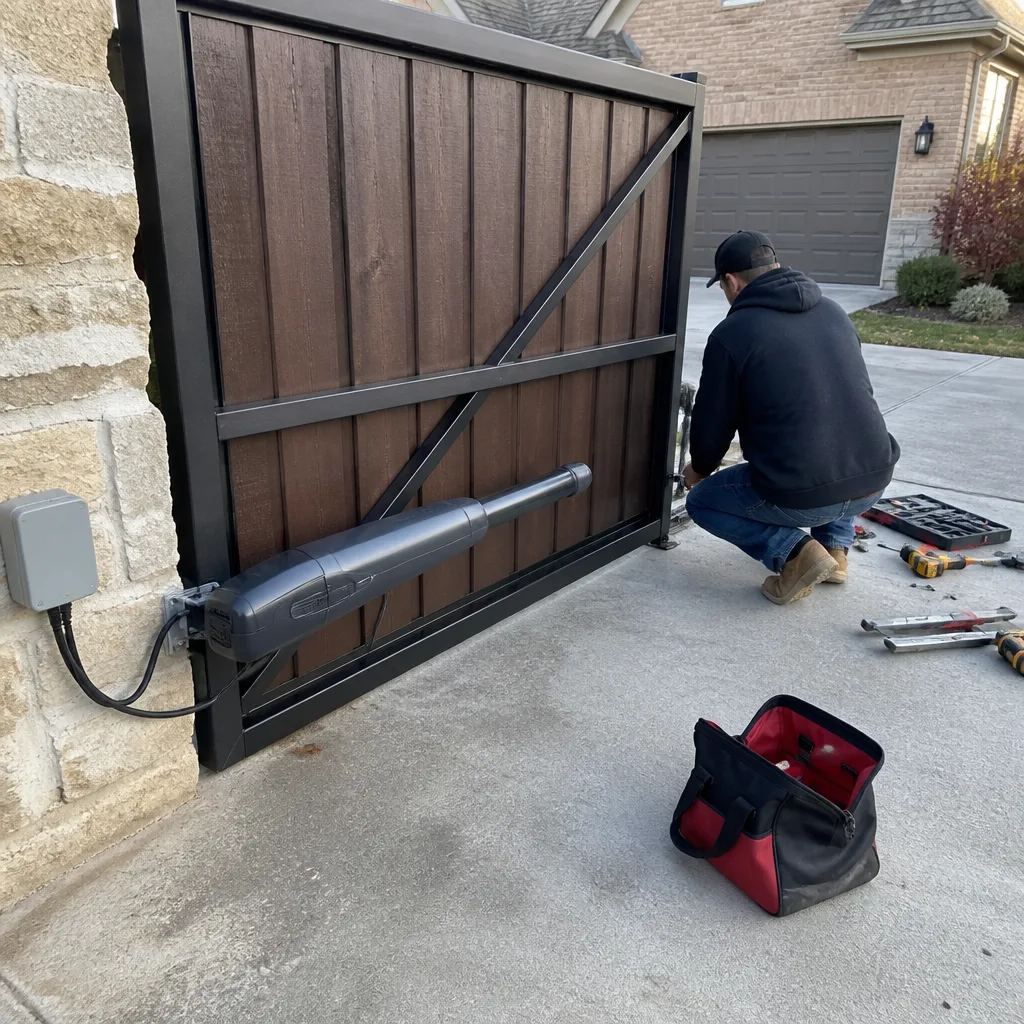 After
After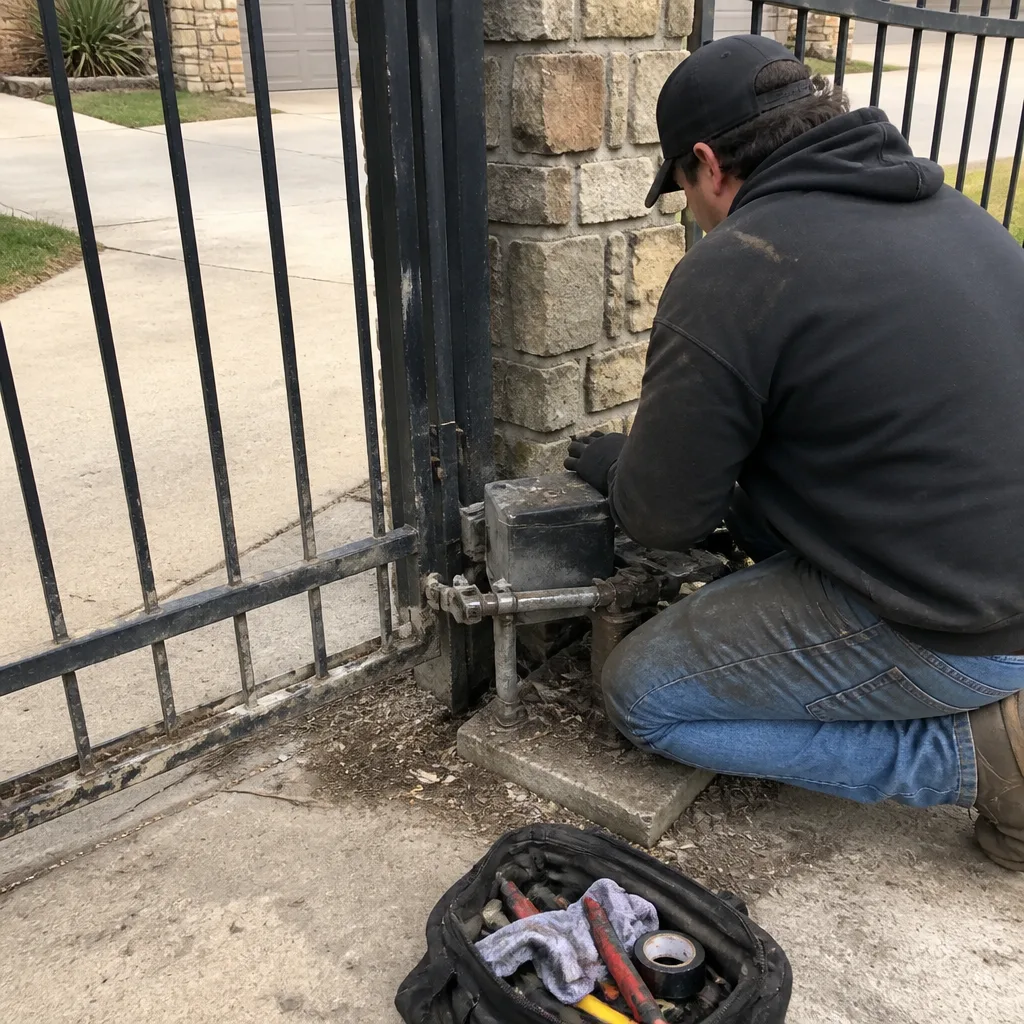 Before
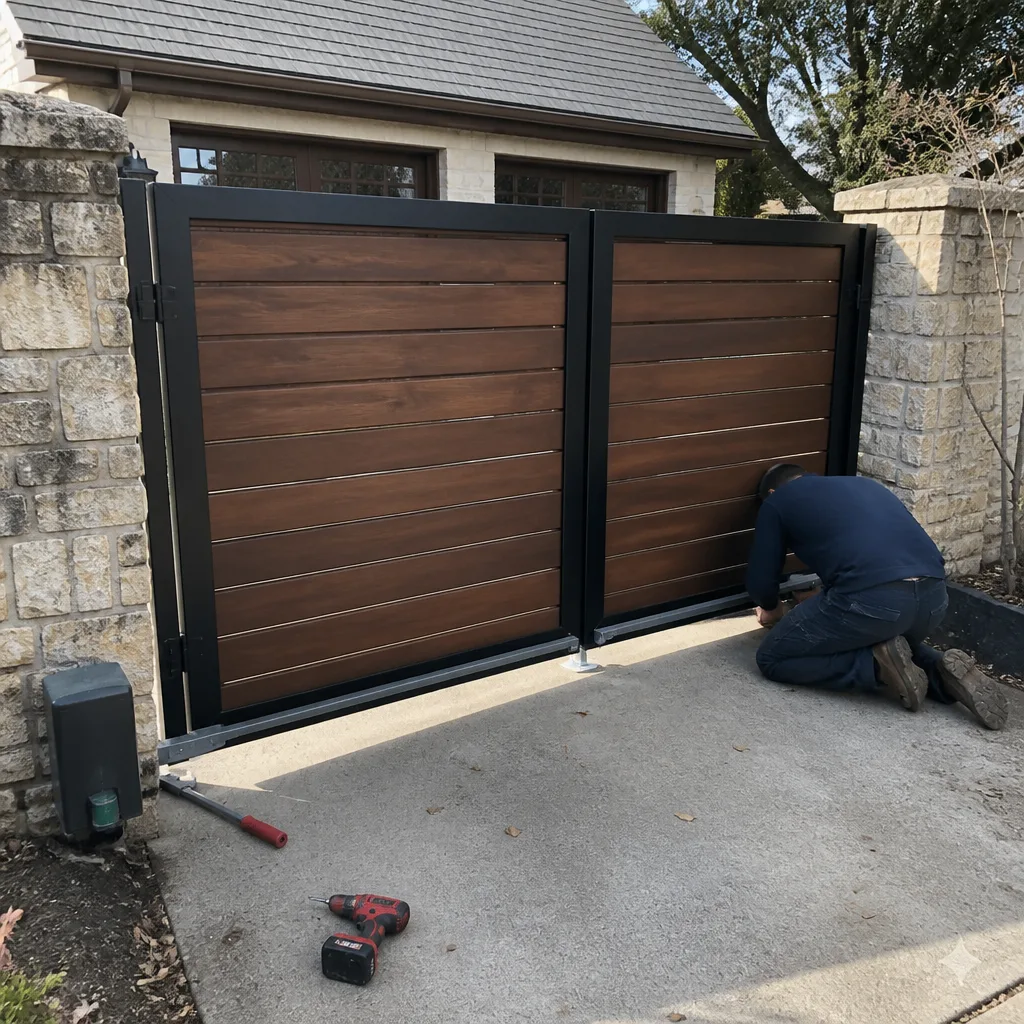 After
After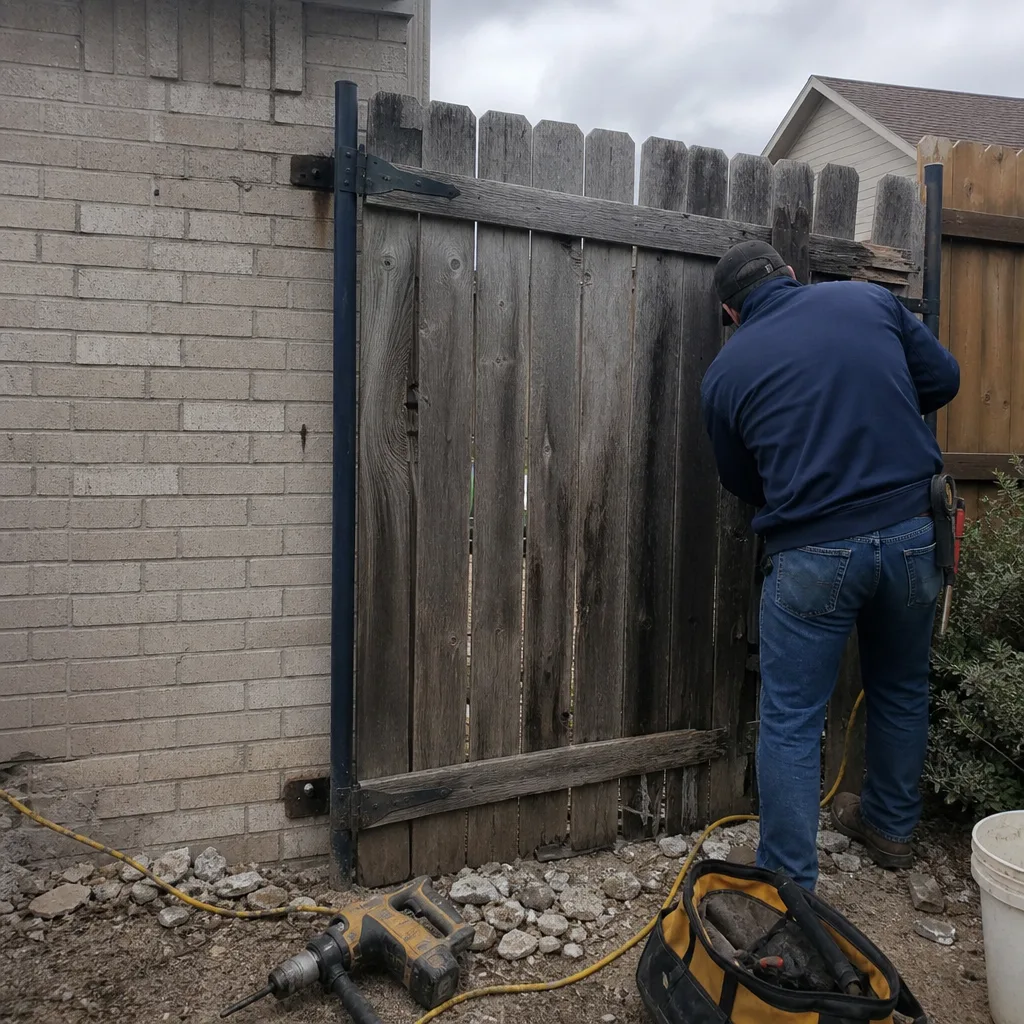 Before
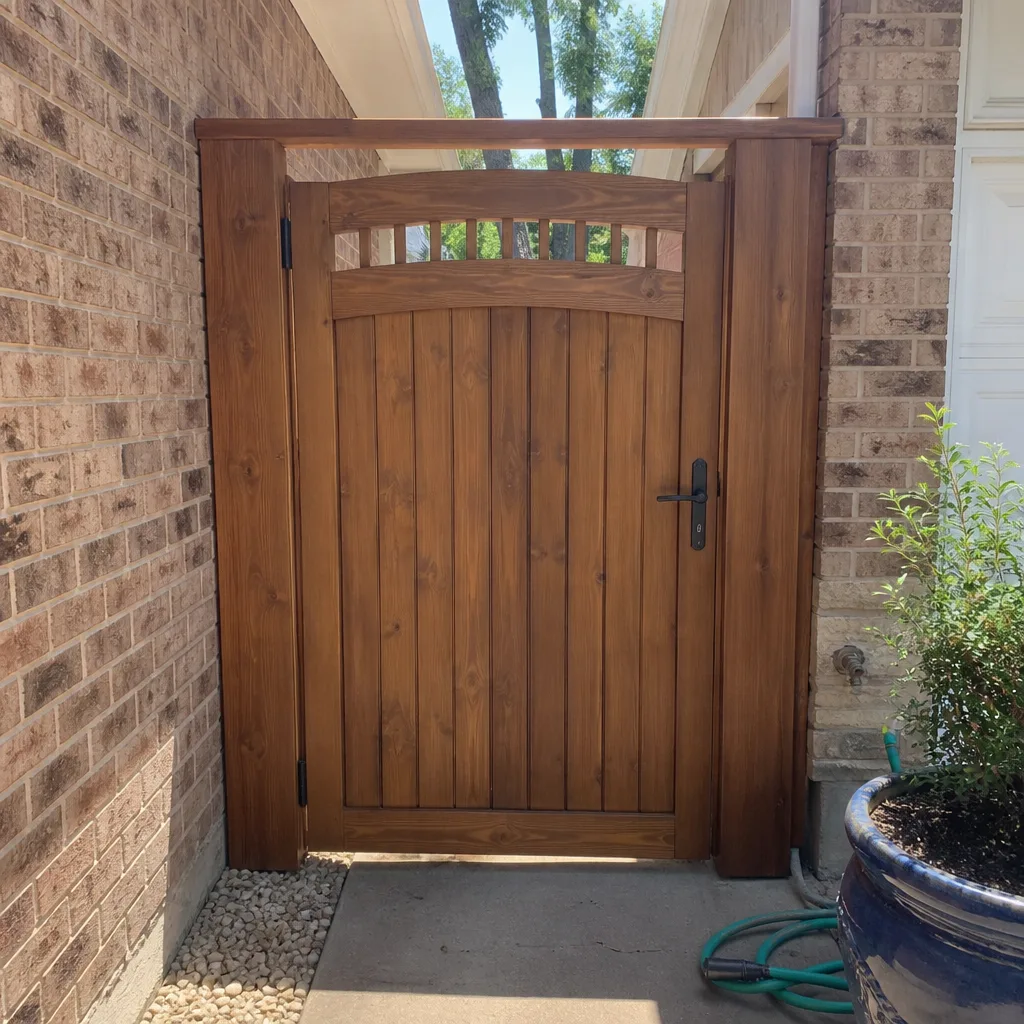 After
AfterGate Repair Permits, Codes & Inspections in TX: What You Need to Know
Most Texas homeowners assume a gate repair is like fixing a fence board: grab the tools, swap the part, move on. Then the city inspector drives by, or a neighbor calls the HOA, and the job turns into a fine, a failed closing, or a gate that has to be ripped out and reinstalled. Gate work sits at a strange intersection in Texas code: it is not always a fence, it is not always a building, and the rules change depending on whether the gate swings on a hinge or runs on a motor. If you live in Keller, you are also working inside a city that takes its right-of-way and driveway sight lines seriously. This guide walks through what actually requires a permit, which codes apply, when an inspection gets triggered, and how to avoid the expensive mistakes we see in driveways across Keller, Fort Worth, Southlake, and the surrounding Tarrant County communities.
Quick Answer
In Texas, most driveway gate repairs like hinge replacement, weld fixes, keypad swaps, and opener motor replacement do not require a permit. You typically need a permit when you install a new gate structure with footings, relocate a driveway approach, add an automatic opener with vehicle detection and safety edges, or run new electrical. Keller follows the adopted International Residential Code with local amendments, and any gate within the city right-of-way or that affects sight distance at the street may require city review. When in doubt, the safe sequence is: check with Keller’s permit office, pull the permit if needed, build to code, and schedule the inspection before you backfill or close up.
Table of Contents
- When a Gate Repair Requires a Permit in Texas
- When You Do Not Need a Permit
- Texas Gate Codes: The Standards That Govern the Work
- Automatic Gate Codes: UL 325, Safety Edges, and Vehicle Detection
- Electrical and Low-Voltage Work: What the Code Says
- How Gate Inspections Work in Keller and Tarrant County
- HOA Rules vs. City Code: The Layer Most Homeowners Miss
- What a Permitted Gate Project Actually Costs in the Keller Area
- Common Mistakes to Avoid
- When to Call a Professional
- Frequently Asked Questions
- The Bottom Line
When a Gate Repair Requires a Permit in Texas
Texas does not have one statewide gate permit rule. The state adopts the International Residential Code (IRC) as a baseline, then each city layers on its own amendments. Keller, like most Tarrant County cities, follows the current IRC edition with local tweaks. Under that framework, a permit is required when the work changes the structure, the electrical system, or the relationship between the property and the public right-of-way. Here is what that looks like on actual driveways.
New gate installation almost always requires a permit in Keller if the gate posts are set in concrete footings. The city wants to review post depth, footing diameter, and the structural connection between the gate and the ground. A wind-rated gate with a solid infill panel acts like a sail in a North Texas thunderstorm; the city cares whether it will stay standing. If you are replacing a gate and reusing existing posts, a permit is often not required, but the moment you dig new footings, the scope changes.
Any work inside the city right-of-way triggers review in Keller. The right-of-way is not the edge of your grass; it often extends several feet past the curb. If your gate sits within that zone, or if moving a gatepost changes how a driver sees oncoming traffic at your driveway, the city will want plans. This comes up most on corner lots and on streets with a slope. A gate that blocks the sight triangle at a Keller intersection can be ordered removed even if it otherwise meets code.
Adding an automatic opener to a manual gate is another permit trigger. The mechanical gate itself may have been legal for thirty years, but the moment a motor drives it, UL 325 compliance enters the picture. Keller inspectors may not require a separate permit for a straight motor swap, but a first-time automation installation, with new conduit and a changed electrical draw, lands in permit territory more often than not.
- New gate with new concrete footings. Structural review, wind load, post depth.
- Any gate work in the city right-of-way or sight triangle. Right-of-way permit, possible traffic review.
- First-time automation on a previously manual gate. Electrical permit, UL 325 equipment check.
- Gate installation tied to a new driveway approach or curb cut. Engineering review for drainage and slope.
- Access control tied to a residential entry system that crosses the property line. Utility locates, right-of-way review.
In Keller specifically, the permitting desk is inside the city’s Development Services department, and the application is straightforward: a site plan sketch, gate specifications, and the permit fee. Most single-gate residential permits in Keller come back approved within five to ten business days, assuming the plan is clean. We have helped homeowners through this process enough times to know that the city is not trying to slow anyone down. They want to see the footing depth, the setback, and the opener’s safety compliance. Give them those three things and the review moves fast.
When You Do Not Need a Permit
Most gate repairs we perform in the Keller area never see a permit desk, and that is correct. The IRC and Keller’s local code draw a practical line between maintaining an existing installation and constructing something new. Maintenance is fair game. Knowing the difference saves you the cost of an unnecessary permit and the delay of an unnecessary inspection.
- Hinge and weld repair on an existing gate. You are restoring the gate to its original function, not changing its structure. No permit needed.
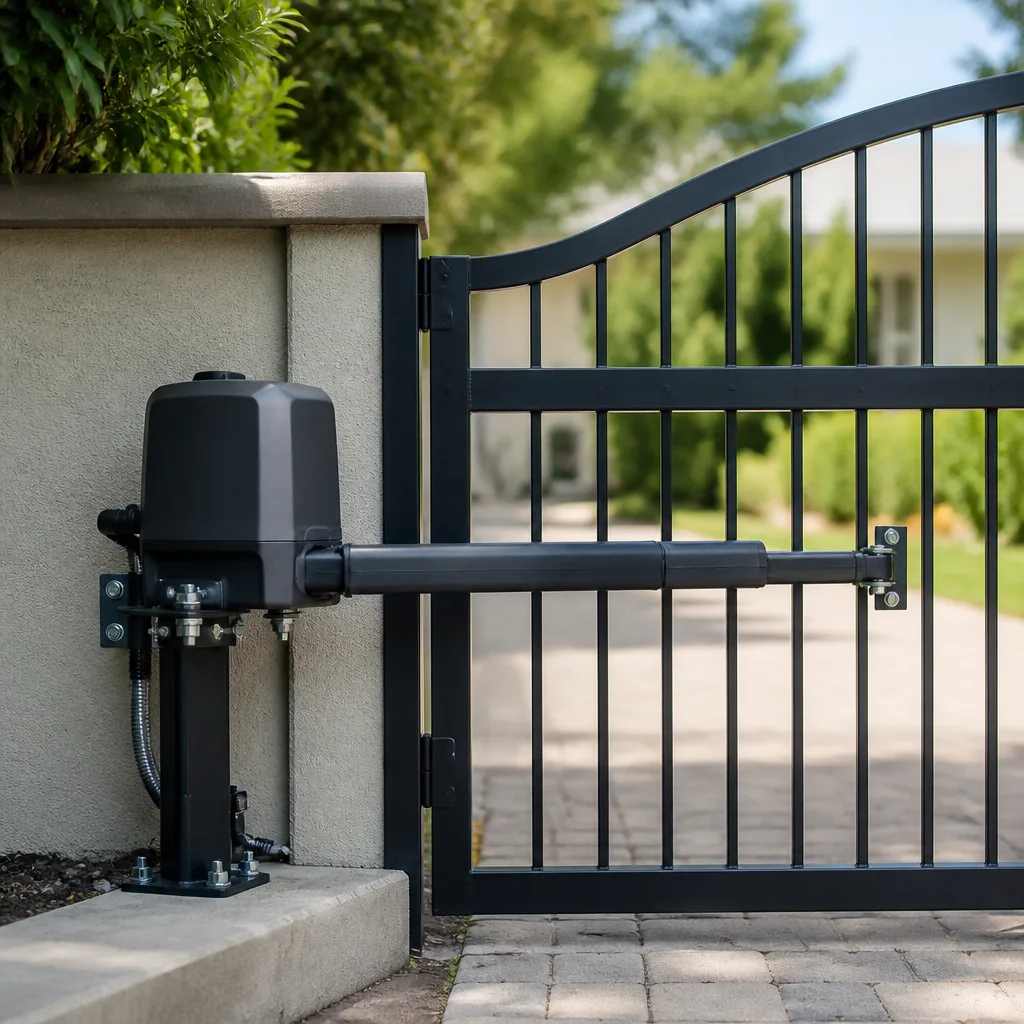
- Opener motor replacement with the same voltage and no new circuit. Swapping a LiftMaster for a LiftMaster, or a FAAC for a FAAC, is maintenance. No permit needed.
- Keypad, remote, or receiver replacement. You are not changing the method of operation, just refreshing a component. No permit needed.
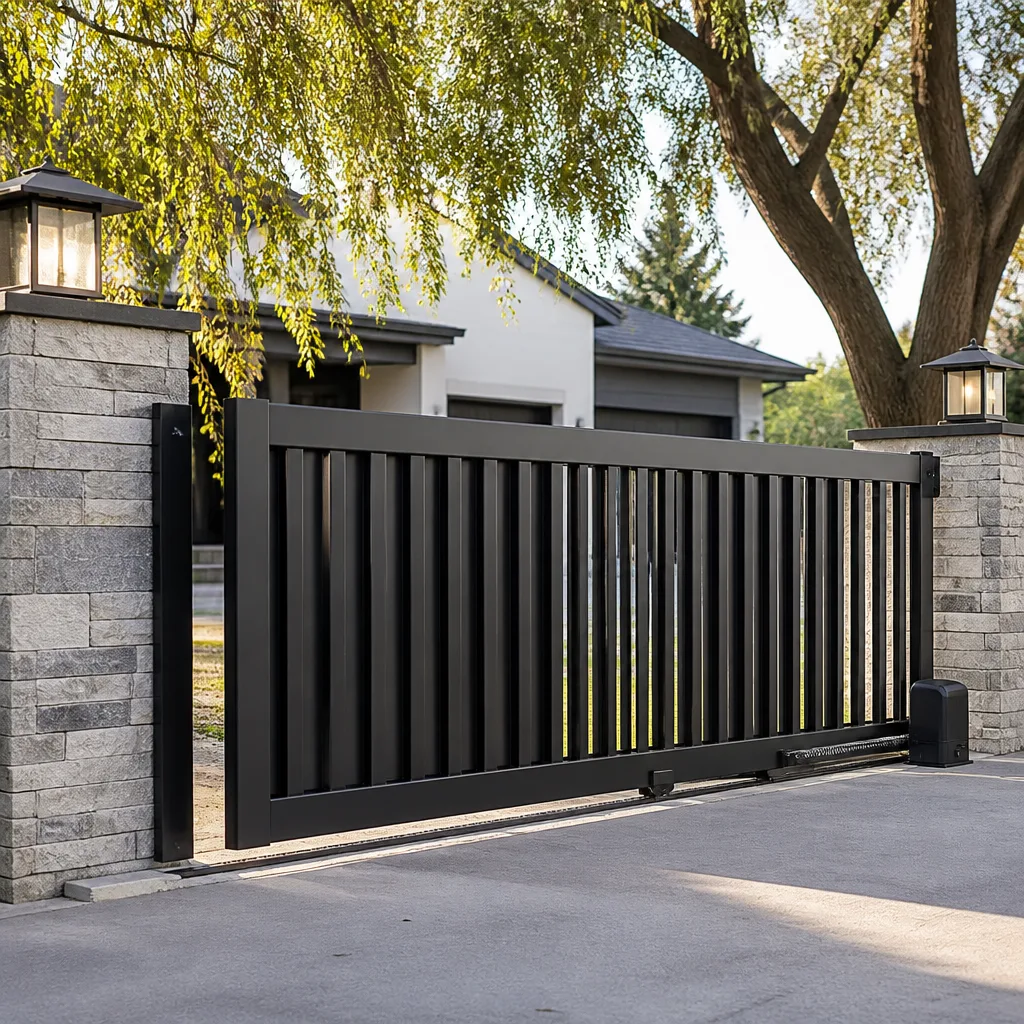
- Track and roller adjustment on sliding gates. Routine adjustment. No permit needed.
- Welding a cracked frame or re-hanging a sagging gate leaf. Structural repair to restore original condition. No permit needed.
- Replacing a photocell, safety edge, or vehicle loop sensor. Safety components are meant to be replaceable. No permit needed.
The common thread: if the work returns the gate to the condition and function it already had, Keller treats it as maintenance. If the work changes the gate’s size, location, power draw, method of operation, or relationship to the street, that is when the city wants to see it first. There is a judgement call in the middle, and when a customer in Keller is unsure, we tell them to call the permit desk and describe the job in plain language. The City of Keller’s inspectors give straight answers over the phone. A five-minute call beats a stop-work order every time.
Texas Gate Codes: The Standards That Govern the Work
Texas residential gate work is governed by a specific stack of codes, and the order matters. The IRC sets the baseline for residential structures. The National Electrical Code (NEC) governs the power feeding an automatic gate. UL 325, a safety standard, governs automated gate construction and installation. And Keller’s local amendments sit on top of all of it. Here is how each one plays out on a gates project in north Texas.
The IRC covers gates under its fence and accessory structure provisions. The gate is not a dwelling, so most of the structural language is about wind resistance and connection to the ground. Keller sits in a high-wind region relative to much of the country. A 16-foot estate gate with solid steel infill presents roughly 80 to 100 square feet of wind catch area. In a 60 mph gust, that translates to thousands of pounds of force at the post connection. The IRC’s footing requirement exists because that force is real. In practice, a Keller gate post should sit 36 to 42 inches deep in concrete, with a footing diameter of 18 to 24 inches for a heavy swing leaf. Sliding gates need a reinforced track bed that will not heave with the clay soil’s seasonal movement. Keller’s blackland clay expands and contracts relentlessly; a track bed without proper base compaction will misalign within two seasons. We see it every year on gates installed by out-of-area contractors who do not account for the soil.
The NEC applies to the line-voltage portion of an automatic gate system. The gate operator itself usually runs on 12 or 24 volts DC from a transformer, but that transformer plugs into a 120-volt branch circuit, and that branch circuit falls under the NEC. The breaker size, the wire gauge, the burial depth of the conduit, and the use of GFCI protection are all NEC matters. Low-voltage communication and sensor wiring, below 50 volts, gets more latitude, but a Keller inspector will still want it in conduit where it crosses under the driveway. Direct-burial cable without conduit is legal in some cases, but it fails often enough in Texas clay that we do not recommend it.
UL 325 is the standard most homeowners have never heard of and the one that matters most for safety. We will cover it in the next section. For now, the key point is that Keller, like every Texas city that adopts the IRC, treats UL 325 compliance as a code requirement for automatic gates, not a suggestion. A gate that does not meet it fails inspection, regardless of how well the posts are set.
Automatic Gate Codes: UL 325, Safety Edges, and Vehicle Detection
UL 325 is the safety standard for automatic gate operators, and it is the document that governs how a motorized gate may be installed. The core principle is simple: a moving gate must not injure a person, and it must not damage a vehicle that is lawfully in its path. Every design requirement in UL 325 flows from that one sentence.
The standard divides gates into four classes based on where they are installed and who uses them. Class I is a residential gate, serving one to four homes. Class II is a commercial or multi-family gate serving a broader population but still with trained users. Class III is an industrial or limited-access gate. Class IV is a guarded or restricted-access gate. In Keller, nearly every driveway gate is Class I, and that classification determines which safety devices are mandatory.
- Inherent entrapment protection. The operator must have a clutch or current-sensing system that stops and reverses the gate when it meets resistance.
- External entrapment protection. For a Class I gate, this means a non-contact sensor like a photocell or an actuated edge sensor on any leading edge that can contact a person or vehicle.
- Warning signage. Every automatic gate must carry a visible warning sign, mounted on both sides of the gate, with the UL 325 required wording.
- Manual release. The gate must be operable by hand in a power failure. The release mechanism must be accessible from both sides.
- Obstruction detection on close. The gate must stop and reverse when a sensor detects an object during closing. This is not optional.
The most common code failure we find on Keller automatic gates is a missing or dead safety edge. A safety edge is a pressure-sensitive strip mounted to the leading edge of the gate leaf. When the gate closes on a car bumper, a child’s arm, or a trash can, the edge compresses and sends a stop-and-reverse signal to the operator. Over time, Texas sun and heat break down the rubber, and the edge stops responding. The gate still runs, so the homeowner never notices, but the gate is no longer code-compliant, and it is genuinely dangerous. The second most common failure is a shorted loop detector on a sliding gate. Vehicle loops buried in the driveway tell the operator when a car is present. When the loop fails, the gate treats the car as empty space and closes on it. We regularly replace loop detectors in Keller driveways where the gate has clipped a bumper more than once, and the homeowner did not know why.
The brands you see most in the Keller area reflect what is spec’d by local gate installers and what has held up over time. FAAC and BFT are common on estate gates because they dominate the hydraulic and screw-drive market for heavy custom gates. Linear and Viking appear more often on residential swing gates and community entry systems. None of these brands is code-compliant on its own. The operator is a component. Compliance comes from how the operator is installed: the safety edges, the photocells, the loop, the signage, and the clearance. A new FAAC operator on a gate with no safety edge is a UL 325 violation, full stop.
Electrical and Low-Voltage Work: What the Code Says
An automatic gate is a small electrical installation, and the NEC applies to it the same way it applies to a pool pump or an outdoor outlet. In the Keller area, that means four things a homeowner should know before anyone starts pulling wire.
First, the branch circuit feeding the gate operator must be GFCI-protected. This is a NEC requirement for outdoor receptacles and it carries over to gate power. If the transformer for the operator plugs into a non-GFCI outlet, the inspector can flag it. In practice, we see this all the time on older Keller homes where the gate power was tapped off a garage circuit years ago, before GFCI was required. Bringing that outlet up to code is a simple fix, but it must be done before the final inspection.
Second, any line-voltage wiring run underground must be in conduit at the correct burial depth. For PVC conduit under a driveway, the NEC wants 18 inches of cover. For low-voltage wiring below 50 volts, direct burial cable can be run at 6 inches without conduit, but that minimum is a floor, not a target. Keller soil moves. We have dug up direct-burial cable that was pinched, corroded, or rodent-damaged within five years. Conduit is the difference between a repair that costs a few hundred dollars and a re-trench that costs thousands.
Third, the disconnect means must be accessible. If the gate operator needs to be powered down for service, the person servicing it must be able to reach the disconnect without climbing over or around the gate. A shut-off switch inside the garage that requires walking through the house is a code problem if the inspector is strict, and it is a practical problem every time we need to service the gate.
Fourth, the low-voltage control wiring, the keypad line, the safety edge wiring, and the loop leads, must be kept away from line voltage. Running 120-volt power and low-voltage control wiring in the same conduit is a NEC violation and it causes interference that can make a gate behave erratically. A gate that opens and closes on its own, or refuses to respond to a keypad, often has a wiring separation issue. The fix is to run separate conduits, and it is far easier to do before the trench is backfilled.
How Gate Inspections Work in Keller and Tarrant County
If your gate project required a permit, an inspection is part of the deal. The sequence in Keller is predictable, and knowing it removes most of the anxiety. A typical permitted gate project involves two inspections: a rough-in inspection and a final inspection. On a larger project, there may be a footing inspection before the concrete pour.
- Footing inspection (if required). The inspector verifies footing depth, diameter, and reinforcement before concrete is poured. On a standard residential swing gate, this inspection is often combined with rough-in, but a gate on a retaining wall or a long-span slider may need it separately.
- Rough-in inspection. The posts are set or the track is in place, the conduit is run, and the wiring is pulled but not terminated. The inspector checks post plumb, footing depth (if visible), conduit burial depth, and wire type.
- Final inspection. The gate is hung, the operator is installed, all safety devices are connected, and the system is fully functional. The inspector tests the safety edges, confirms the warning signage, checks the manual release, and verifies the gate reverses on obstruction.
The final inspection is where most gates pass or fail. What surprises Keller homeowners most is how thorough the safety check is. The inspector does not just look at the gate; they push on it, walk in front of the photocell, and test the reverse on close. On an automatic gate, be prepared to demonstrate that the gate stops and reverses when a safety edge contacts a test object, usually a stationary block or a traffic cone. If the edge is dead or the reverse force is set too high, the gate fails. We set reverse force to the lowest setting that still moves the gate reliably in Keller’s wind, and that usually satisfies the inspector and the safety standard at the same time.
Keller’s inspectors are reasonable, but they are doing a job that exists because past failures hurt people. A failed inspection means a correction notice, a re-inspection fee, and a delay. The fix is to treat the inspection as a checkpoint, not an adversary. Have the permit paperwork posted, the plans on site, and the safety devices working on the first visit. Gate repair companies that skip permits and inspections altogether save the homeowner a few hundred dollars up front and expose them to far more on the back end. A non-permitted gate that fails can invalidate a homeowner’s insurance claim. A non-permitted gate that injures someone is a liability the homeowner carries personally.
HOA Rules vs. City Code: The Layer Most Homeowners Miss
In Keller, and in the master-planned communities around it, the HOA is often a fiercer gate regulator than the city. The city cares about safety and right-of-way. The HOA cares about appearance, height, set-back from the street, material, color, and sometimes even the type of opener you may use. The two layers do not talk to each other, and satisfying one does not satisfy the other.
This catches more Keller homeowners than you would expect. They pull a city permit, build a gate that passes inspection, and then receive an HOA letter demanding removal or modification because the gate is six inches taller than the community standard, or because the operator cabinet is visible from the street. HOAs in the Keller area have their own architectural review process, and many require pre-approval before any gate work begins. The approval process can take thirty to sixty days in a busy community. That is the timeline, not the exception.
The practical sequence for a Keller homeowner is: check your HOA’s covenants first, then the city’s permit requirements. If both approvals are needed, start the HOA application and the city permit application at the same time. The HOA will not care about the city permit, and the city will not care about the HOA, but the homeowner is bound by both. In our experience, the most common HOA pushback is about gate color and gate height. A standard 6-foot gate may be fine in one Keller subdivision and a covenant violation in the next. The second most common is about operator visibility; some HOAs require the motor and control cabinet to be screened or painted to match the gate. These are solvable, but only if you know about them before the concrete is poured.
What a Permitted Gate Project Actually Costs in the Keller Area
Permit and inspection fees in Keller are not the expensive part of a gate project, but they are a real line item, and knowing the range helps you budget honestly. The table below reflects what we see on residential gate work in Keller, Southlake, Colleyville, and the surrounding Tarrant County communities. These are working ranges, not quotes.
| Item | Typical Range in Keller Area | Notes |
|---|---|---|
| Residential gate permit fee | $75 - $250 | Based on project valuation; most single-gate permits land at the low end. |
| Electrical permit (if separate) | $50 - $150 | Required when new branch circuit or significant electrical alteration. |
| Re-inspection fee | $50 - $100 | Paid if first inspection fails. Avoidable with proper preparation. |
| HOA architectural review | $0 - $200 | Many Keller HOAs review at no cost; some charge a processing fee. |
| Site plan or drawing | $0 - $300 | Simple sketches are free; engineered drawings for complex gates add cost. |
| Utility locate (811) | Free | Required before any digging. Schedule 48 hours ahead. |
The larger cost driver on a permitted project is not the permit itself. It is the work the permit requires: proper footings, conduit, safety devices, and the labor to do it all to code. A permitted automatic gate installation in Keller typically runs $4,500 to $9,000 for a single swing leaf, depending on gate size, weight, opener brand, and access control. A permit-exempt repair, like a hinge replacement or a motor swap, runs a few hundred dollars. Homeowners who budget for the permit as a separate line item, not as an afterthought, avoid the surprise that kills projects halfway through. And every price we quote is agreed before any work starts, in writing, so the invoice at the end matches the number on the table at the beginning.
Common Mistakes to Avoid
- Skipping the 811 utility locate before digging. Digging into a gas line, a fiber-optic line, or an electrical service is dangerous and expensive. In Keller, 811 locates are free and take two business days. Every gate with new posts or conduit needs one. Not calling is not a shortcut; it is a liability.
- Assuming a repair does not need a permit because the gate “still works.” A gate can function perfectly and still fail code for a missing safety edge, a dead loop detector, or missing warning signage. Function is not compliance.
- Ignoring the HOA until after the gate is installed. The city permit means nothing to the HOA, and the HOA can force removal. Check covenants before you spend a dollar.
- Burying low-voltage cable without conduit to save money. It saves a few hundred dollars on installation day and costs thousands when the cable fails in Texas clay two years later. Run the conduit.
- Setting gate posts without accounting for Keller’s soil movement. Blackland clay expands and contracts with moisture. A post set too shallow, or a sliding gate track bed without proper base, will shift. The gate will sag, bind, or drag within two seasons.
- Installing an automatic gate without a separate manual release check. The release must be reachable from both sides of the gate without tools. If a power failure leaves you unable to open the gate by hand, the installation fails UL 325 and common sense at the same time.
- Accepting a verbal quote and then being surprised by the invoice. Every gate job should have a written price agreed before work starts. If a contractor will not put it in writing, find another contractor.
When to Call a Professional
Some gate work is a weekend project for a capable homeowner. Replacing a keypad, touching up paint, re-hanging a small pedestrian gate: those are fair game. Other work crosses the line into professional territory because the stakes are structural, electrical, or both. If the job involves setting new posts in concrete, running electrical, installing or reprogramming an automatic opener, or diagnosing a gate that moves erratically, call someone who does this every day. The cost of a professional is often less than the cost of fixing a DIY mistake, and it is always less than the cost of a gate that injures someone. Automatic gates carry enough force to break bones. They are not a learning project.
Ironworks Gate Co. offers free estimates in Keller: call (254) 330-8718. We have been repairing and installing gates in the Keller area for decades, and we walk each project through the permit, code, and inspection process from start to finish, so the homeowner never has to guess what the city will say. That is not a convenience. That is the job.
Frequently Asked Questions
Replacing an existing gate opener with a motor of the same type and voltage is generally treated as a repair, not new construction, and typically does not require a permit in Keller. If you are converting a manual gate to automatic, or adding a new electrical circuit, a permit is usually required. Call (254) 330-8718 and we will tell you which category your job falls into.
The most common reason is a missing or non-functional safety device, usually a dead safety edge or a poorly adjusted reverse setting. UL 325 requires that the gate stop and reverse on contact. An inspector tests this. If the edge is worn out, the gate fails even if everything else is perfect. This is a quick repair, but it must be done before the inspection.
For a standard residential swing gate in Keller’s expanding clay soil, we set posts 36 to 42 inches deep with an 18 to 24 inch concrete footing. Sliding gates need a reinforced track bed with compacted base. Anything shallower than that will move within a couple of seasons as the soil swells and contracts.
Yes. HOA covenants run independently of city code, and many Keller communities require architectural review before any gate installation or major modification. The HOA can deny a gate based on height, color, material, or visibility of the operator, even if the city permit has already been issued. Check the HOA first.
It can. A non-permitted gate installation that fails, or an automatic gate that does not meet UL 325 and causes injury, can give an insurer grounds to deny a claim. A permitted, inspected, code-compliant gate does the opposite: it documents that the work was done properly. Keep the permit and inspection records.
A straightforward residential gate permit in Keller is typically approved in five to ten business days from application, assuming the site plan and gate specs are complete. HOA review, if required, usually runs thirty to sixty days on top of that. Starting both processes at the same time is the fastest path.
A full installation includes the gate leaf or leaves, the posts and footings, the opener and its mounting, all required safety devices (photocells, safety edges, loops as needed), the electrical run from the house to the gate, the keypad or access control, warning signage, and the permit and inspection process. We quote the complete job, in writing, before any work begins. Call (254) 330-8718 for a free estimate in Keller.
The Bottom Line
Most gate repairs in Keller are maintenance and need no permit. The work that matters, new footings, first-time automation, right-of-way changes, electrical runs, is exactly the work where a permit protects you. The city is not the obstacle; a code-compliant gate is the thing that keeps your family safe, your insurance intact, and your resale clean. Know which category your project falls into, pull the permit when it is required, build to UL 325 and the NEC, and let the inspection be a checkpoint rather than a surprise. Do those things in that order, and a gate installed today will still be closing square and safe in forty years. That is the standard, and it is the only one we build to.
Written by Victor Salinas, Owner at Ironworks Gate Co., serving Keller since 2013.