
Last updated August 25, 2026
Free on-site gate assessment - hinges, posts, and your LiftMaster or Nice gate operator checked before anything is quoted
The assessment is free and the quote is the invoice.
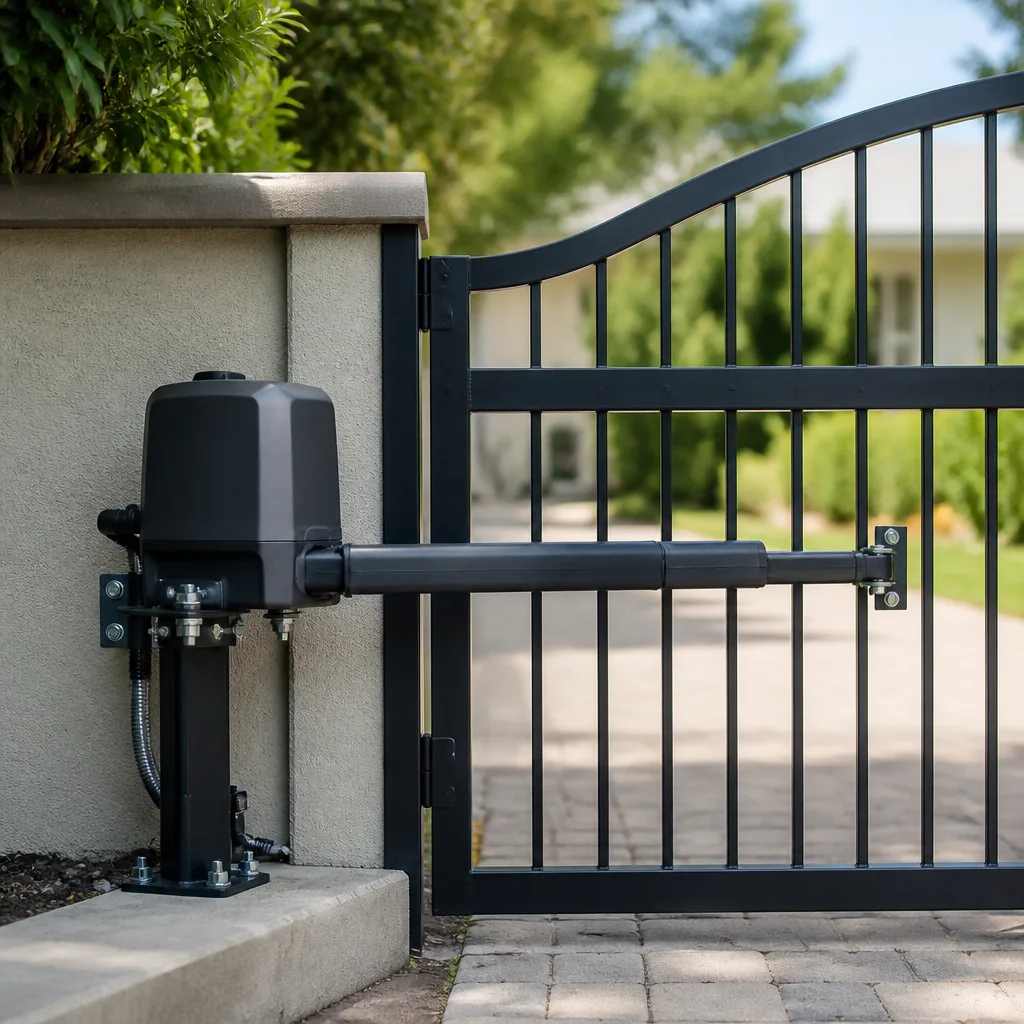
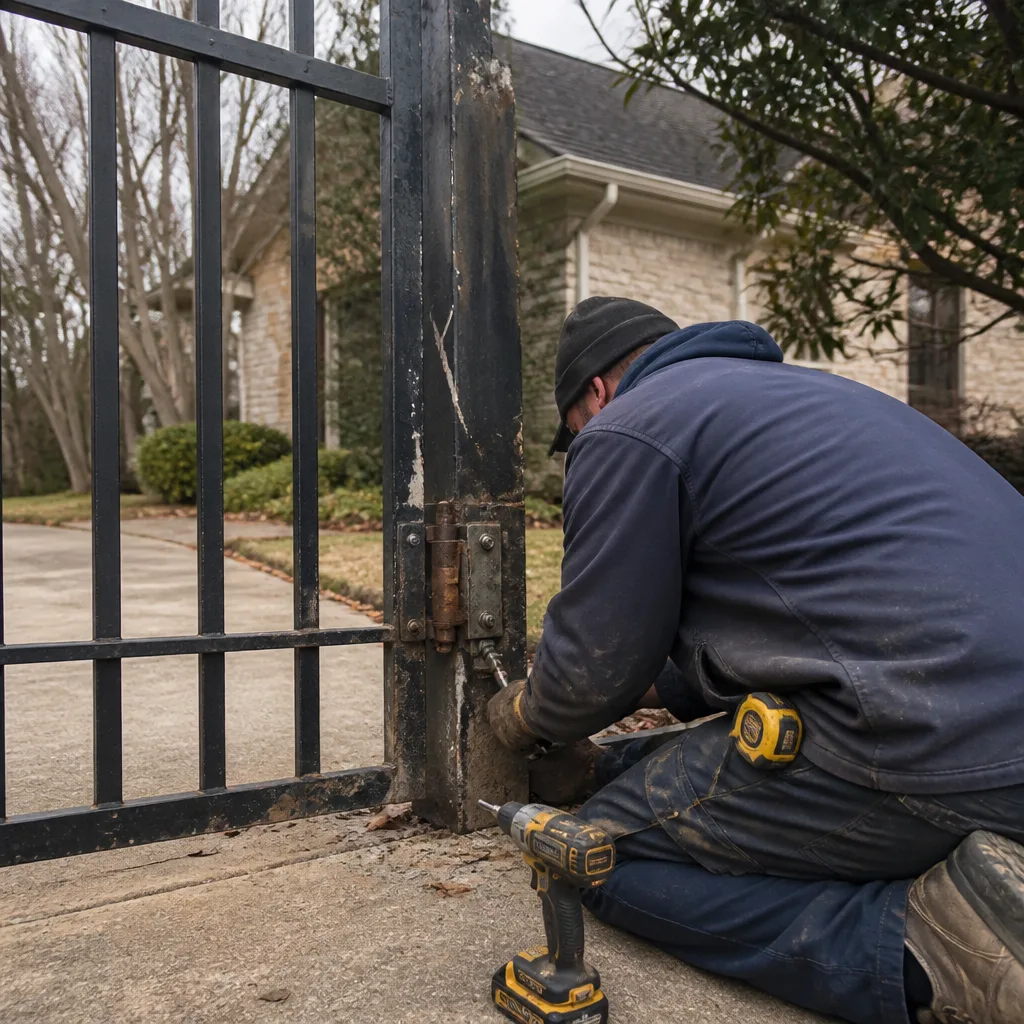 Before
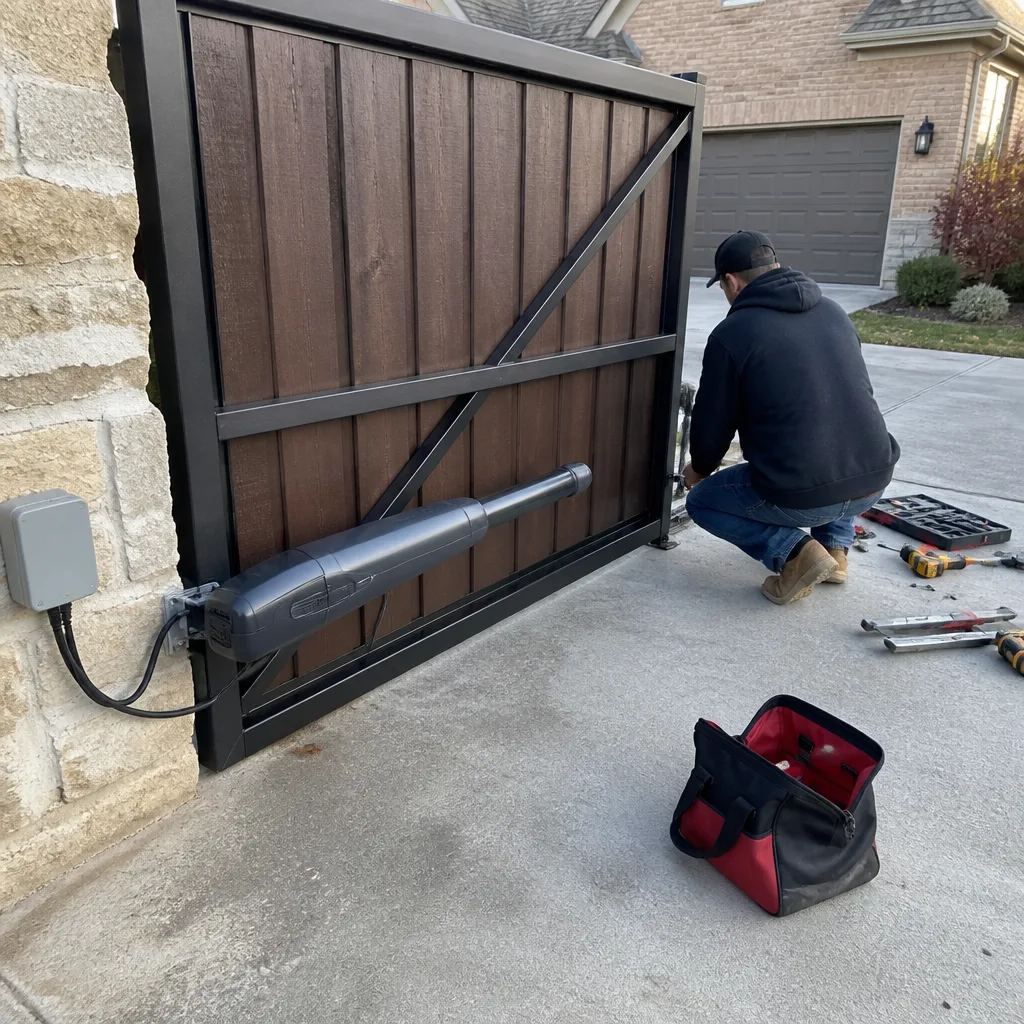 After
After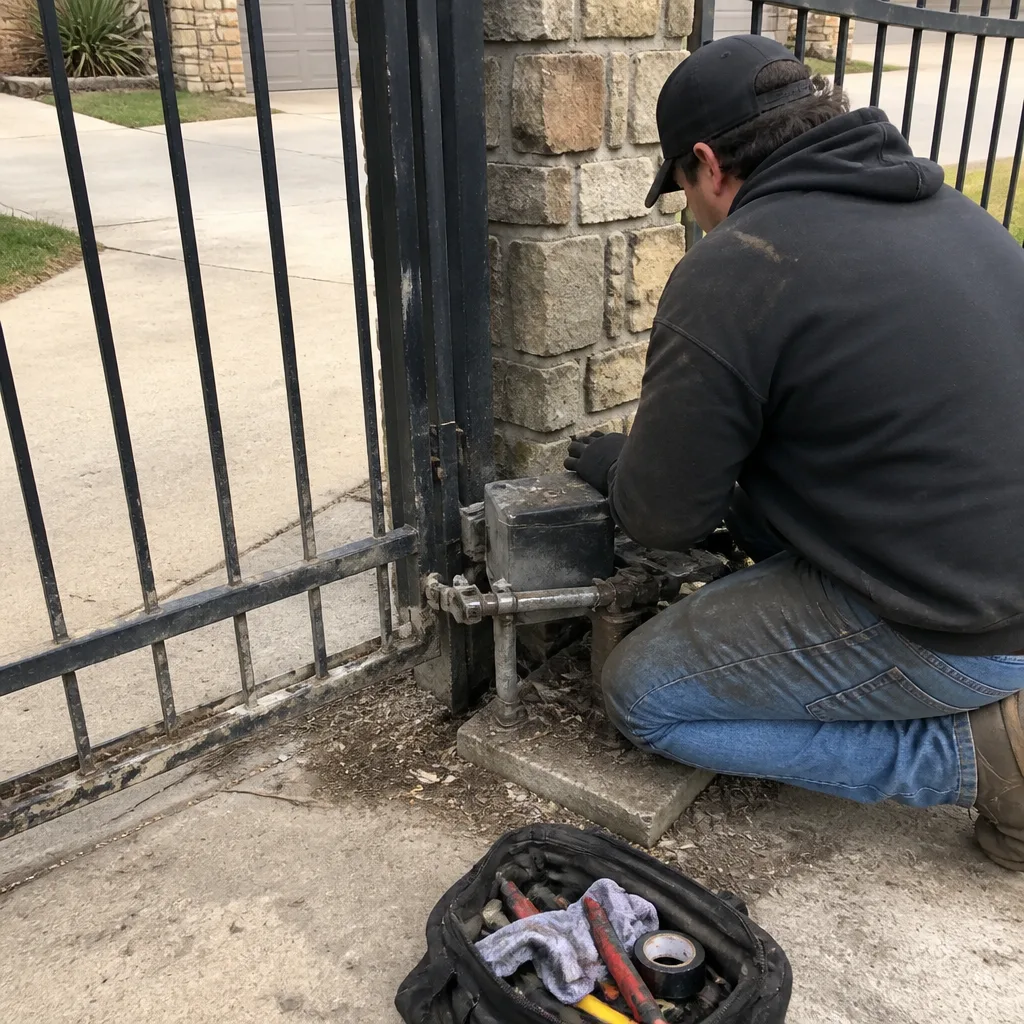 Before
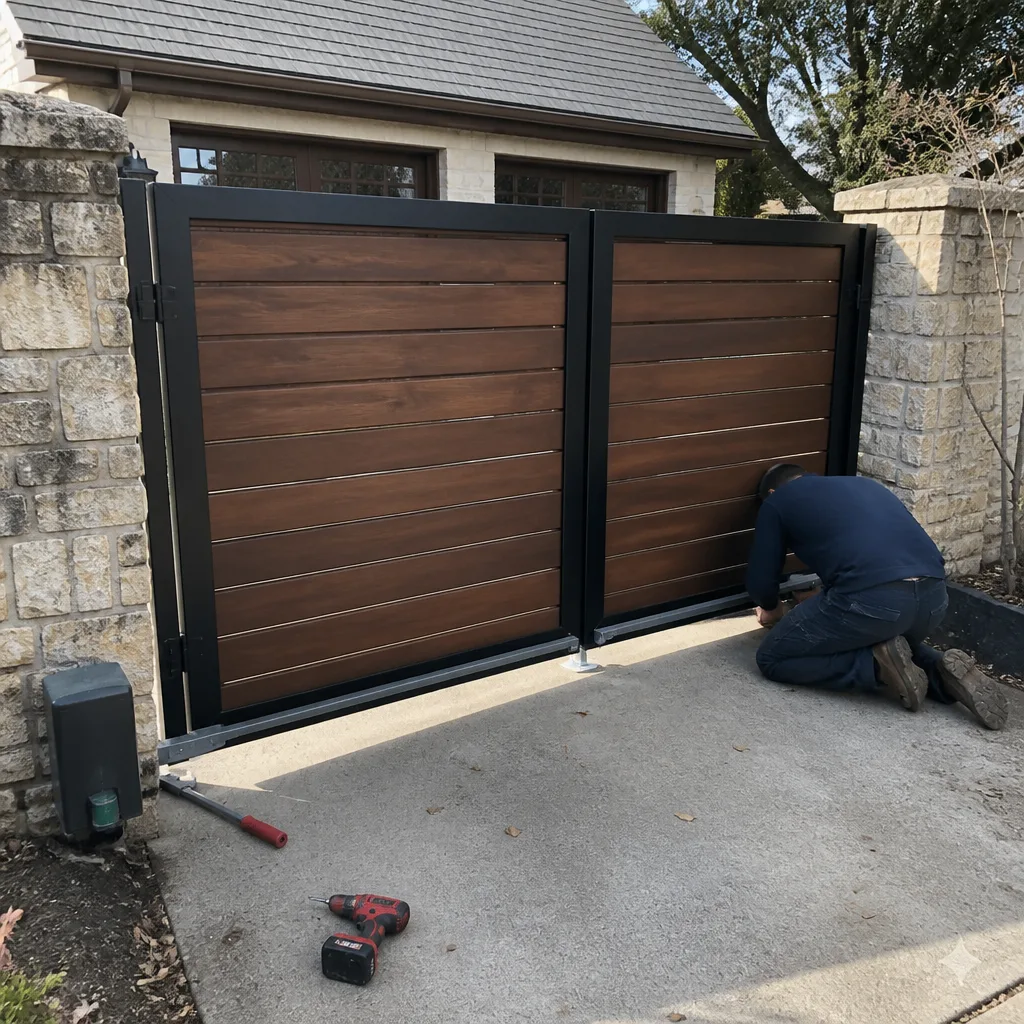 After
After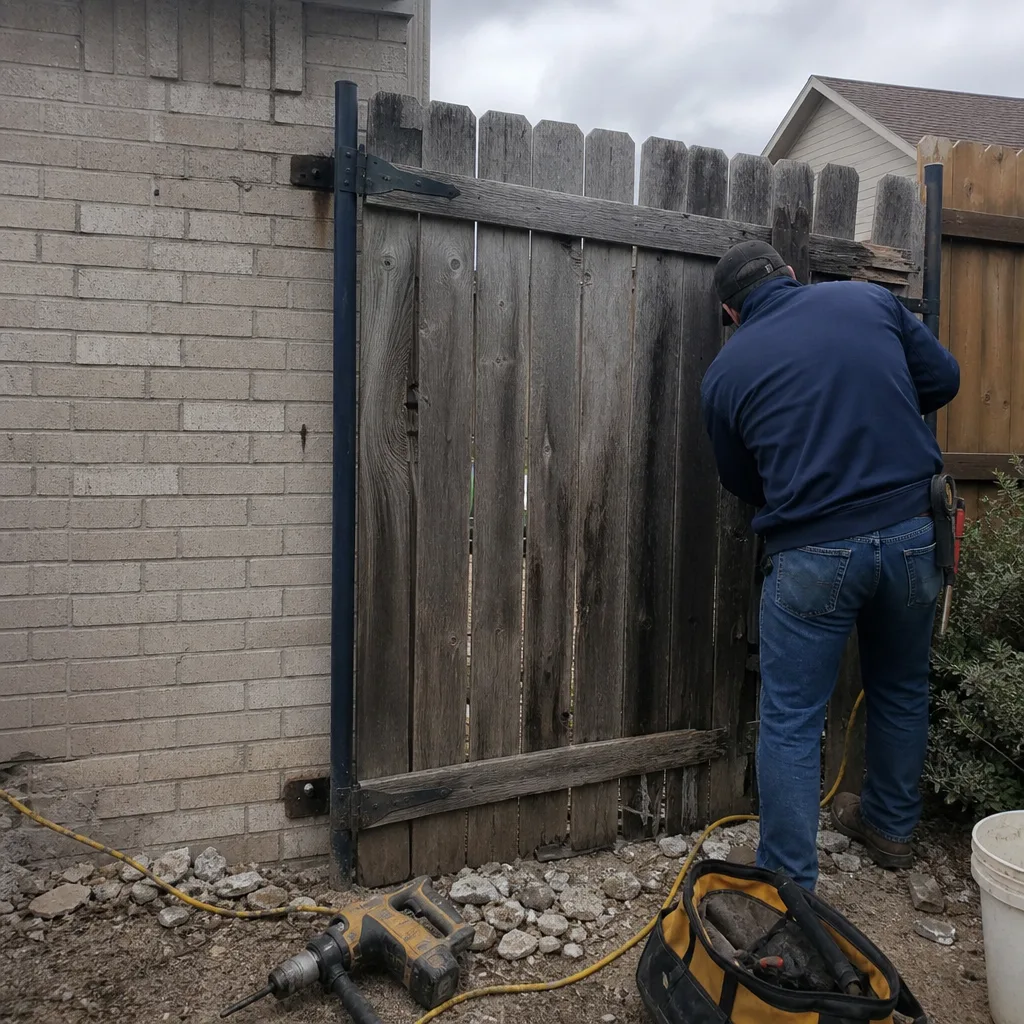 Before
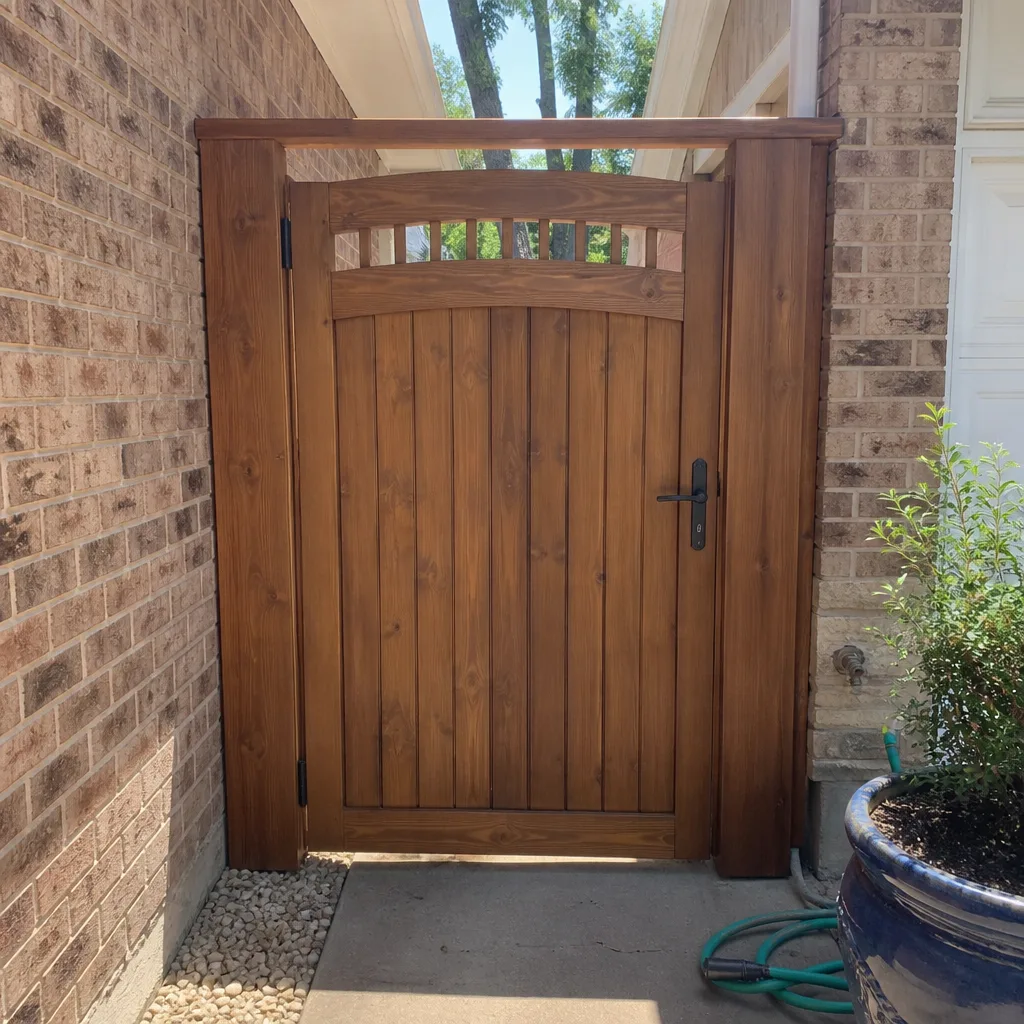 After
AfterGate Repair Warning Signs: A Keller Homeowner’s Reference Guide
Most Keller homeowners don’t think about their driveway gate until the morning it refuses to open. That’s the nature of the equipment: it works quietly for years, then it doesn’t. But gates almost never fail without warning. They signal trouble for weeks or months beforehand, through sounds, movements, and small hesitations that are easy to dismiss. This guide covers every warning sign we’ve cataloged across decades of Keller service calls, what each one means, what it costs to fix if caught early, and what it costs if ignored. If you own a gate in Keller, this is the reference you’ll want bookmarked.
Quick Answer
The most common gate repair warning signs in Keller are: the gate moving slower than it used to, grinding or squealing sounds from the motor or wheels, the gate stopping mid-cycle and reversing, sagging or dragging at the latch end, and the opener running but the gate not moving. Any of these means a component is failing. Catching it early usually means a $150 to $350 repair; letting it go often turns into a $900 to $2,400 motor or track replacement.
Table of Contents
- A Gate That Moves Slower Than It Used To
- Grinding, Squealing, or Clicking Sounds
- The Gate Stops Mid-Cycle and Reverses
- A Sagging Gate or a Gate That Drags
- The Motor Runs But the Gate Doesn’t Move
- What Keller Weather Does to Gate Hardware
- Chain Drive vs. Belt Drive: The Sound You Should Expect
- How Long Should a Keller Gate Actually Last
A Gate That Moves Slower Than It Used To
A driveway gate in Keller should take roughly 12 to 15 seconds to open fully, assuming a standard 16-foot span. When that time creeps toward 20 or 25 seconds, something is working harder than it should. Almost every slow gate we see has one of three causes, and two of them are inexpensive to repair caught now.
The first cause is dirt and debris in the track. Keller sits on clay-heavy soil, and after a dry spell, wind pushes fine dust into every groove, wheel well, and hinge point on a gate system. That dust mixes with grease to form a paste that adds friction. A thorough cleaning and re-lubrication resolves perhaps half of all slow-gate complaints, which is why it’s the first thing we check.
The second is a failing capacitor in the opener. The capacitor gives the motor its initial burst of power. When it weakens, the motor still turns but it labors. Capacitors cost a few dollars and take 30 minutes to swap. If a weak capacitor is allowed to stay in place, the motor draws extra current through the windings and burns out early. That’s a $400 component turned into a $1,200 replacement because of a delay.
The third is sagging hinge hardware, which changes the geometry of the gate and makes the opener push the extra weight against gravity. That’s covered separately below, but it can also slow the gate down.
In our experience, a slow gate in Keller’s Fairway Bend or Hidden Lakes neighborhoods is one of the most commonly ignored early warnings on the whole property. Homeowners adapt to the slower speed over the course of a month and forget it was ever faster. The gate doesn’t forget: the same friction that slows it is wearing out rollers and hinge pins every cycle.
Grinding, Squealing, or Clicking Sounds
A gate should be quiet enough that you don’t notice it from inside the house. You may hear the soft hum of the motor when you’re near it, but that’s the limit. Anything beyond that – grinding, metal-on-metal scraping, a rhythmic click, or a high-pitched squeal – is the gate telling you exactly where the failure is happening.
A grinding noise usually means the drive chain is too loose or the sprockets are worn. Chain-driven gates are common in Keller, especially on older estate properties along Bourland Road and Marshall Creek. The chain stretches over time, and a loose chain rides up on the sprocket teeth instead of seating into them. It grinds, and each cycle files the teeth down a little more. Tension adjustment fixes a stretched chain in under an hour; stripped sprockets have to be replaced.
Squealing tends to point to the wheel bearings or the hinge pins. Keller’s temperature swings – below freezing some winters, over 100 degrees most summers – accelerate wear on bearing grease. The grease dries out, then the bearings run metal-on-metal. A squeal is often audible for weeks before the bearing actually seizes, and that window is the cheap-repair window. Replacing a wheel bearing runs about $60 to $90. Replacing the gate wheel and section of track after a seized bearing digs a groove into it can run $400 or more.
Clicking is usually electrical. A relay in the control board chattering, or a solenoid failing to hold. If you hear a click and the gate doesn’t move, do not keep pressing the remote. Each press sends another surge through a circuit that’s already struggling. One call to a professional is cheaper than replacing a control board.
The Gate Stops Mid-Cycle and Reverses
This is the warning sign that gets our office the most calls in Keller, because it’s the hardest to live with. The gate opens four feet, stops, reverses, and closes again. Or it reaches almost-closed and then backs up like it’s afraid of the latch. The cause is almost always one of two things: an obstruction the safety sensors are detecting, or a damaged hinge that’s binding at a specific point in the arc.
Safety edges and photo-eyes are required on automated gates, and the sensors do their job well until they don’t. A sensor misaligned by half an inch, or a safety edge that’s been dented by a car bumper, tells the control board there’s an obstruction when there isn’t. The board’s response – stop and reverse – is correct behavior. It’s the sensor signal that’s wrong. Replacing a safety edge on a Keller driveway gate typically runs between $90 and $160 installed, and it’s one of the more common repairs we make on FAAC and BFT openers in the area.
The more serious cause is a hinge that’s failing at one end. Gates are wide, and small misalignments at the hinge post translate into large movements at the latch end. A gate may swing cleanly for the first thirty degrees of arc and then bind, tripping the force-reversal safety built into the opener. A hinge replacement along with re-welding a gusset typically runs $350 to $500, and it’s a one-day job. Left untouched, the continued stress will eventually damage the opener motor itself.
The rule of thumb we give homeowners: if a gate reverses at the same point every time, it’s the gate, not the sensors. If it reverses unpredictably, it’s the sensor circuit. Either way, the repair is straightforward. The risk comes from repeatedly overriding it with the manual release, which bypasses the very safety system protecting your vehicles, your pets, and your family.
A Sagging Gate or a Gate That Drags
The most visible warning sign on a swing gate is the one homeowners notice first: the latch end drops. A gate that once lined up with its striker post now sits two or three inches low. It drags on the driveway or needs a shove to close. On a sliding gate, the same force shows up as wheels riding at an angle, and the gate scraping a line into the concrete.
In Keller, the culprit is usually the post, not the gate. The heavy clay soil across much of Tarrant County expands when wet and contracts when dry. Over years, that cycle pushes fence and gate posts out of plumb even when the posts were set in concrete. A post that’s moved three degrees changes the entire geometry of the gate, forcing the frame to carry weight it wasn’t welded for.
There are two distinct repairs, and the price difference matters. If the gate itself is intact and the post has shifted, we cut the post free, re-set it in concrete, and re-hang the gate. That runs about $400 to $700 depending on the post size and the condition of the footing. If the gate frame has cracked at a weld from carrying the strain, the gate has to be removed, straightened, and re-welded – which generally runs from $700 to $1,200 on a standard driveway gate in Keller. The longer a sagging gate stays in use, the more likely you are to need both repairs instead of one.
A gentle test: close the gate and run a finger along the line where the latch meets the striker. If that gap has grown by more than half an inch over the last year, the post is moving. Call before the gate starts dragging, because once metal is scraping concrete, every open and close shaves material off both surfaces.
The Motor Runs But the Gate Doesn’t Move
This is the warning sign that turns a $150 repair into a $1,500 repair fastest, because the failure compounds by the second. The opener motor hums, or even runs at full speed, but the gate stays put. The wrong response is to let it keep running while you investigate. The right response is to hit the stop button or cut power at the breaker.
On chain-drive openers, the most common cause is the chain slipping on the drive sprocket. The chain may have stretched past the tensioner’s adjustment range, or the sprocket key may have sheared. If the motor runs and the chain doesn’t turn, you’re overheating the motor against a stalled load. Repeated attempts burn out the windings. A chain tension and sprocket service runs around $150 to $250 on most Keller driveways. A burned-out motor, replaced, runs $800 to $1,300 on common Linear and Viking openers, and can exceed $2,000 once a new control board is priced in.
On belt-drive and direct-drive openers, the failure is usually the belt itself or a stripped gear in the transmission. These parts are replaceable, but they should be replaced the day you notice the problem, not after two weeks of letting the motor spin. The motor itself is the most expensive component in the system. Consider it the protected part and the chain, the belt, the sprocket, and the capacitor as sacrificial parts – they’re designed to wear out first, and they’re cheap. Letting a sacrificial part fail and continuing to run the system sacrifices the component that actually costs money.
If you ever hear a motor running and see a gate motionless, kill the power and call. That single decision saves, in our experience, an average of $600 to $900 per incident.
What Keller Weather Does to Gate Hardware
You can’t talk about gate repair in Keller without talking about the weather, because the climate here is harder on gate hardware than any other factor. The same conditions that make North Texas good for oak trees and long summers are the conditions that dry out lubricants, crack powder coating, and move posts throughout the year.
The heat is the first and most constant stress. Keller regularly sees consecutive days above 100 degrees in July and August, and driveway gates sit in direct sun absorbing it. The surface of a dark-colored metal gate can reach 160 degrees or more in mid-afternoon. That heat expands the metal, cooks the internal grease out of hinge pins, and degrades the plastic insulation on wiring that runs through the gate frame. Components that would last twelve years in a milder climate often need attention by year eight or nine here.
Then there’s the clay soil. Many homes in Keller’s older neighborhoods – Melody Hills, Oakwood Terrace, the established sections around Keller Parkway – sit on soil that moves significantly with moisture. Every wet spring, the soil swells. Every dry August, it contracts and cracks. Posts set in that soil don’t have to move far to cause trouble: a quarter-inch of post movement at the base translates to inches of gate droop at the latch end. It’s the single most common root cause behind sagging gates in this city, and it’s not fixable by adjusting the opener. The post has to be re-set.
Freeze-thaw cycles add to the problem. When moisture gets into hairline cracks in the gate frame or the post welds, then freezes, it pries the crack open. A small crack that opened during one January freeze in Keller can let in water all spring, rusting the inside of the frame invisibly until a weld lets go. We recommend homeowners in this area give their gate a quick visual once at the start of summer and once in late fall. You don’t need to be a technician to spot a new crack, a fresh scrape line in the concrete, or a post that’s moved off plumb.
Chain Drive vs. Belt Drive: The Sound You Should Expect
Part of reading a gate’s warning signs is knowing what your equipment is supposed to sound like. We get calls from Keller homeowners worried about noise that is, for their particular drive type, completely normal. So here’s the baseline.
A chain-drive gate has a metal chain running between the motor sprocket and the gate spur gear. It hums and has a soft mechanical whir – think of a garage door opener, slightly muffled. A new chain properly tensioned is about as loud as a box fan on medium. As the chain stretches over years, the sound deepens and takes on a rattle. A light rattle is normal on a chain that’s near its next tension adjustment. A grinding or clanking sound is not normal. If your chain-drive gate suddenly sounds like silverware in a dryer, that’s sprocket or tension trouble and it should be addressed that same week.
A belt-drive gate uses a reinforced rubber belt instead of a chain. It should be noticeably quieter – a low whir, sometimes with a slight whoosh as the gate swings. Belt drives are popular in Keller’s newer subdivisions, and they’re excellent equipment, but the rubber belt degrades in heat faster than a chain wears. A belt that’s developing cracks will sometimes make a slapping or ticking sound as it goes around the drive pulley. That’s a $120 to $180 part replacement if caught before it snaps. Once it snaps, the motor spins freely with no load, and if the automatic cutoff doesn’t trigger, the motor can damage itself in minutes.
Do not assume a sound is harmless because the gate still works. Gates don’t recover from wear. They accumulate it until the repair crosses from maintenance into replacement.
How Long Should a Keller Gate Actually Last
We’re often asked this directly: how long should a driveway gate last in Keller, and how does a homeowner know when to stop repairing and start replacing? The answer depends on three things, and none of them are the brand name on the opener.
A well-built steel or wrought-iron gate frame, welded rather than bolted, should last 20 to 30 years in this climate before the frame itself needs major work. Powder coating lasts 8 to 12 years before it needs to be stripped and re-coated, and the coating is what protects the steel underneath. A gate that’s re-coated on schedule can easily outlive the house’s water heater, the HVAC unit, and two or three garage door openers. We’ve worked on Keller gates hung in the 1980s that are still swinging true, because someone kept the coating intact and the hinge pins greased.
The opener and electronics are a different story. The motor, control board, sensors, and remote receivers on a gate automation system typically need significant service or replacement every 8 to 12 years in North Texas. Heat and power surges are the two big killers. A surge protector on the opener’s power feed costs under $100 and has saved more than a few Keller control boards during storm season.
The practical rule: if the frame is sound and the post is solid, repair the automation components. If the frame has rusted through in multiple places, or the post needs re-setting for the second time in five years, start pricing a replacement. A new gate installed by a Keller company that welds its own frames and installs its own automation carries the cost of doing it once instead of patching it for a decade.
Common Mistakes to Avoid
- Ignoring a slow gate for months. A gate that’s losing speed is losing a cheap repair window. Friction compounds, and the motor pays the price. Two weeks of observation is fine; six months is not.
- Overriding the safety reversal repeatedly. The stop-and-reverse behavior is the system protecting you. Bypassing it with the manual release while it’s still powered risks injury and equipment damage.
- Greasing everything without cleaning first. Adding new grease on top of Keller’s dust-coated old grease just makes more paste. The cleaning step is not optional.
- Using the wrong lubricant. WD-40 is a solvent, not a gate lubricant. It strips away what’s left and leaves bare metal. Hinge pins need a proper grease; slide tracks need a dry silicone.
- Welding a cracked gate without removing it from the post. Welding in place can warp the frame from the heat, and it doesn’t fix the root cause if the post has moved. The gate comes off, gets straightened, then gets hung on a stable post.
- Replacing the opener before diagnosing the gate. A new motor on a sagging, binding gate will burn out just like the old one. The gate itself is the first thing to check.
- Waiting until the gate fully fails to call. Keller homeowners who call at the first warning sign routinely pay half what those who wait pay. That’s not an upsell. That’s the arithmetic of wear.
When to Call a Professional
You don’t need a service call for a gate that’s working well and just needs a wipe-down. But if you notice any of the warning signs above – slow travel, grinding, mid-cycle reversal, sag, motor running with no movement – you’re past the maintenance point and into the repair point. The safest approach with a gate that carries hundreds of pounds of steel across a driveway is to have it looked at by someone who works on gates every day.
High-tension gate springs, welding, and any electrical work on the opener should not be a DIY project. The stored energy in a sprung hinge or a wound spring can cause serious injury. So can a 240-volt line that’s been routed through a gate post. We mention this because we want Keller homeowners to treat their gate with the same respect as their electrical panel or their garage door. It’s heavy, it’s under tension, and it’s powered.
Ironworks Gate Co. offers free estimates in Keller. Call (254) 330-8718 and a live person answers – 24 hours a day, 7 days a week. We’ll tell you over the phone what we suspect, what it typically costs, and whether it can wait for Monday.
Frequently Asked Questions
Most gate repairs in Keller run between $150 and $500, depending on whether the problem is a worn part, a failed sensor, or a misaligned post. A capacitor replacement typically costs $120 to $180, a safety edge replacement $90 to $160, a hinge repair with re-welding $350 to $500, and a full opener replacement $800 to $2,000. These are the common ranges we quote in this market. Call (254) 330-8718 for an exact quote on your gate – estimates are free.
We complete most repairs in a single visit, and we stock the common parts for LiftMaster, FAAC, BFT, Linear, Viking, Ghost Controls, DoorKing, Elite, and Mighty Mule openers on our service trucks. If the part your gate needs is in the truck, the repair is done that day. If it’s a special-order part, we’ll tell you the timeline before any work begins. Call (254) 330-8718 and we’ll let you know what’s realistic for your specific gate.
The single most common problem in Keller is post movement caused by the clay soil’s shrink-swell cycle, which leads to sagging gates and binding hinges. After that comes heat-related capacitor and control board failures during summer, and chain stretch on older chain-drive systems. Keller’s climate and soil combine to make these three issues more common here than in most of the country.
A new driveway gate in Keller, installed with automation, typically starts around $3,500 for a basic single swing gate and runs upward of $8,000 to $10,000 for a larger estate gate with custom welding, access control, and a high-end opener. Every bid should include the gate, the posts, the opener, the safety edges, and the wiring. We provide a written quote before any work is scheduled, and the price you sign is the price you pay. Call (254) 330-8718 for a free measure and written estimate.
Yes. Every automation job includes the full power run from your panel to the opener, the safety edges and photo-eyes required by code for automatic gates, and the control wiring. We do not leave a gate installer for you to call after we leave. The gate, the opener, the sensors, the keypad, and the safety system are all installed and tested as one complete job, then covered by our 90-Day Done Right Promise in writing.
Every 18 to 24 months in this climate. The heat and soil movement in Keller mean that grease dries out faster and bolts work loose sooner than in milder regions. An annual or biennial tune-up catches loose hinge bolts, dry bearings, and early chain stretch before any of them become repair calls. We offer an $89 seasonal tune-up in Keller, and we treat it as the cheapest insurance a gate owner can buy. Call (254) 330-8718 to schedule yours.
The Bottom Line
A Keller gate gives warning before it fails. The signs are easy to miss only if you’re not looking for them: slower travel, new sounds, mid-cycle reversals, a drooping latch end, a motor running while the gate sits still. Each of these points to a specific repair, and each has a cheap window that closes. Treat the warning signs early and you’re usually looking at a few hundred dollars and a gate that runs another decade. Ignore them and you’re pricing a replacement. Keller’s climate and soil make gate maintenance a fact of life here, not an option. Know what your gate sounds like when it’s healthy, check it twice a year, and call when something changes. Done right, and backed in writing.
Written by Victor Salinas, Owner at Ironworks Gate Co., serving Keller since 2013.